Books In My Life

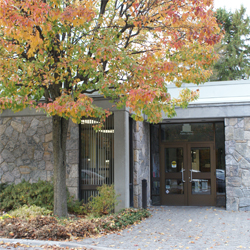
This past Friday I sorted through about 2500 books imprisoned for the past three years in a storage unit in Westchester County, New York.  They ended up there following the sale of my house after the divorce.  Sixty-four boxes of these books were donated to the Mt. Pleasant Library in nearby Pleasantville.  I mailed seven boxes back to myself in San Francisco.  My son David helped me sort, load and deposit these boxes at the library, saving my back from breaking—as well as providing emotional support to let go of the past.  We spent a happy day together. I’m immensely grateful for his help.
LibraryPhoto

Nearly twenty-five boxes of books are still in the unit, along with furniture, dishes, a trunk, a large box of letters, tools, framed pictures, and bins of things I no longer remember.  I have no need for any of this, and regret having not disposed of it when I moved out of the house.  Another trip, or two, will be needed to finish the task of clearing the space.

Still, I was sad to give away so many books, collected and read over a lifetime. I once had the antiquated, and absurd, idea that a “gentleman” had his own library, representing evidence of sophistication and learning.  Clearly I had read too many 19th century novels, all of which ended up in the mass give-away.  These books also provided evidence that I was different from my father, a successful engineer who preferred shooting large animals to reading a book.  The only book I remember seeing him read when I was growing up was William Shirer’s The Rise and Fall of the Third Reich, perhaps not so unexpectedly since he had briefly served at the tail end of World War II.  (The war ended as he sat in a ship at Fort Mason in San Francisco shortly after he enlisted.)  I know today in retirement he reads popular fiction in between watching sports on television.  He gave up hunting only a few years ago, although occasionally goes fishing.

imgres-1

I realize there’s a good deal of snobbism in the previous paragraph.  My thousands of books are serious books: literature, history, politics, poetry, art, culture.  I would no sooner buy a drug store novel than a bag of fried pork rind.  The books I saved are all valuable to some degree, a few very much so.  I was an English major in college, and obtained a master’s degree in Anglo-Irish literature.  The only gun I ever touched was an over-and-under shot-gun for shooting skeet, a “manly” sport mandated by my father who was a champion skeet shooter. (I hesitate to admit I enjoyed the sport, and the tweedy country club trappings that went along with it.)

imgres

Giving away so many of my books, while so evidently a necessity, touched memories and emotions I’ve harbored for decades.  There goes Middlemarch, unwisely assigned by Miss Wilson in 9th grade! There goes all of senior year in high school’s English class, great novels taught by Sewickley Academy’s one Ph.D., Dr. Robb, our cynical, heavy smoking, Smith and Yale educated, much-loved teacher. I won the English Prize at graduation, and achieved the highest verbal SAT score in the class (while objectively a high score, the distinction wasn’t much, given we were only fifty in the class.)  The evidence started early.

imgres-2

Giving away my college books was harder.  I associated each book with a class and a professor and a time in my life that was academically filled with happiness while personally painful. The books from five English courses I took with Larry Hall; from all three courses with Franklin Burroughs, Bowdoin’s soft-soften Southern professor who taught me Chaucer and Milton. Among the books I saved are two he wrote.  More difficult yet were the books from C. Douglas McGee’s Literature as Philosophy course, the most influential course of my college experience.  In truth I own nearly all of these in finer editions than I had in school: George Santayana’s The Last Puritan, Thomas Mann’s Dr. Faustus and The Magic Mountain, D. H. Lawrence’s Women in Love.  In my final paper I wove Elliott’s Little Giddings together with my mother’s attempted suicide, the first time I told anyone in the four years since it occurred in front of me. Learning this, Doug and his second wife Phoebe gave me much-needed solace and remained friends for the rest of their lives. Doug’s sterling ship captain’s whistle, engraved “CDM Bowdoin Alumni College ’65  Tace Explicuit”, which Phoebe gave me after Doug died, is one of my fondest treasures.

IMG_3547

In league with my ideas about a gentleman’s library were my notions of “the collected works” of favorite authors.  Hence, fourteen Jane Austin novels, in handsome turn of the century heavy buckram, rows of Henry James, Sir Walter Scott (how could I have endured reading all of those!); from my junior year thesis on the Bloomsbury Group, all of Virginia Woolf, E.M.Forster, Leonard Woolf, Katherine Mansfield, Lytton Strachey (I kept my first editions of Eminent Victorians and Elizabeth and Essex), G.E.Moore’s Principia Ethica, memoirs by John Maynard Keynes, Ottoline Morrell, Vita Sackville-West, Clive Bell, and all the other hangers-on.

The only collected works I still shelve in San Francisco are a fine twelve volume edition of The Golden Bough and every book written by the English travel writers H. V. Morton, Patrick Leigh Fermor, Jan Morris, Colin Thubron, Simon Winchester, Wilfred Thesiger, among many, many one-offs.  (All of Freya Stark went to Pleasantville.)

IMG_3536

Art books posed no psychological burden.  I felt a twinge giving away books with which I was specifically associated, such as Aperture photography books from when I was managing editor, or Corinth Press books published by my friend Eli Wilentz, owner of the sadly long gone 8th Street Bookstore in Greenwich Village. I kept all of my Jargon Society books, published by Jonathan Williams, to give to Bowdoin College. I was treasurer of the Jargon Society for many years, and through Jargon gained my friends Paul and Nancy Metcalf, Paul, an author himself, being Herman Melville’s great grandson. (Paul’s mother Eleanor Melville Metcalf discovered the manuscript of Billy Budd in a trunk.)  I couldn’t bear to part with anything published by my friend Leslie Katz’s Eakins Press.  These will have to go on another day. Eli, Jonathan, Paul, Nancy and Leslie have been dead for many years.

Still left at home are all my books from my time in Dublin, a thorough survey of everything of note written in English in Ireland.  Oh yes, among these are all the books written by the Anglo-Irish lady co-authors Somerville and Ross.  Who can’t be delighted by Experiences of an Irish R.M?  All of these remain because I harbor the wish to someday teach a course in Anglo-Irish Lit.  (Stanford Continuing Studies turned down my proposal, requiring a Ph.D., not just an M.A.)

IMG_3546

This parting with my books in storage also lifted a weight I no long need to carry.  I don’t need all of this evidence, other than what I know, and how I behave as a result of reading these books.  The physical books aren’t evidence of anything other than vanity. In truth I shouldn’t have saved any or spent money shipping them across the country.  They will eventually have to be given away.  The idea that my sons want to inherit my carefully composed, now smaller, library is ridiculous.  Maybe a book or two, but not the thousand or so, I’m embarrassed to confess, I still retain.

I’m at a point in my life wanting less of everything.  Anyone who sees my apartment knows instantly I have too much of everything. Many things have gone.  Books sold to Russian Hill Books or donated to Friends of the Library, clothes, odds and ends, dishes, unused kitchen equipment to the Town School Thrift Shop, clothes consigned to Goodbyes, eBay and Craigslist sales. (eBay has been especially helpful and lucrative.)  Helping Adam and Rachel furnish their new apartment helped all of us.

Much more remains to go. I’m getting more ruthless and less sentimental.  Things aren’t life.  I want my life to be lighter, freer.  I want to feel the lightness, the unclogging of drawers and cupboards, the extra space, a little emptiness.  Two glass fronted sets of shelves filled with almost fifty years of collected treasures—my own small Wunderkammer—present a problem I haven’t resolved in my heart much less solved in reality.  Their day will come, and when it does I’ll know that my old, past derived, life is gone and a new surprising one can emerge.

Yet some books will be saved, and enjoyed, for many more years.  In the current issue of Harper’s, Mark Kingwell writes in an essay on the future of physical books, “ Books are my friends when nobody else can be; they offer a form of intimacy nothing else does. They do not make me a better person, but they give respite from the incessant noise of existence.”

imgres-3

Forty Years: There and Back

I

I’m traveling back forty years to a time caught between fours years of some happiness, some doubt, some trauma, some fear, some deep joy in all that had been lived in this small college in Maine, to plans for a future defined, at least for a while, by the intermission of more school, across the ocean, before the uncertainty of what comes next becomes real.  I didn’t, and couldn’t, know what these next forty years would bestow.

images-2

Forty years.  They’re unimaginable.  Not yet a lifetime.  But there won’t be forty more.  I wouldn’t want them again. I have everything I need in my life, now; I have things I want, too.  There’s no desperation anymore, no despair, no need to prove, to regret a past that’s gone. It’s just a story I created, lived like chapters in an old book long since closed. What these forty years have given me is the certainty that the future that doesn’t exist yet need not be feared, only anticipated with intention and curiosity.

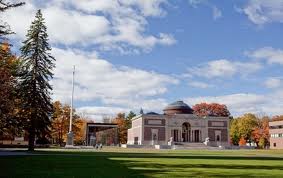
How could I have known on graduation day in 1973 that everything that unfolded over forty years was contained in that day, in me, as on a map tucked in my suit jacket, never consulted yet always with me.  As hard as I try to think of that day—it must have been warm, maybe hot, outside on the lawn spread in front of the art museum—I can’t remember many details.  I know my mother was there, my father wasn’t. He never explained the unspoken decision he made not to face my mother, whom he had recently divorced.  She wouldn’t have had him there, regardless of what I wanted. It was my graduation but her arrangement. I think my aunt and uncle Dolores and Albert were there, too.  After the ceremony we had an awkward lunch with Evelyn, her sister and parents.  Nothing could be expressed.  It was the end of the only happiness we ever would have.

images

But in sex, we were superbly ill suited.  Our parents objected, which was in part the point of the union.  A merger of conflict.  Each of us wanted to reject a past defined by parents and culture, one that had sown seeds of misery, misunderstanding, and abandonment, each in its own unhappy way.  Each of us had something the other wanted, or thought we wanted, to replace what we had and sought to leave behind. The tragedy of this longing was that our desire wasn’t for each other, but what we stood for.  Oh, we craved inescapable desire, but not in love.

Our relationship was difficult over the next few years.  I went to Ireland, Evelyn to New York.  We didn’t speak or write.  I returned and our passion again blinded the reality of an unsustainable future.

Forty years have passed since that day in June to which I’m traveling today.  My plane from San Francisco is 37,500 feet somewhere over Iowa; we have 1107 miles to go. I’ll land in Boston and go on to Maine tomorrow.  It’s a long trip, going back forty years.  There are very few registered from my class I’ m curious to see.   Evelyn will be there, another reason I should have stayed home.  At Sam’s wedding in December she neither spoke to me nor acknowledged my presence.  Another divorce playing it’s sorry song in a place I love against a backdrop of events that occurred forty years ago.

The intervening years exist as moments, possibilities for something good and true to emerge from the wrongness we lived: three sons, each brilliantly lit in immeasurable joy –something we achieved together, not to be discounted.  My life was lived in three places at once.  There was the beautiful life with my boys; my life in marriage, the best choice off a bad menu; and the quiet life I created within myself.  Two plus one never equaled three.

Wounds do heal; scars fade. It has taken a long time to understand that what happened over forty years were things that just happened, that’s all.  They hold no more meaning than that.

More years passed.  More stories written out of needs defined by loss.  Hopes found, only to disappear.  That’s the problem with hope.  It creates an expectation for a future that can’t ever be achieved because it wasn’t real in the first place.  When we so badly need something born of hope, the inevitable crash is devastating.

All of this lifted on the Arctic ice of Lapland.  I have everything I need—my sons, and our love, are all I need to live a fulfilled life.  I found freedom that Christmas Day 2012.  Freedom from hope.  Freedom to want things for myself born from desire, not from loss.  What I saw so clearly in that vast expanse of white was that it’s not a matter of a glass half full, half empty; there’s no glass at all.  There’s only now.

images-5

Maybe this trip to my 40th Bowdoin reunion is another kind of freedom, yet to be discovered.  I can’t predict what the next few days will hold.  I’m staying with a friend from that time forty years ago, a friend born from a faculty friendship, maintained and grown over all these years. I’m lucky to have made such friends.  I’m lucky we’re both still around to enjoy our friendship.  Unattended by our former mates and families, our friendship has deepened.  It’s easier to share now. The losses we have experienced create a backdrop to our sharing. We’re calmer, more at peace with ourselves.  I’m looking forward to the days ahead.

Thomas Wolfe wrote we never can go home again.  Of course we can’t, but there are things that never change. Hawthorne and Longfellow still graduated in the famous class of 1825. I graduated in the class of 1973. Maine Hall stands as it did when I was a freshman.  I watched David and Adam graduate on the same lawn, on similar sunny days.  It’s a choice to love what I had then, still carried within me, not as a millstone but as a beacon of light.  When I told Brenda that I had always wanted to live in a lighthouse, she said let’s do it!  So we’re staying in the Point Arena lighthouse on the Mendocino coast over the 4th of July.  Another beacon of light, shining on the possibility of a future that doesn’t yet exist, but free, totally free, of these past forty years.

II

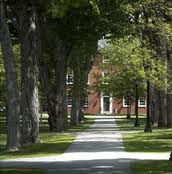
I’m again on a plane 36,000 feet above the ground, nosing into Nebraska, this time returning to San Francisco from the long weekend in Maine.  The reunion’s over: forty years becoming forty-one. The guys I had little interest seeing are now long lost buddies.  We had a terrific time.  Maybe it was the glorious summer weather, the blue sky over the green campus, the warm evenings.  Few college campuses can match Bowdoin’s New England perfection.  As sentimental as it sounds, I can barely look down the long pathway leading to Massachusetts Hall without tears welling up.  There are too many memories of those irreplaceable four years.

images-1

For his 50th reunion, Longfellow composed Morituri Salutamus: Poem for the Fiftieth Anniversary of the Class of 1825 in Bowdoin College. We who are about to die, salute you.  It was the cry of Roman gladiators in the arena to their emperor; it was Longfellow’s farewell to his beloved college.

O ye familiar scenes,—ye groves of pine,

That once were mine and are no longer mine,—

Thou river, widening through the meadows green

To the vast sea, so near and yet unseen,—

Ye halls, in whose seclusion and repose


Phantoms of fame, like exhalations, rose

And vanished,—we who are about to die,

Salute you; earth and air and sea and sky,

And the Imperial Sun that scatters down

His sovereign splendors upon grove and town.

Nothing marred the delight of the past four days. Not even Evelyn, who managed an unavoidable “Hello, Niland.”  Many times I wished I had remained more in touch with these classmates from forty years ago. The bond with Bowdoin we shared is the one that has most endured. Sixty from our class of two hundred twenty came back to Brunswick for the reunion.  Most I recognized immediately; a few I needed to read their nametags before greeting by name.  Some showed the passage of forty years more than others.  All of us have mellowed. We all enjoyed seeing one another.  Still, my best friends were missing: Stuart and Bill.

Staying with Cynthia possessed its own special place in the weekend.  I met Cynthia and John Howland my first semester freshman year when I took Chuck Huntington’s ornithology course.  John, a biochemistry professor at the college, would accompany the class on our weekly field trips up and down the Maine coast.  His department friend Sam Butcher would also come along, beginning yet another special friendship. On Sunday night, Cynthia, Sally and Sam Butcher and I had dinner together, forty-four years later.  I know we felt the loss of John, who passed three years ago. The most erudite of any of us, John had always entertained us with his wit, his broad knowledge of everything, his warmth, his often funny views on Bowdoin.  I miss John.  It remained unspoken at dinner that we all miss John.

Cynthia’s new house on Water Street in Brunswick sits on the bank of the Androscoggin River, just downstream from the hydroelectric falls and resulting churning water and across from the Bowdoin Mill in Topsham.  Eagles nest nearby, fishing up and down the river.  Gulls and cormorants sun themselves on the rocks.  In the mornings, a few fishermen were out casting for what we assumed to be striped bass.  Cynthia reported that on occasion a sturgeon could be seen jumping in the river.

The Bowdoin Mill on the Androscoggin River

Listening to the waterfall at night, the house dark and silent but for a ticking clock, was magical.  Given history, how lucky I am to be alive and able to return to these friends, to this place I love.

Another special faculty friend from my time is also gone: Doug McGee.  Another loss.  Doug and his second wife Phoebe were close to me when I could be close with no one. They were the first, and only, people I told about the awful events that occurred at home on Christmas my freshman year.  It took four years, not until I attended Doug’s great Literature as Philosophy class.  I told my story in the final paper I wrote, using lines from Little Giddings as my metaphor:

What we call the beginning is often the end
And to make and end is to make a beginning.
The end is where we start from.

We shall not cease from exploration
And the end of all our exploring
Will be to arrive where we started
And know the place for the first time.

That year, Doug, too, was experiencing his own rebirth.  We formed a bond that lasted until both Doug and Phoebe were gone.  It’s hard walking past their house on Maine Street, across from the campus, without feeling sad.

I’m glad I returned for the reunion.  I plan to stay closer in touch with my classmates.  I’ll never have friends like these again.  I never have, but have often failed to remember.  No more.

For age is opportunity no less

Than youth itself, though in another dress,

And as the evening twilight fades away

The sky is filled with stars, invisible by day.

images-3

Midwood

IMG_2151

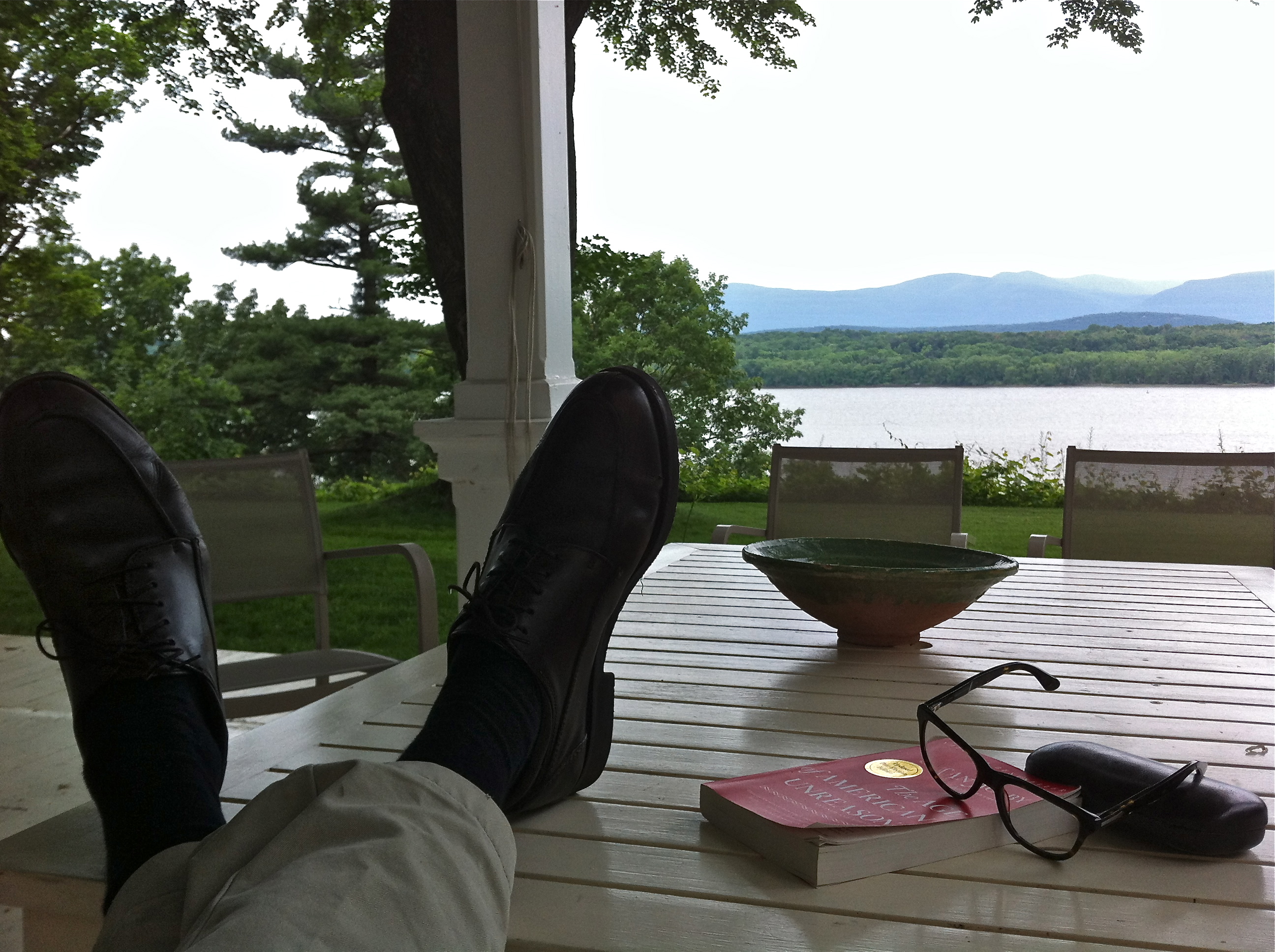
Midwood sits on a bluff above the Hudson River, just north of the border between Dutchess and Columbia Counties in New York.  The river, so much a part of Midwood’s history, flows downstream, wide and straight at this expanse. The rose-tinted house looks across to the Catskill Mountains, Round Top in the center of the skyline.  Woodstock lies somewhere over those hills. The distant view from the back porch is almost unique among the great Hudson River houses, being devoid of any buildings marring the serenity of the picture spread out against the sky.  At night a single green light blinks from the opposite shore.

IMG_2259

The privilege of participation in the life of Midwood is immeasurable. The warmth of family, hospitality, generosity and civility must be among the last remnants of a time when such qualities still exist and are valued. Whether it can last into future generations is in question.  Without doubt it will never be the same. One extraordinary woman maintains more than this house, this place where grace and comfort pervade every room, every vista, every path that leads to a view Constable might have painted. She maintains a tradition grounded in culture, conversation among old friends and new, books and art, liberal beliefs, children and grandchildren, morning expeditions along the river, lunches on the lawn, dinners in the dining room surrounded by luminous bookshelves.  The city is far away, both by miles and gentility. Yet Midwood remains a beacon, pointing toward something larger than ourselves.

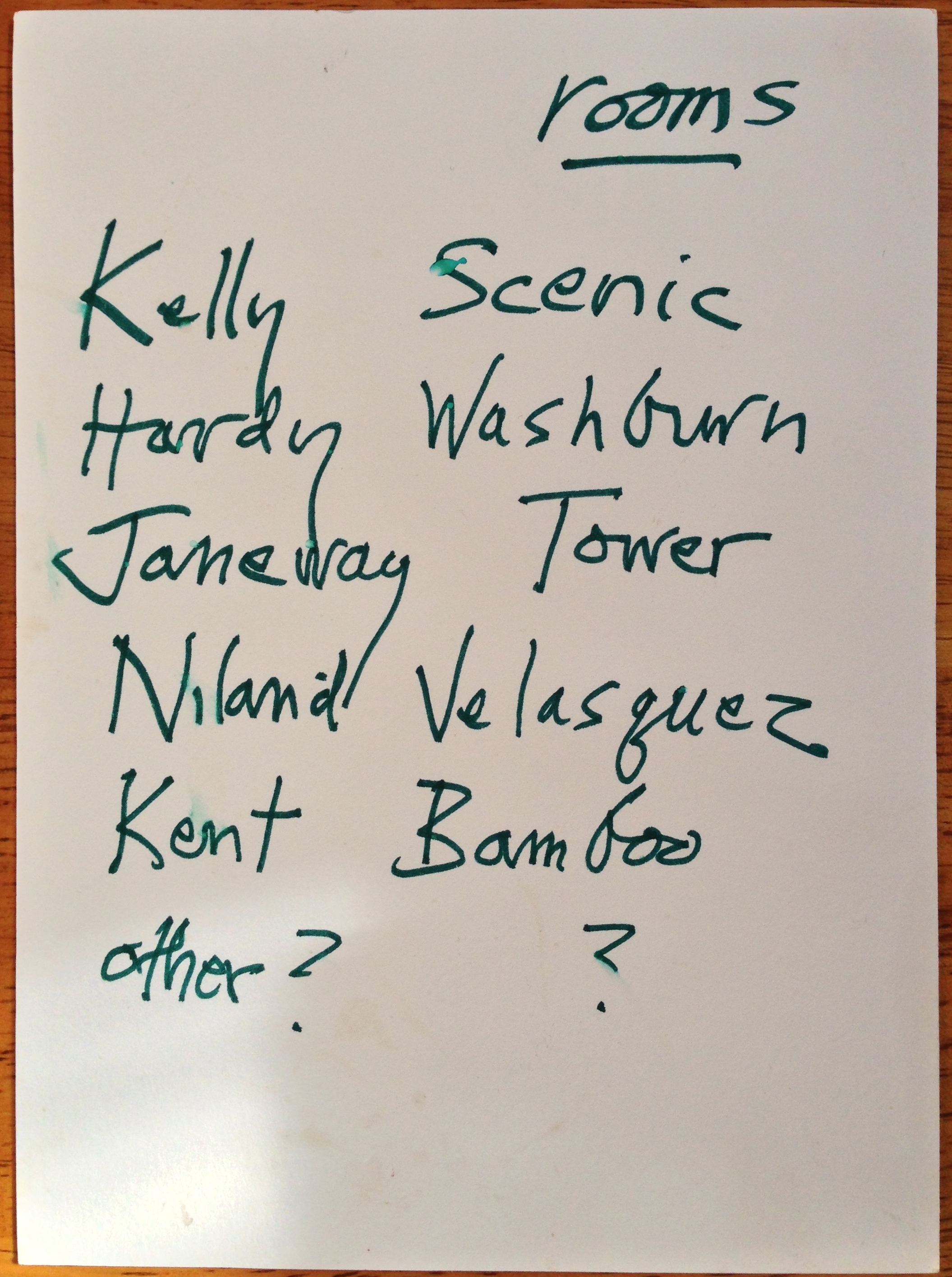
Where can we go from here?  Every time I leave Midwood I wonder if there will be a next time.  Will I sleep again in the upstairs silence of bedrooms named Velazquez, River View, Washburn?  I live far from the Hudson Valley, on the other side of the country.  The hills and farms and architecture of Columbia Country, so rich in the nation’s history, reside in memories of that house and the times spent under it’s great blanket of happiness.  Every time I’m there I feel like a fugitive landed in a more perfect place.

IMG_3251

Three hours south another world jars us back into reality.  Driving down the leafy Taconic Parkway it emerges in stages; countryside yields to Westchester suburbs, to the chaos of the Bronx along the highway, to the sudden skyline of towering Manhattan.  Depending upon the approach, the Hudson reappears on the Upper West Side, though the jumbled wharfs and apartment buildings of New Jersey on the opposite shore are as far from Midwood’s harmony as the moon.  The life of the great city slowly marks the passing of something more than a long weekend away.

manhattan-skyline

I’m lucky that six and a half hours in the air away from New York I can land in a city as beautiful as San Francisco, serene in its own toy-city isolation from the rest of America. No other city replicates or can even approach the astonishing liberal openness of these hills sliding into the Pacific Ocean.  I’ve heard that George W. Bush never set foot in the city during the eight years of his administration.  Barack Obama visits frequently.  In its own urban atmosphere, San Francisco might be a citified image of Midwood’s heritage and beauty.  The Bay is as historical and embracing as the Hudson River.  It’s an odd comparison. Snow never falls on San Francisco and the Bay never freezes over with ice.  Fog rarely covers Columbia County; lazy, hot mid-summer afternoons rarely occur in the City-by-the-Bay.

I’m returning this time from Midwood’s tranquility to greet another special warmth and joy: it’s called love. From the doorway of the South End Club walked a woman named Brenda. She walked into my life.  She lives in my future.

376144434_ca15a04c9f_m

Life has many surprises and many mysteries.  We never know where love comes from. Or where it goes. It breaks hearts…and creates unimaginable happiness.  To wrap our arms around love, and our beloved, is to experience something removed from all the drama, activity and potential misery of the world.

L1080126

Memories of Midwood, friends in New York, love in San Francisco, reside alongside many blessings. My boys give me infinite pleasure, as far and deep as the sea.  Sam is graduating from law school today.  His marriage in Finland last December to his lovely Saga was out of a fairy tale. It seems like yesterday his yellow hair was as bright as sunshine, glowing in the sunlight of Australian beaches.  David is a grown man, husband and father.  His life is busy, too busy, with all the responsibilities of family, teaching, more school. His enthusiasms–photography, headphones, gear, anything that can be researched and enjoyed–keep him in order and balance.  Adam is poised in that precious moment between student and the grown-up life of work, graduate school, maybe marriage. He’s working his first job in the neuro research lab at Nielsen. He and Rachel moved a week ago into their own, first-time, apartment in Oakland.  They’re thrilled.

Where can I go from here?  Large challenges remain.  Life passes.  My children grow.  Midwood resides in memory.  I hope to be there again.  I hope to walk in the late August tangle of asters and Queen Anne’s lace spread through the meadows, summer at its fullest, on the edge of autumn and the edge of time.

_DSC0079

The legacy of Midwood lives in what I can take from that graceful place and share in my own life.  It’s the only repayment I can give: to offer my own experience of a life well-lived, providing a safe haven from the everyday burdens we all experience, especially to those who can never experience that life on the banks of the Hudson River.  I can give this in my fellowship with other men, with my colleagues at work, with my children, with the woman I love.  We can never know what comes next.  We don’t need to know.  All we have to do is take what we have and create a new future that doesn’t exist today.

Thank you Midwood.

IMG_2154

So Long Facebook

Last week I deactivated my Facebook account as a personal protest against Mark Zuckerberg’s creation and support of Fwd.Us, an essentially conservative political lobbying group, ostensibly driving immigration reform.  The group advertises policies and positions advocated by the likes of Marco Rubio and Lindsey Graham.  Many serious liberal organizations, from the Sierra Club to MoveOn, have condemned the group and ask that companies in disagreement with Zuckerberg’s political movement pull their advertising from Facebook.  Several high profile backers have also withdrawn their support, including Elon Musk, founder of Tesla and SpaceX  and David Sacks, the CEO of Yammer.

One might argue that Zuckerberg’s private initiatives have nothing to do with Facebook, the social platform he created, runs, and from which he has become one of the richest young men in the world.  I argue that they are two sides of the same coin.  Facebook has long been criticized for its purposeful erosion of privacy. In my view, the site has shifted from a place where people (“friends”) connect and share their lives, to a pure marketing play designed to better match their users to advertisers.  Social goals have become subservient to marketing goals.

One practice that supports this argument is the new tactic of suggesting “Likes” in users’ news stream. Of course, when you “like” (and perhaps when you don’t “like”) the new sponsored page, you are adding to your demographic profile for better advertising targeting.  Obviously this serves the needs of advertisers at little expense to users beyond annoyance.  But I am annoyed—even being in the business of finding appropriate audiences for advertising campaigns.  Facebook can only exist because it derives revenue from advertisers (same for Google.)  I get this and yet have regarded Facebook as a private domain.  Interrupting my private space with marketing is an invasion I don’t accept.  Maybe Facebook should implement an opt-in series of questions, like OKCupid, designed to define users more precisely.  People could decide whether to answer questions or not, thereby setting their own limits with transparency on all sides.

Part of me thinks I’m cutting off my nose to spite my face by deactivating Facebook.  I like posting on Facebook.  I like sharing photos of my kids and places I’ve been. I like seeing my friends’ posts.  I like connecting to friends around the world whom I very rarely see.

About a year ago I read Robin Dunbar’s book How Many Friends Does a Person Need?  The answer is 150, based on anthropological research into the cognitive limit to the number of people with whom one can maintain stable social relationships. It’s now known as Dunbar’s Number.

images-4

Robin Dunbar wasn’t thinking about Facebook when he developed his thesis.  But it led me to wonder if having more than 800 Facebook friends was realistic or even consistent with my use of the network.  I decided it was not, so pared down my number of friends to 160—as close as I could get to the 150 goal.  The first 500 were easy.  These were not friends by any traditional definition: people I may have met at a conference, former business associates, friends of friends.  The next 100 were more problematic because these were people I did know, but in some defined and limited context which wasn’t of lasting interest.  The final 40 were hard choices.  My criteria, at this stage, were to cut anyone who had never commented on one of my posts, or didn’t share regularly themselves.

It’s these 160 remaining friends whom I’m going to miss by not being on Facebook.  It dawned on me however that these friends were my friends long before Facebook arrived, and will remain so whether I’m on the site or not.  It even pushes me to go back to more personal forms of communication.  I’m not interested in the friends and families of my friends, unless there’s an opportunity for an old-fashioned introduction along the lines of, “Come over on Saturday and meet my friend Sue.  I think you’ll ready hit it off.”

Many of my 160 Facebook friends are people I see all the time.  I enjoy seeing the photos they post—a visual scrapbook of their everyday lives. When we get together they don’t pull out an album and show the latest photos taken at the Bay to Breakers race, though they might have posted one on Facebook.  Still, I’ll see these friends and hear all about their lives first hand.

I worry about staying connected with my Facebook friends whom I don’t see all the time—or ever.  They’re in Germany, Australia, the Netherlands, France, Japan, Austria, Canada, Chile, England; or other parts of the United States.  The onus will be on me to remain in touch.  It goes back to what makes a friend a true friend, someone with whom we share real parts of our lives, not just ephemeral details that come and go.

images-2

What I want my friends on Facebook to know is that they are still my friends—real friends, not only social network friends.  In many ways, social media has both connected us to people and disconnected us at the same time.  We have become disconnected from real human interaction and caring.  I know someone who tallies the number of birthday wishes she gets on Facebook as evidence of something—even when Facebook provides a notice of all your friends’ birthdays!  Even if you forgot, or never had an intention of calling or even sending a card, the reminder makes it possible to spend 25 seconds and send birthday greetings.  Is that affection?  Sentiment need not be a public comment on someone’s Facebook wall.

I think back to how I have used Facebook to communicate my own emotions.  I regret many of these posts.  What drove me to unwrap often painful feelings in front of hundreds of other people, most of whom were not real friends?  Those few who were my friends understood what I was writing and asked me to stop, mostly to spare myself.  In a miserable way, each post had an intended target audience in mind.  Facebook wasn’t the platform to carry those messages.

It’s a good thing I like letters and cards sent the old-fashioned way.  I love the feel of different papers, the touch of letterpress printing, the way an envelope is lined.  I have hundreds of postcards from around the world.  I have collected hotel stationery from every continent.  I have engraved stationery, hand printed stationery, stationery I illustrate myself.  If I wrote every day I would end my life with reams of unused stationery.

So, my friends: please don’t think I’ve reverted to Luddite childishness.  You’ll still receive my emails, maybe my tweets.  And occasional written correspondence.

So long Facebook. I wish you well.

images

Ads of Our Times

“ Historians and archeologists will one day discover that the ads of our times are the richest and most faithful daily reflections that any society ever made of its entire range of activities.”  Marshall McLuhan

images-3

If McLuhan is correct—and I believe that he is—how dismayed he would be at the debased and irrelevant advertising we see today.  As a reflection of our society, he would say we have the advertising we deserve, advertising that does, in fact, reflect the shoddy moral attitudes of our times.  It’s a sad assessment.

There was a time in my own career when advertising aspired to be more than simply the engine driving sales for products or services.  Of course that’s what the majority of clients want.  Creative agencies have had other goals: to create advertising that becomes an iconic reflection of a moment in time, a page in the history of ideas, a symbol so powerful that it becomes inseparable from the brand it advertises.  There are ads that resonate in our memories long after they crease to exist in the media.  “Think Small,” “We Try Harder,” “Think Different” are slogans that still link immediately to the brands they once supported.

images

I don’t own a television.  When I travel I channel surf from one abomination to the next.  In one evening last week I saw three different commercials that either directly referred to, or dramatized, defecation.  I realize I must sound like some out-of-touch curmudgeon, but honestly, toilet humor?

I work with two of the best creative directors in the industry.  Both are friends.  Paul is the only copywriter to have won AdWeek’s Writer of the Year Award twice.  Steve Jobs once said that our art director Marcus was one of the most elegant art directors in the business.  These are brilliantly talented men.  Nonetheless, we have shared a client that consistently takes the best of their work and turns it into the worst.  While minor in the scheme of things, one classic example was when this client directed Paul to find a superlative adjective to modify the noun “unique.” When we pointed out that “unique” doesn’t take an adjective,  they nevertheless insisted.  So Paul suggested “utterly unique,” only slightly less ungrammatical. The response back was, “Utterly.  That’s an odd word.  We’ve never used it before.  It might stand out.”
Given the drift towards mediocrity and worse, is it any wonder that traditional advertising is losing its influence year by year?  More creative and memorable advertising is found on YouTube, websites, in social media.  It’s shared on Facebook.  Dollar Shave Club has successfully disrupted the razor blade category with its price-cutting proposition communicated by one of the best online video ads out there.  No traditional advertising launched the brand.

images-1

Still, the decline in television advertising is a double-edged sword.  Advertising pays for programming.  As ad revenues decline, so does the quality of network content.  In depth news reporting and educational programming  are nearly things of the past,  freely available on a regular basis solely on PBS.  For families who cannot afford cable, PBS is their only option.  (If Republicans had their way, there would no government funding for public radio or television. Mitt Romney joked–on PBS–“I like Big Bird,” but was more than happy to deny its access to millions of households.)  Network entertainment programming is as bad as the advertising that supports it. “Desperate Housewives…” of whatever city?  The Kardashians?  “My Shopping Addiction”?  I can imagine the nightmares children must have from watching most episodes of “Law & Order: Special Victims Unit.” Even porn may be less damaging than repeated images of mangled, blood splattered, acid burned, broken women.  Reality doesn’t always have to be shown on TV.

There’s no turning back the clock.  We have the advertising our society deserves and demands.  We have the programming most of the country wants to watch.  I can choose not to watch. I can contribute to NPR. I can subscribe to the daily paper edition of The New York Times.  I can tell myself I’m occupying the moral high-ground.  Still, advertising is all around me, around everyone. It’s part of pop culture. We can neither avoid nor escape it.

We could choose never to buy the products supported by offensive advertising.  It’s an act of will worth considering.

images-2

Sand Dollars

urb-0411-1

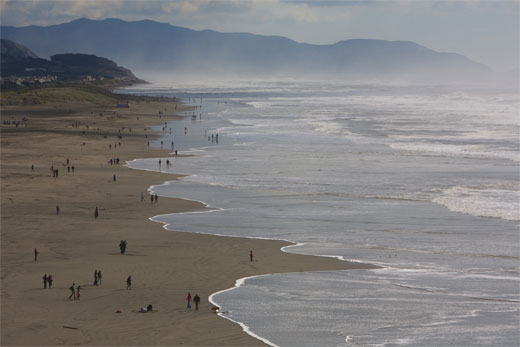
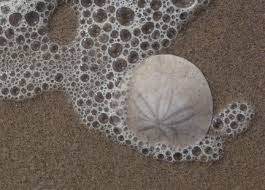
We walked hand in hand finding sand dollars on the beach.  The sun’s last flames of pink and orange stretched just above the gray Pacific’s horizon.  A few surfers still tried to catch the receding waves.  Early springtime melted into early evening and early affections, as gentle as the soft white spume left on the wet sand: Ocean Beach in late March marking a time to begin, to feel the heart’s beat again.
imgres-1

These perfect sand dollars we find are talismans, protecting us from harm for this moment, here on Ocean Beach.  We’re creating the possibility of a future that doesn’t yet exist. Not yet.

imgres-2

Here we are on the Western edge of the country, facing the sunsets.  I grew up facing sunrises.  I once had a summer job as a night watchman at a country club in Sewickley Heights where we lived.  The clubhouse was on a hill and looked out over the golf course directly eastward.  I would sit outside before dawn and watch the first pink glow appear on the horizon.  The sun would pop up and the magic disappeared.  Time to go home.

images

Bowdoin College’s symbol is the Sun.  It’s the first college in the country to have the sun shine on it every morning. For nearly two hundred years the school’s alma mater began with the delicious double pun, “Rise sons of Bowdoin…”  With the arrival of women, the line was changed to “Raise songs to Bowdoin…”  A generation of graduates mourned.

images

These are simple thoughts, warm thoughts, like sunshine.  Walking on the beach in the last rays of sunshine is peace; contentment; happiness–an end in itself, without an outcome, just being together now, in a moment of grace.  There isn’t any other.  This is what it means to be alive.

images-1

The Future That Doesn’t Exist

In a future that isn’t past derived, where does memory fit in?  The past weighs us down, thwarts progress, and embeds stories that cause us to behave the way we do.  Events long in our childhood change the way we see the world forever.  And yet can the past really be banished?  Does memory count for nothing?

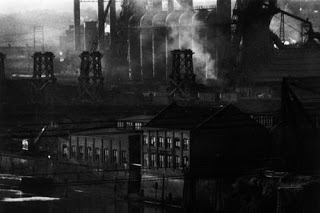
I grew up in Pittsburgh, where my father was an executive in the steel industry.   Steel was still the vital financial backbone of the city when I was a child.  The soot and smoke hadn’t yet cleared to make way for unemployment and a remarkably transformed economy. The descendants of  Eastern European immigrants who worked in the mills lived their lives far from the leafy hills of the exclusive distant suburbs.  I remember being taken to the big Jones & Laughlin mill on the South Side of Pittsburgh, along the Monongahela River, to see the giant cauldrons of molten steel pour their liquid fire into moulds for girders. I imagined this was what a spewing volcano looked like.

smith

My father is descended from a long line of Pennsylvania coal industry people, going back to the beginnings of the State.  There were land grants in the old Rimersberg Courthouse in Clarion County signed by William Penn. (My former wife used to ask, “well, where’s that land today?”)  Memories of this industrial childhood formed my worldview  for decades.  Against my father’s wishes, I never wanted to be part of that industrial legacy.  I associated steel with everything my father did: he shot skeet and pheasants, hunted big game, fished big fish.  Having failed at football I became a swimmer to his distaste.  I wanted to play the violin and he said no, I had to play the clarinet–just like Benny Goodman!  He said the violin was a sissy instrument, not for boys.  Fearing I might be one of those sissies he became the Scoutmaster and I became an Eagle Scout.  Because I read compulsively I knew there was another world beyond the smokestacks and the Duquesne Club.  My father wanted me to go to Penn and become a lawyer. Instead I went to Bowdoin and became an English major.  I loved that Hawthorne and Longfellow had graduated together in the famous class of 1825.

images

Can I excise these memories from my brain?  Cut them out and toss them into a past that no longer exists, to create a future that doesn’t yet exist?

“But the fact is that writing is the only way in which I am able to cope with the memories which overwhelm me so frequently and so unexpectedly. If they remained locked away, they would become heavier and heavier as time went on, so that in the end I would succumb under their mounting weight. Memories lie slumbering within us for months and years, quietly proliferating, until they are woken by some trifle and in some strange way blind us to life. How often this has caused me to feel that my memories, and the labours expended in writing them down are all part of the same humiliating and, at bottom, contemptible business! And yet, what would we be without memory? We would not be capable of ordering even the simplest thoughts, the most sensitive heart would lose the ability to show affection, our existence would be a mere never-ending chain of meaningless moments, and there would not be the faintest trace of a past. How wretched this life of ours is!—so full of false conceits, so futile, that it is little more than the shadow of the chimeras loosed by memory. My sense of estrangement is becoming more and more dreadful.”

W.G. Sebald,  The Rings of Saturn.

Oliver Sacks in his new book Hallucinations writes about “false” memories–vivid memories of events and experiences that never happened, or happened to someone else.  Maybe we assimilated something we read, or were told, into our own memory bank and it became as real as if it had actually happened to us. “We, as human beings, are landed with memory systems that have fallibilities, frailties, and imperfections–but also great flexibility and creativity.  Confusion over sources or indifference to them can be a paradoxical strength: if we could tag the sources of all our knowledge, we would be overwhelmed with often irrelevant information.”

My own first memory must have been when I was  three or four years old. It was a summer day and I was mowing our lawn with a tiny toy lawnmower.  I remember exactly where I was on the lawn and that I was wearing a bright green polo shirt and white shorts.  I was happy.  Why such a completely unimportant and ordinary situation should be my first memory is a mystery.  It’s so banal  I assume it’s real.  Later, from the same time, I remember my mother carrying me to a neighbor’s during an electrical storm.  I know this came after mowing the lawn. Neither seem to have influenced future behavior, although I have always liked lawn mowing and enjoy thunder and lightning.

Other later memories may be concoctions of real events and imagined responses.  When I was sixteen, and already a champion swimmer, my father drove me to a swimming meet in Cleveland. I was to swim one event and was expected to win. Instead I came in second, by less than half a second.  The boy who won set the National Record for the event. My father met me at the locker room and told me he hadn’t driven me here for me to come in second. He didn’t talk to me during the entire ride back to Pittsburgh.  I’m sure he made that remark, but could he possibly have been so callous as not to speak to me?  Or is this a story I made up–with full legitimacy in my mind–adding to my inventory of injustices at his hand that I’ve carried, among so many more, to build the case he never loved me?

images-1

Over the years, these stories filled more volumes that the works of Thackeray. All this perceived pain came to an end last Saturday.  Encouraged to take the initial step towards establishing an authentic relationship, I called my Dad and talked to him for the first time in thirty-five years about how all of these experiences came to haunt me and determine the future of how badly we related to one another. The call was easy, the conversation difficult and emotional. We both cried.  Memory had served neither of us well.

Creating a future that doesn’t exist demands leaving the past in the past.  A past derived future only creates more of the past. There can’t be a future.  All we have is this moment right now, and the next one, and the next one.  Once when my boys were small we were all sitting at our dining table when David, aged around nine, said he would do something “later.”  Adam, still in his high-chair, looked up and said, “Later means never.”  When a three-year old understands this, why can’t most adults?  When do we lose this intuitive understanding that now is all the time we have?

Time to grab the day and make the future happen.

images-2

The Promise of Happiness


Stendhal wrote, “ Beauty is the promise of happiness.”  The promise of happiness…

Don’t we all want the promise of happiness?  Stendhal is talking about love and the beauty of women. There’s irony in his definition: love is but a promise.  A beautiful woman is but a promise.  Not happiness to be achieved, but promised.  It’s the carrot always just ahead of us.

url

I think everyone has a symbol of their promise of happiness.  It might be a beautiful woman, or handsome man.  It might be a place, a time, a job.  It’s in the future of our lives.  It’s what we want, what we hope for.  I wonder if it’s always out of reach, always a promise?

What’s mine?  I was asked that question once, not so long ago. It was the only time anyone ever asked me what did I want in my life, what would make me happy.  I had a ready answer, one that just entered my head at that very moment.  I hadn’t thought about this answer before.  I couldn’t have. It came from deep within my subconscious, the yearning for something I never had.  It was my promise of happiness.   I wanted the asker to be the answer.  On that day I thought what I asked for was possible.  It wasn’t. It never could be.

imgres


I wouldn’t answer the question in the same way today, regardless who asked it.   Experience since then has taught me lessons I hadn’t expected.  Life lessons. The epiphany I experienced on the ice in Lapland erased that earlier promise of happiness.  It just lifted away, leaving me so much lighter and freer.  My heart beats in a different way today. I’m clearer about where I am in the world and what I need—and want– in my life.  I don’t need anything more than I have.  I don’t want anything more. I’ve wondered, though, that if encased within this insight there’s not some resignation or regret.  Did I give up on ever achieving the promise of happiness I once sought?  I don’t know the answer. It’s very hard to understand one’s own heart.  All I know is that I’m no longer burdened with seeking that promise of happiness.  And that’s a relief.

This is part of a big shift I feel all around me. I don’t think I’m doing anything differently, but outside the world is shifting and I’m shifting with it. It’s all good—the creation of a future that doesn’t exist today; happiness that might not be a promise, but the thing itself.

I’m returning home to San Francisco on Saturday, having spent five weeks in New York.  It’s been a long time away.  Work has been the reason; family, many friends, culture, museums, food, restaurants, books, music, Shakespeare, grace and beauty on the Hudson, Science Night at the Bank Street School, The Alice Prize, Boston and Minneapolis, have been the benefits.  The weeks have been rich with life. Everything connects.

imgres-1

I’ve realized how small things can fill holes I used to see as unable to be ever filled.  Last Sunday I worked all day in our office, pulling together the final pieces of a business pitch to retain our agency’s largest client.  Despite having wonderful creative ideas and campaigns, incumbent agencies are rarely successful. [We were successful.]   I left the office, heading back to my hotel room feeling isolated and, for the first time on the trip, lonely. But then I stopped halfway to the subway and said to myself, no!  I can fix this.

I walked up Broadway to Astor Place and over to East 9th Street.  Sunday was the first evening of Daylight Savings Time.  At 8:00pm the sky was still silver and clear.  The cold March night air had the first hints of Spring.  I went into St. Marks Bookstore, browsed for nearly an hour, bought a magazine to read at dinner, and walked a little further down the street to Soba-ya, a favorite restaurant that never fails to delight me with its food, its traditional Japanese style and manner, and the happy memories I have of all the times I’ve been there before.  When Sam was a junior at New York University, I was taking two semesters of watercolor painting classes at Cooper Union, only two blocks from Sam’s dorm.  Both are close to Soba-ya.  Sam and I would meet there every week for dinner.  A few times Adam came to the city and joined us.  On one especially happy occasion, a work colleague, and friend, from Vienna came with the three of us.  We had the best time, despite the difference in all our ages.  Sam and Alex even went out to a club afterwards.  Remembering that evening makes me smile, and I remember it every time I step into Soba-ya.

imgres-2

Sunday evening was no exception.  Even though I was by myself, being in the crowded restaurant, having my favorite foods, watching the skillful Japanese woman behind the bar prepare the drinks and dishes, any thought of loneliness disappeared.  I walked back to Herald Square with a renewed outlook; happy to be alive, happy to have had the life I’ve lived.  Simple, renewable, pleasures that endure long after some bigger ones fade.

The promise of happiness.

No Explanation Needed


If you can’t understand it without an explanation, you can’t understand it with an explanation.  1Q84

My son David tells me that math explains everything. He’s a math and science teacher and knows much more than I do about the elegance of mathematics.  Without equations, though, understanding our own universe is often beyond words and sentences.  Explanations don’t come wrapped in gift boxes marked Life, Love, Sickness, Joy, Death.

In 1Q84 a remote and near silent father responds with the statement quoted above to his son’s questions about whether his mother was in love with another man, and whether that other man was in fact his real father.  If you can’t understand it without an explanation, you can’t understand it with an explanation.

I have many questions I’d like to ask my own father, but I don’t.  Maybe I don’t want to know the answers. “Why did you walk out of the house when my mother shot herself?  I was only nineteen.  Why did you leave me with her?”  “Why did you never tell me why you left our lives?”  “Why didn’t you come to my wedding?  My college graduation?”  “Why do you love your step-grand-children more than my sons?”

If you can’t understand it without an explanation, you can’t understand it with an explanation

My father’s an old man now.  He’s eighty-six and lives in Alabama.  He’s in good health, yet I know he’s slowing down.  What would I gain by asking him these questions?  Maybe he’s forgotten the answers.  Maybe he never knew them.  What would I learn with an explanation that I don’t already know without one?

But…there’s much that’s happy and joyful that we know without an explanation!  Music, a sunset over the Pacific, the very first leaves to fall in late August in New England, a star filled sky.  Who can listen to Die Forelle and not be happy? We all have our own experience of happiness.

I tend to associate my own moments of intense inner joy with quiet times, often when by myself.  I remember a walk I used to take when I was in college in Maine.  I called it The Transcendental Trek, and it went through the woods from Small Point to the far southern edge of Popham Beach.  I’ve walked the route in all four seasons.  Cresting the top of the final hill, with the Atlantic spread out in the distance, never failed to make my heart beat just a little faster—the ocean blue in the summer, steel grey in the winter, always with white caps breaking on to the beach.

imgres-3

Another time in Spain I rode the funicular to the summit of Montserrat near Barcelona and hiked well out across the jagged peaks.  No one else was there.  Freedom was what I saw.  No explanation required. (Another time I unwisely took my family there, Sam still in a stroller, and the trip was a disaster.)

imgres

Experiencing the lives of my boys, their births, their first small steps, their delights and laughter and so much more, have given me an immeasurably rich storehouse of happiness.  I can see the sunshine sparkle on Sam’s golden childhood hair, David standing for a saxophone solo in his high school jazz band, Adam playing the piano in our darkened living room when I felt dejected and low myself.  He brought light into that darkness.  I wonder if he knows that, since there’s never been an explanation.

I’ve already described elsewhere the transformative experience I had snowshoeing across the Arctic fells in Lapland.  I can’t explain what happened; it just did.

Falling in love has no explanation, while falling out of love might.  I hope it does, because mystery and misery are a bad combination.

vandyck13

A few weeks ago I spent a Saturday afternoon at the Frick Museum in New York.  It was a cold day in January.  Not many tourists were out and about.  Can a painting elicit a moment of happiness?  Painting for painting, the Frick has what’s commonly regarded as the finest collection of Old Master paintings anywhere.  Hanging in those robber baron rooms, perfectly designed for the collection, each painting speaks directly to the viewer.  They spoke to me. Looking at my favorites—the Van Dyke portraits of the Snyders, husband and wife, the pair of Holbeins, the Vermeers and Titians—I marveled at their beauty and insight into the human condition.  The men and women in these portraits were once flesh and blood, happy or not (Moore and Cromwell not too happy.) I sensed their reality and I felt good to be alive, being there hundreds of years later.

Fellowship brings me special, deep-seated, peaceful joy and serenity.  Camping on the Russian River with a dozen other guys joined in common bonds of experience and friendship; sharing stories of pain and lives regained; no judgments, just a great blanket of security and hope; true friends.  We reach out and touch and feel a different kind of pulse.

photo

Within the past two weeks something special and completely unexpected happened.  A friend from many years ago, someone I haven’t spoken to, or even thought much about, for at least eighteen years, emailed me, having found me thanks to Google.  He had come across a letter I had written him when his wife had died.  He thought I might want to read it and asked if he could mail it back to me.  When it arrived I saw that it was postmarked January 20, 1993—my birthday exactly twenty years ago.  And before I had opened the envelope, a quote from Kierkegaard surfaced from somewhere deep in my subconscious: Life can only be understood backwards; but must be lived forwards.  In my letter to my friend, I had paraphrased the exact same quotation.

The universe was speaking, and there was no explanation.  Many of these moments of grace have been happening to me recently.  I’d like to know why, but have to understand with no explanation, because there is no explanation.  In my fellowship we talk about having a spiritual awaking.  I’ve not believed in this; I’m not at all sure that I do now. What I think is that this kind of awakening happens from within.  It doesn’t descend from the sky, like a bolt from Heaven.  When we become ready for what the universe has to give us, we don’t need an explanation.

On rare occasions—very rare in my life—being alone with someone you love is happiness out of time and reality.  These are moments of light, shining light, like fireflies on a summer night.  They glow for an instant and then disappear into the darkness.  Sometimes they twinkle and glow again.  We don’t ask an explanation of fireflies.

output_hd

Place can make a difference.  It my case it was the difference that allowed the lights to burn brightly, if only for a moment.  Tassajara.  Amsterdam in winter.  On old streets in Tokyo.  They still glow in my memory, a foundation for another journey taken with the confidence of possibility.  Yes I did and yes I can!

No explanation needed.

imgres-1

The Lament of Books

If we lament our book-swamped age, it is because we sense that it is not by reading more, but by deepening and refreshing our understanding of a few volumes that we best develop our intelligence and our sensitivity.  We feel guilty for all that we have not yet read, but overlook how much better read we already are than Augustine or Dante, thereby ignoring that our problem lies squarely with our manner of absorption rather than with the extent of our consumption.

Alain de Botton.  Religion for Atheists.

books16_shiny-books

How often do we reread books, especially “great” books that impart, if we’re open to receiving them, moral lessons or insights into how to live a more soul enriched life?  Alain de Botton points out that a wealthy English family in 1250 would probably have had only three books: a Bible, a collection of prayers and a compendium of the lives of the saints.  And that they would have read their few books every day, a ritual of belief and comfort.

I’ve read John Kennedy Toole’s The Confederacy of Dunces eleven times, also for comfort, although I suspect not with the same intent as the Book of Common Prayer.  For me it’s a balm for anxiety.  It makes me laugh—laugh out loud reading in bed at night.  I love Ignatius J. Reilly and his outraged affront at the modern world.

In the shadow under the green visor of the cap Ignatius J. Reilly’s supercilious blue and yellow eyes looked down upon the other people waiting under the clock at the D. H. Holmes department store, studying the crowd of people for signs of bad taste in dress.  Several of the outfits, Ignatius noticed, were new enough and expensive enough to be properly considered offences against taste and decency.  Possession of anything new or expensive only reflected a person’s lack of theology and geometry; it could even cast doubts upon one’s soul.

I love that my friend John Leonard introduced me to his own favorite book, and gave me his much-read, well-worn copy, a paperback rebound in half-calf by an Italian bookbinder.  John wrote, “My favorite book, once a tattered paperback lovingly bound in Milan, now battered anew.” It’s a treasure.  Perhaps it does have much in common with that twelfth century book of prayers.

My son David has reread The Lord of the Rings as many times.  Most Tolkien fans have.  Frodo’s journey is an endlessly entertaining, and emotionally moving, parable of hardship endured, questioned, and overcome.  When David was a child I could always tell when he was anxious and stressed because he would be rereading his collection of David Eddings.  (I thought it was a step up in rigor when he moved on to Tolkien, not understanding the relief the Eddings provided.)

There are other books to which I return for reasons often apparent, sometimes not.  Since high school I’ve read the Iliad over a hundred times.  I’ve read The Magic Mountain five times; Women in Love, three.  There are poems that I’ve read, for years, more times than I can count: Sunday Morning; Among School Children; Voyages; For the Union Dead.   Reading aloud Kenneth Rexroth’s beautiful poem When We With Sappho to a woman I loved forged its meaning into my heart forever.  Words can do this.

books31_two-open-books_00

At Bowdoin I took a course called Literature as Philosophy, taught by the incomparable C. Douglas McGee. These books we read back in the ‘70’s have remained with me ever since, all reread several times at different junctures in my life, times when I needed them.  Thomas Mann’s Dr. Faustus.  George Santayana’s The Last Puritan.  Moby Dick. The Brothers Karamazov.  Henry James’s Portrait of a Lady.

I think we reread books for specific reasons.  Some comfort us, not only with their plots and characters but with their warm familiarity.  (Movies, too.  I’ve watched the Merchant-Ivory film adaptation of A Room With a View at least a dozen times because I like it; it makes it happy without the slightest uplifting message.  I’ve watched Ken Russell’s over-the-top adaptation of Women in Love as many times because the characters are so wonderfully acted. For years I wished I had been born Alan Bates as he played Rupert Birkin–who bore no comparison to the character in the novel. .  And only a few months ago I watched Gosford Park on five consecutive nights.)

I’ve read Brideshead Revisited several times to wallow in lost love, not to assuage it.  I read W. G. Sebald over and over because he only wrote four novels before he was killed in a car crash and their melancholy theme of memory haunts me.  He makes me think about my own memories and mortality.

“And yet, what would we be without memory?  We would not be capable of ordering even the simplest thoughts, the most sensitive heart would lose the ability to show affection, our existence would be a mere never-ending chain of meaningless moments, and there would not be the faintest trace of a past.”  The Rings of Saturn

Patrick Leigh Fermor’s A Time of Gifts sits at my bedside, as does M.F.K. Fisher’s Journals.  I understood immediately why Anthony Lane wrote in his New Yorker profile of P. G. Wodehouse that he reads “Uncle Fred Flits By” once a fortnight.  Some writing renews itself every time it’s read.

books01_dictionary

There are also books that are so well written, well constructed, with wonderful characters and high emotion, that I go back to them over and over for the sheer joy of reading: Wuthering Heights.  The Quiet American. The Turn of the Screw.  Billy Budd. Antony and Cleopatra. The Importance of Being Earnest.  Tom Jones. Howards End.

Rereading books, and the hope of rereading books, is my excuse for maintaining a “personal library.”  It’s obvious to me that this is a conceit, a vain imitation of some 19th century English gentleman.  I’ve used these physical books as a metaphor for me—I am what I’ve read and there I am on all those bookshelves!   The fallacy is that while I am, in part, a thinking adult as a result of all that I’ve read and absorbed, it’s not the physical evidence that counts.

books13_tall-bookcase

I’ll never convert my books to a digital library.  Nevertheless, I don’t need two-thirds of the books I own (and we won’t even speak of the ninety-seven cartons of books languishing in a Westchester County storage facility.)  A critical, spiritually necessary, task for 2013 is to pare down my collection to only those books I treasure for their content, their beauty, their personal significance.  I already know which books they are.  I won’t sell my complete collection of H. V. Morton’s or my prized thirteen volume early edition–beautifully bound–of Sir James Frazer’s The Golden Bough.  I have, in fact, read all of it. I watched the row of green bindings sit unbought on the shelves of Bell’s Books in Palo Alto for more than a year, hoping against hope no one would buy it, as I saved up to purchase it myself.

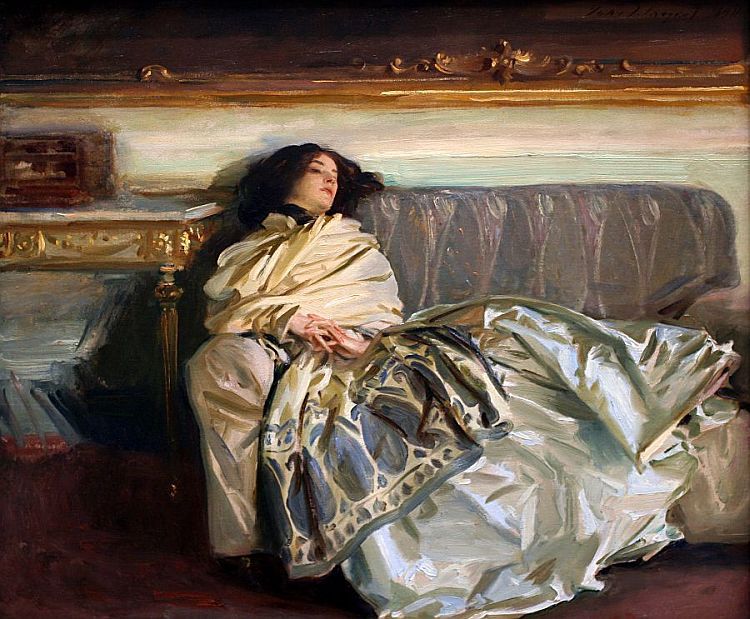
I’ll keep my collection of books about and published by Bowdoin College, and hope that David or Adam will someday want them.  I’ll keep all the Winslow Homer and John Singer Sargent art books because I think they inspire my watercolor painting (vanities of vanities.)

I have a plan for dispersing all of these books. I’ll sell all the art books at Russian Hill Books—this being a sneaky plan because I get 25% more in trade than in cash, so I have my eye on two rare and expensive books that I hope to get in exchange.

(I previously sold more than fifty cookbooks to Russian Hill. My test was if I hadn’t opened the book in five years it had to go.)  The owner of Russian Hill Books, Carol Spencer, is one of my neighborhood saints.  Her store is like a station of the cross: I can’t walk by without reverence and awe.  It’s an addiction.  I really need Book Buyers Anonymous!

Other books will go to Friends of the San Francisco Library.  Some will be, with luck, sold on eBay.  I hope to give my collection of Jargon Society books to Bowdoin College.  Some will be given to friends and to my sons.  I think the Pleasantville Library will benefit from the books in storage.

After all of this book reduction is accomplished, my spirit will be free, the chi will flow unencumbered through my apartment, artifice will be banished—and I’ll for sure have to take to my bed with The Confederacy of Dunces and reread it for the 12th time.  I’ll need my friend Ignatius more than ever.

books23_damaged-water

All photographs by my Bowdoin friend Abelardo Morrell.