Back East

Again, Joan Didion:

Part of it is simply what looks right to the eye, sounds right to the ear. I am at home in the West. The hills of the coastal ranges look “right” to me, the particular flat expanse of the Central Valley comforts my eye. The place names have the ring of real places to me. I can pronounce the names of the rivers, and recognize the common trees and snakes. I am easy here in a way that I am not easy in other places.

I’m thinking about this after spending ten days “Back East,” first in the Hudson Valley, then Boston and Providence, ending in New York City. We never speak of “Back West.” It’s “Out West,” someplace we go to, from Back East– where we came from. This is the popular narrative. So few people I know in California actually were born there. They all went Out West—it’s a destiny foretold in a thousand stories and films.

Back East, I’m easy in ways I’m not easy Out West. The beauty of the golden Sonoma hills, with their copses of live oak dotting the landscape, is someone else’s comfort. They look right to someone else’s eye. To my eyes they’re foreign, exotic—scenes an early California landscape painter might capture.

Having never expected to live in California, having never even entertained the possibility for most of my life, I’m astonished– and delighted– that I live here now. I always imagined I would eventually return to Maine. Or that work would take me again outside the country, perhaps back to Asia. I liked being an expat. When I moved to San Francisco in 2008 it was a serendipitous combination of work and escape. Wanting—needing– to escape from New York and a particular life I had led and lost, San Francisco fell into my lap, the right place at the right time. I’m grateful for the job that moved me here, and for the life I’ve found here. Yet this, too, is a kind of expat’s life. Out West, not Back East.

Images that remain strong in my mind:

Endless summer evenings driving my father’s red convertible through the rolling back roads of Sewickley Heights, so dense and green in their leafy affluence.

f9487438d91d43D-1211343

The walk through the pine and birch woods from Small Point to Popham Beach in Maine, a walk I dubbed the Transcendental Trek. Popham Beach itself, still to me the loveliest beach anywhere, where on hot August afternoons we would walk at low tide to the small island where a Bates student had been swept off the rocks and drowned forty years ago. Later I learned our family friend Dick Sampson had been the professor along on that ill-fated field trip.

imgres-1

The views from Camp Dudley Road in Westport, NY—Lake Champlain and the Green Mountains of Vermont stretching out to the left and the Adirondacks to the right, across gentleman fields of just harvested hay, the rolled bales standing as reminders of other, older times. (Once when skiing with Adam high on the Matterhorn, I banally commented on how beautiful the glistening white Alps were. He replied, “not as beautiful as the views from Camp Dudley.”)
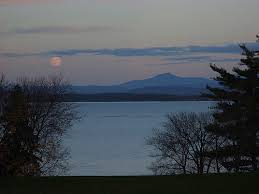
images-1

Cresting Under Mountain Road connecting Millerton to the hamlet of Shekomeko in Pine Plains, Duchess County, the not-so-far off Hudson out of sight but its presence felt in the dips of the intervening hills and valleys. I drove over this hill every day for more than a year when working at Aperture, no two days alike—the sky always changing, the color of the trees in autumn, lilacs in spring in old farmyards, snow blanketing the fields in winter. Crows on falling down fence posts. My address was Willow Tree House, Country Route 22A, Pine Plains, New York. On the field adjacent elephants from Barnum & Bailey had once summered. My porch was entwined with Dutchman’s Pipe, its heart-shaped leaves forming a shady cocoon of old-fashioned benevolence. (I imported Dutchman’s Pipe to my San Francisco garden as a reminder of that small house and those other times. It’s thriving.)

pipevine

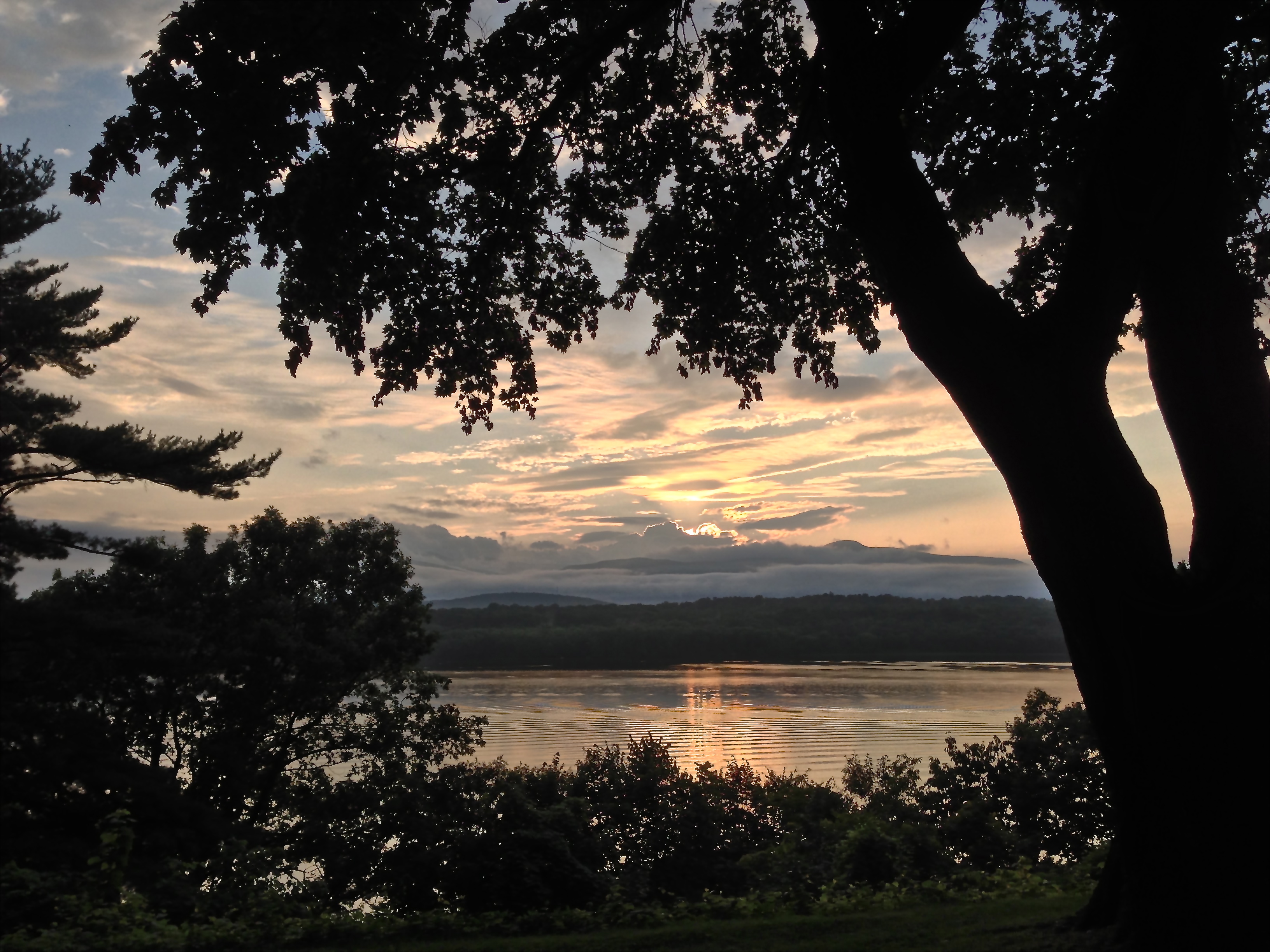
The view across the Hudson River from Midwood’s back porch, the river slate and cool, the Catskills black against the horizon, no human touch intruding. The civilization this place, this view, implies.
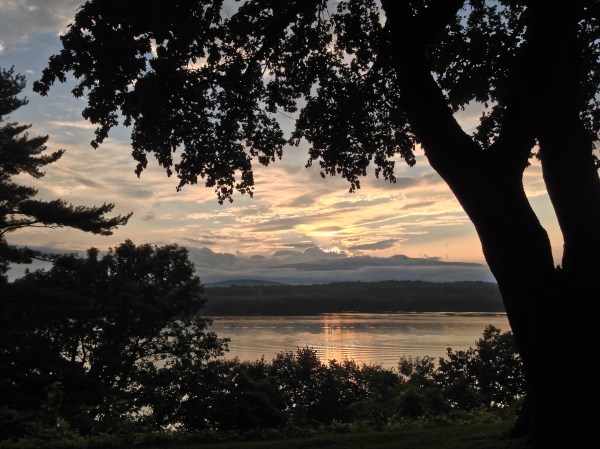
IMG_3995

Old country roads in the Berkshires. Memories of the Red Lion Inn, of what might had been.

imgres-3

Lake George in the summertime.

imgres-4

The Hudson River from the Scarborough train platform. For ten years I stood on that platform watching the river, and opposite, the Palisades, in all its changing seasonal raiment, wonderful even in the frigid winter when the river was frozen over and the wind felt straight from the Arctic. The Hudson Line is one of MetroNorth’s glories. Anywhere else in the world it would be designated a Scenic Railway. I never denied when charged by my ex that the only reason we lived on the western, Hudson, side of Westchester County was because I preferred the river commute to the city.
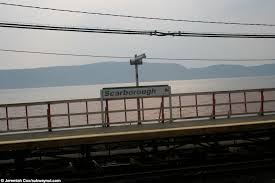
imgres-2

These are my unifying images, landscapes that look right to my eye.

Cities, too, bear witness to easy familiarity. I feel more at home on Washington Square in Greenwich Village than on Union Square in San Francisco, where, after nearly eight years, I still feel like a tourist. Living for ten years at 24 Fifth Avenue on the corner of 9th Street, the streets of the West Village resonate with close familiarity yet. Not much has changed. When I think about walking over to the French bakery on West 4th Street when David was just a toddler, it feels like yesterday—yesterday thirty years ago.

I rarely return to New York without walking down Madison Avenue from the mid-80’s all the way to Grand Central. I walked there last Monday, stopping in, as always, at Crawford-Doyle, the most civilized bookstore in the city, an old and reliable friend. There’s nothing like this stretch of pavement in San Francisco: handsome older couples arm in arm, expensive women in Chanel and Harry Winston; teenage girls in Hermès boots and perfect blonde hair, Italian or French as commonly spoken as English.

What is it about these landscapes of our youth that remain so indelible? Why should I find more contentment in the pine bordered rocky coast of Maine than in the sea stacks of Mendocino? Why should the Pacific look different to my eye than the Atlantic? Is it actually a physical impression, or is it the associations I bring to each?

I’ve been lucky to experience many other great landscapes far from my familiar territory. Milford Sound, the Lauterbrunnen Valley, hiking the jagged ridges of Montserrat near Barcelona, the frozen Jungfrau, Victoria’s Dandenong Ranges with its giant tree ferns straight from the Jurassic Period, the Outback of Western Australia, Hudson Bay. Would I trade any of these for a summer afternoon on Islesboro Island? In a heartbeat.

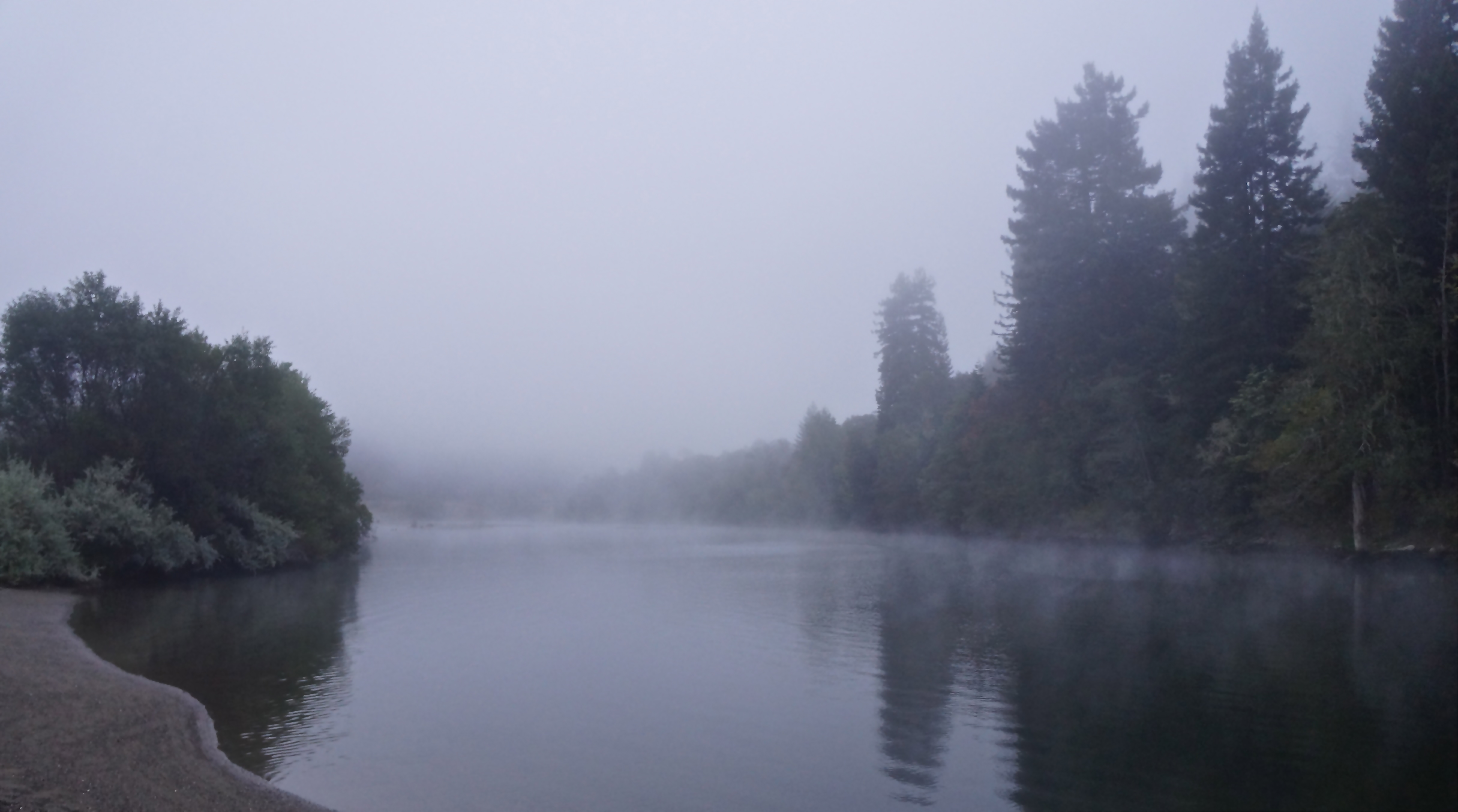
Today I’m working hard to create new unifying images in my life. I may have found one, one that sparks joy whenever I stand at the lookout in Sea Cliff at the end of our street and look across the Golden Gate to the Marin Headlands, the Pacific opening out to the west. The view is becoming familiar, a part of where I live. I swim in the cold water below. I know China Beach and the coastal trail leading away from the lookout to Lands End and Ocean Beach. I can make these images right to my eye. I love walking over in the early evening—always my favorite time of day—and watching the sun set with the sky ablaze over Point Bonita. Sometimes we see dolphins off China Beach. They never fail to thrill. Sometimes I swim near them—unnerving but reassuring. It’s said they keep sharks away.

IMG_8496

Here, too, is where I’ve found happiness in marriage. Ocean Beach will forever be where I walked with Brenda on an early date, finding sand dollars, getting to know one another. I held her hand. A new beginning.
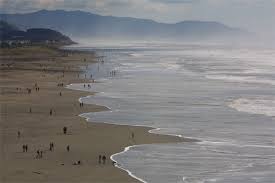

imgres-5

Lost

“There is no real way to deal with everything we lose.” Joan Didion, Where I Was From

imgres

I thought of this sentence when earlier this year I read about the sorry destruction of the Hotel Okura in Tokyo, “renovation” so misguided that even the eternal developer’s quest for greater return on square foot investment seemed inept, flatfooted, even heretical. The Okura’s demise made me sad in ways well removed from the reality that I was unlikely ever to return to its perfect ‘60’s elegance—one of the most elegant expressions of that period ever designed. Over a three-year period I had stayed at the Okura maybe twenty times. These were the years of the unraveling of my former marriage, the deconstruction of a life I realized with disillusionment was built on soggy wetland, never the bedrock idealized in my imagination. Japan was an escape, and the Okura was the dream made physical, a place where home was seven thousand miles away.

Okura.lobby


There’s a scene in Lost in Translation where Bill Murray is sitting alone in his Tokyo hotel room at night, his own marriage failing, receiving a fax from his wife back in the States. More than distance separates them. He could be on Mars. The extreme foreignness, strangeness, of Japan is both disorienting and liberating. I’ve been there, felt that, too. It’s a place where I once was…literally so, since I, too, have stayed at the Tokyo Park Hyatt where the movie was filmed, sat alone in the top floor bar, drinking too many fine sakes, swimming off my heavy head in the crystal pool early in the morning. Another world in another world, far far away.
imgres-1


The Hotel Okura as I knew it is gone; I no longer travel to Japan; that marriage is over; that job is over. That time of my life is over. I’ve “moved on” as the narrative demands. Life improved.


We lose many things in our lives. We lose umbrellas, hats, pens, everyday things that don’t amount to much. Some things we lose are inevitable: childhood, pets, grandparents, parents in their time. We grieve for these losses, absorb them into our lives and transform their absence into a different reality. The dead remain with us.

images

We lose tiny pieces of our past, too, like losing pieces from a favorite jigsaw puzzle. We remember what the picture looked like, but that patch of blue sky is missing. Places and people come and go, many without consequence. I’m thinking today of a few that my memory of them comes laden with meaning—memories of times and places that stand out in soft relief from the background noise of otherwise uneventful days.
 

I remember when I moved back to New York from Australia and discovering that once-favorites places were gone: the Russian Tea Room; Copenhagen, where I used to go every May 17th, which happened to be Norwegian Independence Day; the sublime Honmura-An closed, its owner needing to return to Japan to run his deceased father’s restaurant; Patina Antiques, the tiny eccentric shop on Bleecker Street where I’d found many treasures. The shop had been robbed, the owner’s young partner murdered. The shy owner committed suicide the next day: a local tragedy, mostly unnoticed. A pair of brass candlesticks in the shape of coral branches with a trio of turtles at each base sit on my dining room table today as a kind of memento mori of that place, that time.

images-1


Lost friendships cut deep grooves in our lives. Some friends are tied to a specific time, blossom there and then fade when that time passes. Some friends die. Some friendships end in unexplained ruptures. I once had a friend who on our first time alone told me that people come into our lives, “for a reason, for a season or for a lifetime.” The lesson from that friendship was never bank on one outcome–and indeed the actual outcome from that friendship proved more profound and life-changing than the once hoped for outcome. Again, the narrative demanded “moving on” and moving on was good.

Loss can be a matter of perspective, too. Here today, gone tomorrow, we grow older, our children grow up, something new replaces something old, chapter after chapter. It’s a process. I guess that’s called living a life.

I don’t know whether my life has been any more episodic that the next person’s. I can construct a storyline, dots connected by an unbroken line. It makes sense in a fractured way. Sometimes, though, the story comes unglued and I wonder did I really do that, was I really there, then? I think about my life in terms of geography, time and place being inseparable: Pittsburgh, Maine, Dublin, Dutchess County, New York, Barcelona, Singapore, Australia, Paris, Japan, Westchester, San Francisco. A life’s itinerary. Heraclitus observed that the man who looks at a river isn’t the same man who steps into that river. I think I can say that stepping into each of my life’s many rivers has been an expansive experience, that the man I am today is a bigger man than the one seeing life in old Berkshire orchards, or driving alone to breathe the soft evening air settling over that long ago battlefield at Roncevalles. Those were dreamy times, disconnected from even the reality I was living then.

3143217602_a77b65fac1_b

Time out of time; there appears to be a pattern. A doctor once told me a story of asking a noted psychology professor whether the pain of heartbreak would ever go away. The professor replied, no, but that we grow bigger and the pain becomes a small thing, not without consequence but lacking the sting it once had.


The way we deal with what we lose is to continue, like running a marathon (so I hear), one foot stepping out ahead of the other until the end. Joan Didion often quotes a young surviving member of the ill-fated Donner Party, who wrote as advice to others making the cross-country journey, “Don’t take no cut-offs and hurry along as fast as you can.” I didn’t follow that advice, though. I’ve taken many cut-offs and progress has often been slow. I’ve rarely hurried anywhere.


Time becomes memory, too. Without memory, there isn’t any concept of time. Memory of the world we knew—“of any balm or beauty of the earth”—is all the divinity we seek.


We live in an old chaos of the sun,
Or old dependency of day and night,
Or island solitude, unsponsored, free,
Of that wide water, inescapable.
Deer walk upon our mountains, and the quail
Whistle about us their spontaneous cries;
Sweet berries ripen in the wilderness;
And, in the isolation of the sky,
At evening, casual flocks of pigeons make
Ambiguous undulations as they sink,
Downward to darkness, on extended wings.

wallpaper-49523

What We Know

A few years back I was teaching an MBA class on technology marketing and used Digital Equipment Corporation as an example of a company that failed—spectacularly so—to foresee the rise of the personal computer. I talked about DEC’s decline and eventual, ironic, sale to Compaq Computer, which in turn due to its own market-forces squeeze was sold to Hewlett-Packard in tempestuous circumstances. I might as well have been describing events in the Age of Pericles.

images-1

 Had this been a course outside the students’ major I might not have been so surprised. (But, in this very same class, I happened to mention Elizabeth Taylor on the day she died. No one had ever heard of her.) This got me wondering about the need for context and the value of knowing things—things specific to our fields of interest, things happening in the world, things that happened in the past, things in general. How important is it to know things? To read? To look beyond our friends’ Facebook postings?

Writing in a recent New Yorker, John McPhee talks about our losing frames of reference, that our collective vocabulary and common points of reference have been disappearing at a faster rate than ever before. He quotes the Times columnist Frank Bruni, “If you…want to feel much, much older, teach a college course. I’m doing that now…and hardly a class goes by when I don’t make an allusion that prompts my students to stare at me as if I just dropped in from the Paleozoic era.” Bruni went on to ask, “Are common points of reference dwindling? Has the personal niche supplanted the public square?”

During this winter term I taught a class at Stanford I felicitously titled, “Does Advertising Still Matter?” My idea was to examine the classic principles practiced by the masters of mid-twentieth century advertising, people like David Ogilvy, Bill Bernbach and Mary Wells, to see if they still held true in today’s digital and social landscape. The first two classes were history lessons, examinations of the revolutionary campaigns for Volkswagen, Avis, Braniff… along with Bernbach’s timeless aphorisms, such as “A principle isn’t a principle until it costs you money.” Only one student in the class recognized the VW “Think Small” ad.

imgres

By the end of the term, we bent the principles to embrace the new rules of customer centricity—after all, it was David Ogilvy who remarked, “The consumer isn’t a moron; she’s your wife.” But translating the creative impulse behind “We try harder” into ephemeral media like Snapchat or Vine was a challenge. I was heartened that during the time I was teaching the class, AdWeek published a piece by one of my long time mentors, Keith Reinhard, in which he wrote, “Creating a brand isn’t the same as creating a buzz.”

On a larger scale, I see the same lack of reference becoming institutionalized in the advertising profession as a whole. Big Data has driven demand for technologists, data analysts, programmatic media buyers, platform specialists and other technology founded roles. It’s become an exciting world of microsecond precision targeting and accountability. Yet, in my recruitment practice, I haven’t seen a single client brief that asks for someone skilled in deriving consumer insights based on human insights. If all we look at are aggregations of data, aren’t we missing those precious sparks of human serendipity that make an ad something more inspiring than just…an ad? Can an algorithm spark joy?

Increasingly, what our clients want are ultra-round pegs to fit into ultra-round holes. Outliers, for the most part, don’t have a chance. Square edges? Forget it. Where novelty and a broad frame of reference might benefit the long term potential for growth and differentiation, agencies today opt for the immediate shiny object, the one that most mirrors back the image already envisioned. There’s no room left for Bill Bernbach’s observation, “Advertising is not a science, it is persuasion, and persuasion is an art, it is intuition that leads to discovery, to inspiration, it is the artist who is capable of making the consumer feel desire.” At least this appears to be the situation at all of the big, institutionalized agencies, whether digital or traditional. Everyone is trying to out-data the others. New roles are being created, new jobs with new skill sets filled.

So, does advertising still matter? My class answered with a resounding Yes. It has to matter, for better or worse, because it’s ubiquitous and entrenched into every aspect of our lives, unavoidable and ceaseless. Once, advertising was much easier to ignore. Today, we experience advertising whether we know it or not. With every keystroke we create meaning for marketers to interpret and refine their messages back to us. All we can do is hope that someone along that split second journey has an urgent need to aspire to a higher purpose, to infuse their words and pictures with inspiration and joy.

In his New Yorker piece, McPhee wrote, “Frames of reference are like the constellations of lights, some of them blinking, on an airliner descending toward an airport at night. You see the lights. They imply a structure you can’t see. Inside that frame of reference—those descending lights—is a big airplane with its flaps down expecting a runway.”

When Chiat Day created their famous “Think Different” campaign for Apple, they relied on a huge cast of brilliantly blinking frames of reference to land meaning and inspiration safely on the ground. They made the assumption that viewers would know who Richard Feynman was, or Martha Graham, or Jackie Robinson. I imagine most didn’t, but Apple being Apple made it uncool not to know. This doesn’t happen often.

images

 For myself, I’m going to continue to know things, new things every day. Maybe this includes a six second video, or rereading Proust, or simply looking at the natural world with fresh eyes every day. I find joy in associations, in bits of trivia, in lost words or new-fangled emoticons. I can’t imagine living any other way.   (Sometimes my wife remarks, “People haven’t used that word since maybe… 1955.”) McPhee asked whether our use of words or examples unknown to today’s students would illuminate or irritate. I think these are the wrong poles. We are who we are based on what we know and how we express that knowledge. I don’t strive either to illuminate or irritate—but only to give context and a frame of reference to me. It makes me happy. Others can interpret as they choose.

IMG_3536

China Beach

Swimming off of China Beach in Sea Cliff is a different experience entirely than swimming in the Bay. We’re in the ocean here, outside the Gate, one cove beyond Baker Beach, an inlet before the outward sweep of Lands End. The color of the water is deep jade green. It’s saltier and fresher than in the Bay, less silt. Out here there are waves and swells and on some days getting off the beach and swimming back can be a challenge in the heavy surf. I’ve been tumbled more than once. All summer long and into the autumn the water has been unusually warm, well into the 60’s. Old-timers like to say it’s too warm, but I’ll take these mild temperatures any day. The cold water will come soon enough and swimming off China Beach, lacking showers and a sauna, becomes an exercise in finding ways to get warm beneath blankets and sipping hot tea.

images

The world changes out here, moving from the sand to the sea.   Sensed texture and our perceptions of space change. In the water our bodies feel different, surrounded by a force that compels attention from all of our senses. Wendell Berry suggests this in his essay ‘The Rise’, where he describes setting float in a canoe on a river in spate. “No matter how deliberately we moved from the shore into the sudden violence of a river on the rise,’ writes Berry, ‘there would be several uneasy minutes of transition. The river is another world, which means that one’s senses and reflexes must begin to live another life.’

images-1

The ocean is another world. In it we live another life. Transition is elemental to open water swimming. Those first uneasy minutes are part of the pleasure and the agony. This is San Francisco, so even on a day destined to be warm and sunny, mornings are cool and during the summer nearly always foggy. As the water temperature drops, the transition becomes abrupt and sometimes violent, like a sharp punch in the stomach. We are not the same person after the plunge as we were standing on the beach.

Marriage is a transition, too. Brenda and I were married in October, exactly one month ago today. Our lives together began with a focus on the water, an experience both separate and as one. The ocean-born metaphors for our lives together come easily. And happily, the plunge has been a gentle one, warm water all the time. My breath still gets taken away, in delight and awe, not icy shock.

BrendaNiland_271

I said to Brenda the other day that one thing I missed living here in mild San Francisco was waking up on cold winter mornings after a heavy snowfall during the night. The world is so still and silent in the frozen early dawn, the air so pure and bright it’s almost visible, a thing to touch. This crystal time doesn’t last very long, gone by noon if not sooner. I always want those cold, white, quiet mornings to extend for hours, even days. Time never is long enough.

images-2

I’m reminded of Wallace Stevens’ The Snow Man:

One must have a mind of winter

To regard the frost and the boughs

Of the pine-trees crusted with snow;


And have been cold a long time

To behold the junipers shagged with ice,

The spruces rough in the distant glitter


Of the January sun; and not to think

Of any misery in the sound of the wind,

In the sound of a few leaves,


Which is the sound of the land

Full of the same wind

That is blowing in the same bare place


For the listener, who listens in the snow,

And, nothing himself, beholds

Nothing that is not there and the nothing that is.

Our lives are like that, too: nothing that is not there and nothing that is. I recently read an article in The Atlantic by a doctor who made the case that he didn’t want to live beyond the age of 75. His arguments were rational, informed by evidence of suffering diminished health, creativity, well-being and happiness as illness and cognitive decline take their toll. He believed that checking out at or around 75 was the dignified thing to do, not by suicide, but by declining any and all medical safeguards, remedies or life-saving measures. Nature would take its intended and inevitable course.

I don’t know. I hope I’ll die swimming in the ocean somewhere, not tomorrow, maybe not even when I’m 75. It’s a sweet idea, a rather wonderful kind of transition. I’ll keep that in mind.

imgres

Jargon

Another lifetime ago I was the treasurer and vice-president of a nonprofit literary publishing venture named The Jargon Society.  This began in the mid 1970’s, a by-product of my first job out of grad school as managing editor of Aperture.  Aperture distributed Jargon Books. The poet, essayist, photographer and all-around polymath-gadfly Jonathan Williams was Jargon’s publisher.  Jonathan was Jargon; the two didn’t live separately.  Jonathan was from Highlands, North Carolina where he lived all his life when not elsewhere which included Corn Close, his house in the Yorkshire Dales, and in other people’s guest rooms around the country.

images-4

Today, some thirty years later, I’m sorting through hundred’s of Jargon related letters, cards, pamphlets, books, ephemera of all kinds.  I’m donating everything to the State University of New York at Buffalo’s special collections library which maintains the Jargon Society and Jonathan Williams archives.  It appears I saved every scrap that came my way, not least of which being the dozens and dozens of letters from Jonathan himself.  Re-reading them is a journey back to another time and place, familiar yet remote.

How life changes.  How my life has changed since I was part of Jargon.  That was then and now is now and the divide runs deep.  This divide is at the heart of most sessions with my therapist today. What was that other life? Why a divide?  Why different today?

images-5

Jonathan Williams opened the door to a world I had always wanted to enter, a world of writers, poets, book people, people with ideas, photographers and painters, arts people, people with money who paid for all of these things, interesting, fascinating people–people not at all like the industrial people I grew up with it Pittsburgh.  People not at all like my father.

Every year we would gather in North Carolina for the annual meeting of the Jargon Society. Sometimes we would meet in Winston-Salem, home of Jargon’s chairman Philip Hanes; sometimes in Highlands; sometimes in Roaring Gap, again at another of Philip’s houses.  There would be the poet Tom Meyer, Jonathan’s partner; Philip and Joan Hanes, Don Anderson and his wife would fly in from Roswell, NM.  (I remember one time in Highlands Don’s wife mentioned she left the book she was reading on the plane.  When I said that she might call the airline to see if they had retrieved it, she said, no, that wouldn’t be necessary, it would still be in their Lear jet standing by at the local airport.) Mel Edelstein, then the Librarian of Congress, would be there; sometimes  Ted Wilentz, publisher of Corinth Books and co-owner with his brother Eli of the late Eighth Street Bookshop in Greenwich Village, still surviving when I first lived in the Village at 24 Fifth Avenue.  Doug and Bingle Lewis were friends then and fellow Jargonauts.  Doug was headmaster of the Summit School in Winston-Salem, a position he held for thirty-three years.  There would be special guest visitors, too, like the time the English poet Basil Bunting came and we all made a pilgrimage to the grave of Uncle Remus creator Joel Chandler Harris.


images-3


Jonathan knew everybody.  It mattered not to Jonathan whether you were a Blue Ridge quilt maker or a Winston-Salem underwear magnate.  His embrace enriched the lives of everyone he touched. He once took me to lunch with New Directions publisher (and fellow Pittsburgher) James Laughlin at his house in Norfolk, Connecticut.  He introduced me to the writer Guy Davenport, the reclusive New Orleans photographer Clarence John Laughlin, film maker James Broughton and Trappist monk Thomas Merton–people I couldn’t have imagined ever knowing otherwise.  One special friendship by way of Jonathan was with Paul and Nancy Metcalf. Jargon published many of Paul’s idiosyncratic books: The Middle Passage, Patagoni, Genoa.  Paul was Herman Melville’s great-grandson and lived in the Berkshires not far from Melville’s Arrowhead.  He and his Southern wife Nancy welcomed me, and in time my young family, with an openness I’ve rarely experienced since. Many happy weekends were spent at their house near Pittsfield.   Both are gone now.  I miss driving through the autumn Berkshire countryside with Paul visiting Melville haunts, or dinner at Nancy’s table where she might be serving roasted cow’s heart, or sleeping in Paul’s writer’s cottage with its well-worn set of the Britannica 11th edition.

paul

During that time I lived for a while in Salisbury, the northwestern-most town in Connecticut, and then in Pine Plains over the New York state line in Dutchess County.  I rented a tiny shack by the side of the road named the Willow Tree House. Dutchman’s Pipe entwined the front porch sheltered from the summer sun by an enormous, billowing willow tree.  Hence the name.  The tree gave the house charm it would have otherwise been without.  A stream ran through the back of the property, part of an old dairy farm still operated by its weekend New Yorker owners.  Next door was a pasture said once to have been the summer grounds of  Barnum & Bailey’s circus.  An old man down the road said he remembered seeing elephants grazing there.

Jonathan and Tom stayed many times at Willow Tree House, occupying one of the two miniature bed rooms under the eves upstairs from my two downstairs rooms.  Books filled the house along with a horsehair sofa and huge desk given to me by Paul and Nancy Metcalf.  I loved that little house.  Evelyn was then at NYU Law School  and would take Amtrak to the Rhinecliff station to spend weekends there.  It was the happiest time we ever had. I had my Maine Coon cat to keep me company–her name was Ivy, after Ivy Compton Burnett. I had many friends.  Many stories.

Aperture’s publisher Michael Hoffman lived down the road in his splendid 18th century farmhouse.  Michael’s ideal was to have his staff all live on the property, commune style.  This never happened, though we spent much time there.  Every weekend photographers and writers visited, along with Michael’s best friend and benefactor Authur Bullowa (of the watch–with a “v”–family.)  Tragically, Michael’s wife had been killed in an auto accident on the Taconic Parkway shortly before I was hired.  The first time I arrived at the house his two small children asked, “are you the new boss?”  Due to Michael’s impossible behavior, so many housekeepers had come and gone they wanted to know if I was yet another.  Michael was a difficult man, not loved by many.  Yet he treated me only with kindness and generosity and I owe much to what he provided and made possible in my life.  I got to know Paul and Hazel Strand, Minor White, Paul Caponigro–so many photographers I admired.  Michael was never a friend, and I rarely saw him after I left Aperture to move to New York.  I only learned well after the fact that he had died.  He and Jonathan had a respectful if never friendly relationship.  I think both wanted a bit of what the other had.

All of these people are gone now: Jonathan, Paul,Nancy, Philip, Joan, Don, Guy, Arthur, Michael. Most are no longer among the living and those that are, are gone from my life.  Those days are gone, too, not just as time passed but gone, gone, gone as a way of life.  I traded them in, made a left turn, turned my back on all that once gave me a particular kind of meaning.  I became bigger than all of that (so I thought) but smaller, too.  Something almost died inside.  I don’t think it’s gone.
6819403_1065904960


2013 in review

The WordPress.com stats helper monkeys prepared a 2013 annual report for this blog.

Here’s an excerpt:

A San Francisco cable car holds 60 people. This blog was viewed about 2,200 times in 2013. If it were a cable car, it would take about 37 trips to carry that many people.

Click here to see the complete report.

Swimming at Dawn

imgres

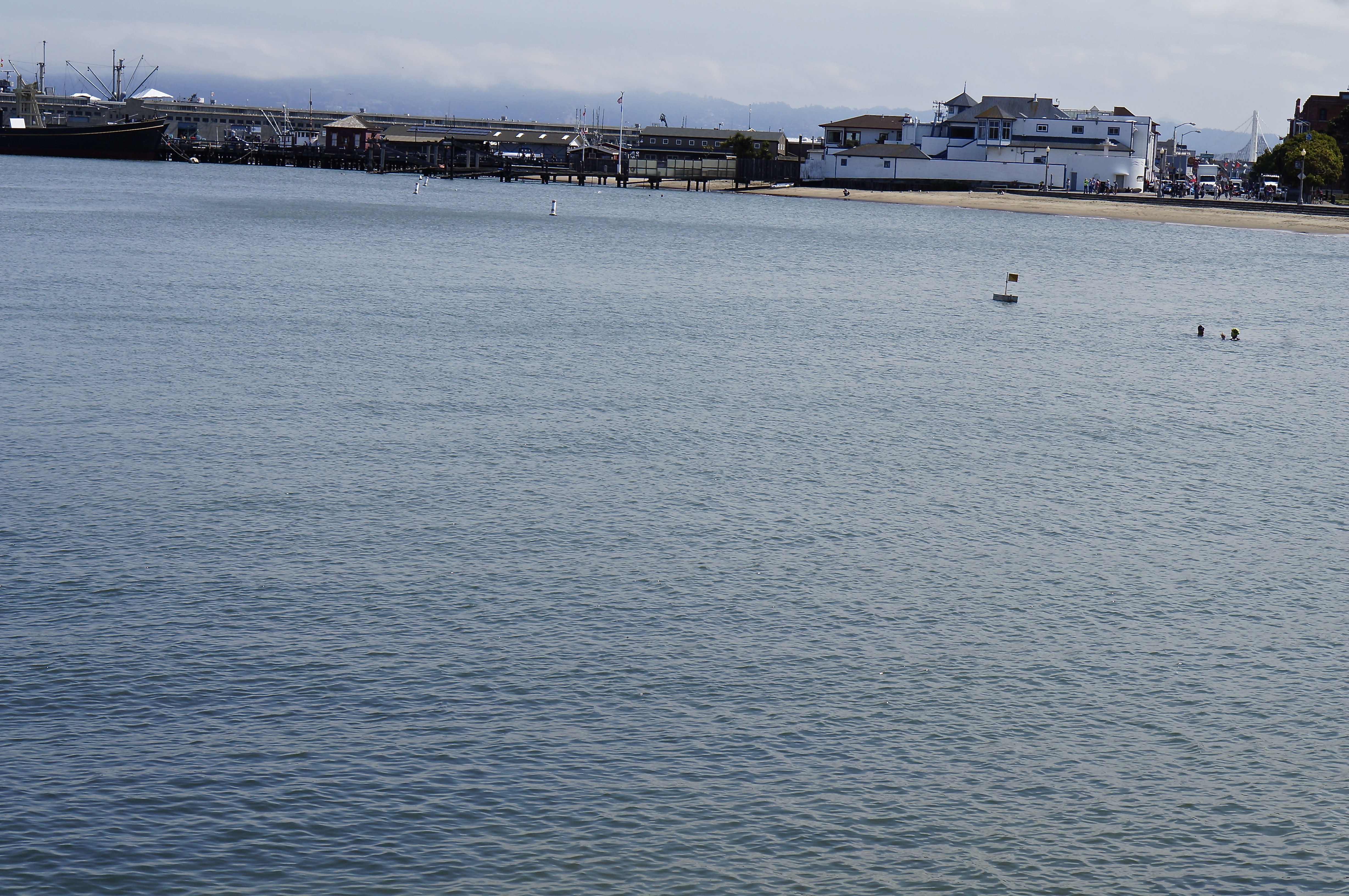
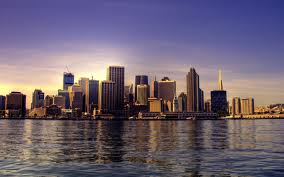
There are mornings when life spreads itself out like dawn breaking over water.  I see this swimming in the Bay as the cool pink light lifts to sunshine.   Watching a full moon sink below the Golden Gate Bridge as the sun rises over the East Bay is as magical as it gets.  Ahead Alcatraz Island floats in isolation, still dark and a little forbidding, and to the north the lights of Marin begin to give way to daylight.  Yes, the water is cold.  Not yet teeth chattering cold.  That comes later in the year.  I wonder if I’ll swim straight through the icy months of winter, when the water temperature can drop below 50 degrees.  My friends do, so I assume I will, too.  Somehow.

images

I have always been a swimmer.  It’s a lonely sport.  The camaraderie comes when not in the water. In open water you’re vulnerable to the currents, the wind, the temperature, boats and to all of those creatures you would rather not be thinking about. I haven’t encountered a sea lion yet, but I will.  Everyone does.  Sharks?  Apparently not.  What I encounter, though, are my thoughts.  In team sports you think about your place in the game, about the opponent, about your next move and theirs.  You are one of many.

Out in the Bay I think about my life.  Sure, I think about making it to Ft. Mason or whatever the morning’s destination.  I think about my breathing, my stroke.  But bigger thoughts flow through my mind, too.  How good it is to be alive, here, now, in this dark water.  How big the sky is above the Bay.  How beautiful the city looks.  How special is this moment; how lucky I am.

The first time I flew in an airplane was from Pittsburgh to Charlotte, NC.  I flew with my swim coach Al Rose and three teammates.  I was fifteen, swimming in an older age group. We went to a meet to swim one event, a 400-meter freestyle relay, in which we meant to set the national record.  We did.  I set three other individual national records that year.  I continued to do well, and achieved some distinction.  That was a long time ago.

imgres-1

I swam because I was terrible at all other sports, to my father’s immense displeasure. I swam because I didn’t have to play on a team and suffer the humiliation of being the last picked.  When in middle school I began to swim competitively I exempted out of gym.  Oh happy day!   I never went to gym again.

I swam because I could do it alone.  I was often alone, an only child of social parents who were rarely there.  For years I ate dinner alone at a club every Friday and Saturday night.  I wonder now what the kind waiter thought.  Some weekends my childless aunt and uncle would invite me to stay.  We would go to a drive-in theatre and have pizza, a treat and a transgression.  They came to my wedding and college graduation.  My father didn’t.  My aunt died in a nursing home ten years ago.  My uncle still lives there, annoyed that at ninety-four the State has taken away his driver’s license.  I wish I saw him more.

During the years of my divorce—it went on and on—I would have a few glasses of red wine at dinner and then head for the pool.  The wine in my blood and my body in the water was, unfortunately, a peace-inducing tonic.  Nothing mattered.  The sadness of life disappeared.  For an hour I was happy.

images-1

Later, after a serious bicycle accident, I was out of the pool for a year, rehabilitating my right arm.  I have a metal elbow now.  It’s taken a while to get back in shape, and I’m not there yet.  My endurance is poor.  Swimming against the current in the Bay is helping.

Sometimes in the late afternoon I walk down Hyde Street to the South End Club and swim for an hour by myself.  The wind picks up later in the day, and the water is generally rougher.  Not rough by any serious swimmer’s standards, but wavy enough to feel the small up and down swells.  Alone I feel like a boy again.  Swimming does this.  In the water we’re always the same age.  I take heart at the many “old” swimmers, men and women, at our club who cherish the cold water every day.  I want someday to be them.

None of my boys became swimmers.  As kids they swam on our club’s swim team. I’m not sure whether they enjoyed it.  They played ice hockey and soccer and tennis and baseball.  All are highly proficient skiers.  David taught skiing at Killington in Vermont. Adam out-skied me in Zermatt when he was just a teenager.  Sam is a champion figure skater, and coaches still.  Because of skating he met his lovely Finnish figure skating wife.

IMG_1821

Brenda my girlfriend and her swimming friends at the South End Club are all vastly more experienced open water swimmers than I am.  I’ll never be able to earn what they have achieved.  Yet I treasure what I have.  It’s opening doors I didn’t know existed.  I don’t feel alone anymore.

_DSC3941

Everyday an opportunity arises to create something that didn’t exist before.  Everyday swimming in the Bay is a new experience.  What we experience today didn’t exist yesterday.  Unlike swimming in a pool, swimming in open water creates its own future.  Heraclitus wrote that the river we see is not the same as the river we step into.  The Bay isn’t the same.  While walking home from morning swims I look back at the Bay. It’s an astonishingly beautiful sight. The panoramic sweep from the Bay Bridge to the Golden Gate never fails to take my breath away.  The clear light falls on the Marin Headlands, the Marina shines.  On these gorgeous mornings I can’t believe I live here.  The further up Russian Hill I walk the wider the view expands to look across North Beach to Telegraph Hill, Coit Tower standing as a proud landmark.

At night the city sparkles. The light show playing its electronic rhythms on the Bay Bridge is a tribute to this City on the Bay.  I watch it from my apartment.  Looking north on clear nights the lights across the Bay in Sausalito wink in what I imagine as happy harmony.  Sometimes the moon shines on the black water, a silver sheen surrounding Alcatraz.  Its lighthouse is a beacon for ships, and a beacon for our lives.  Odd how a place infamous for misery now can renew itself as a destination of desire.  Our club conducts a swim from our beach, out around the island, and back to shore.  I want to do this one day.

images-2


A happy death to me would be to die in the water.  Pamela Harriman died swimming in the pool at the Paris Ritz.  I don’t want to die anytime soon, but that will come and the water would be welcoming.  When I was snowshoeing in the Arctic last Christmas I imagined how novel it would sound for my boys to say their father froze in Finnish Lapland.  That happily didn’t happen.  Water is only another form of ice.  We can’t predict these things, and wouldn’t want to.  It’s just a passing thought.

It’s getting late and I want to swim in the morning.  Tomorrow is Saturday so I can wade in later than our usual 6:30am swims.  It will be daylight.  I hope the sun will be shining.  Already as October continues the water temperature is beginning to drop.  Back in New England we measure the beginning of autumn by the turning of the leaves. Here I’m marking the falling temperature in the Bay.  Every day the water is different from the day before, especially at this time of year.  But Thursday can’t come soon enough when Brenda and Josh and I swim together.  I look forward to Thursdays all week.  I hope I still will in January.

I won’t be alone.

IMG_4434

Happiness is a Camp on the Russian River

_DSC4193

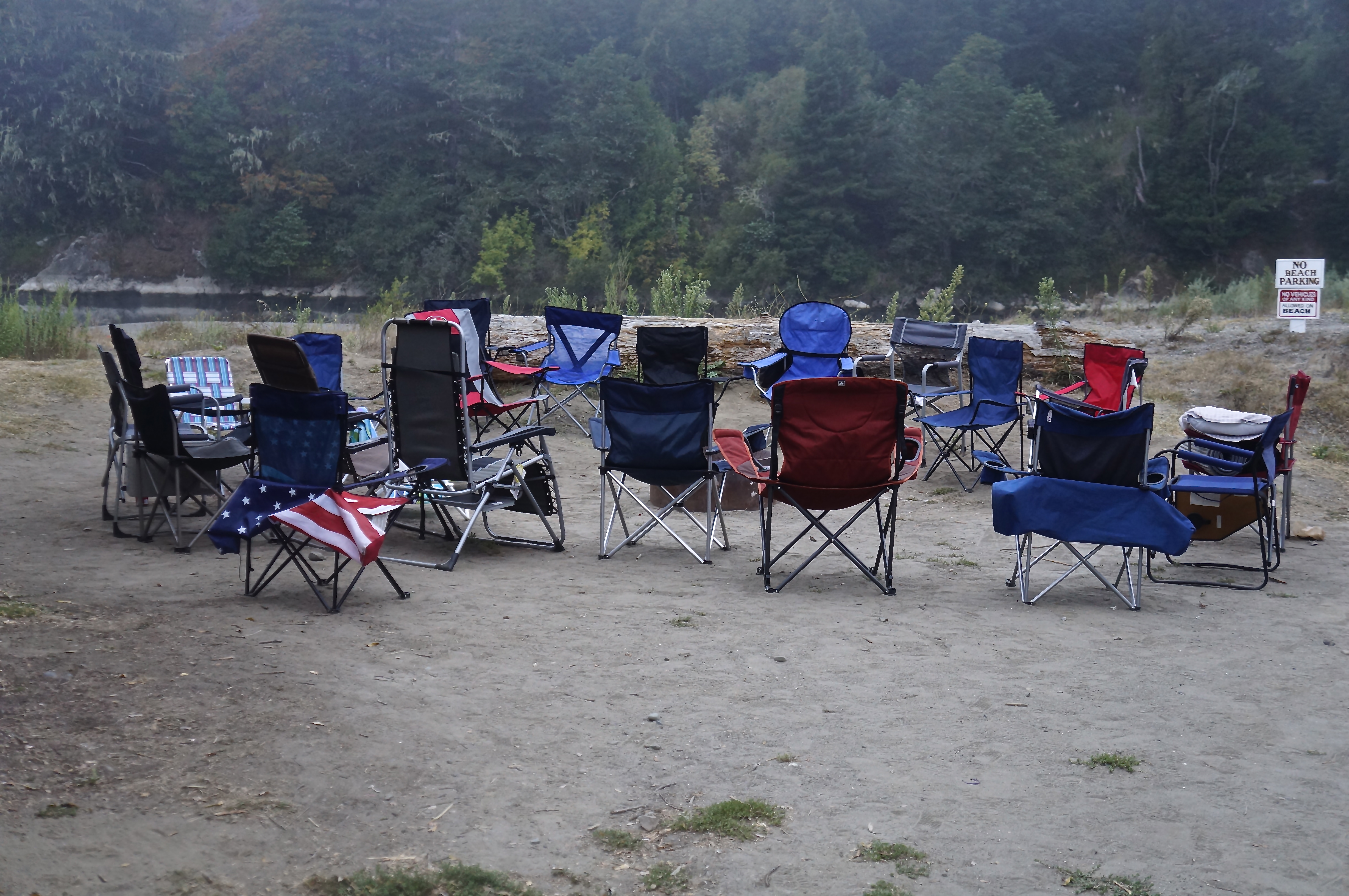
Twenty-nine men around a campfire.  Behind us the Russian River flows gently to its mouth in nearby Jenner.  The river is warm, perfect for swimming.  I swam early Sunday morning, the morning fog still low above the mild water, the surface as smooth and glossy as a pane of glass.  If this isn’t peace I don’t know what is: serenity achieved.

This is the fourth year in a row we’ve camped along this river.  While the weekends aren’t different, the experiences change.  We have grown a year older; our lives have moved on for better or worse; we’re different men than we were the year before.  A core of us has participated since the first camp-out.  A few haven’t been able to make all the retreats.  New guys have joined in.  For the past two years Thomas has raised the meal standards to restaurant level.  This isn’t camping in the wild!

_DSC4050

We sit around the fire each night and share our stories.  We mostly know each other, so listening to the new chapters brings new insights.  Though there’s no knowing what truly stirs inside a man, nothing dire was expressed this year.  We’re holding steady.

My own campfire story was about happiness.  Isn’t that the goal…as we trudge the road of happy destiny?  Another commented that perhaps contentment was a better word.  For me, contentment is happiness, a feeling that all is as right as it’s supposed to be. Happiness is the mean.  There are days that are happier than others, some sadder. Sometimes it’s impossible or inappropriate to be happy. Yet the ability to come back to contented happiness is a worthy process.

_DSC4027

We choose to be happy, or not, every day.  Choosing happiness is a decision that gives us the possibility of creating real happiness in our lives. It’s declarative.  We don’t need to live a past-derived future, colored by those times in our lives when happiness eluded us.  We know those times.  They’re an old story—our old stories.

In my case, I can chart the day when I chose to be happy, without needing happiness for fulfillment, but wanting it for myself as a way to live my life without fear.  The day was December 25th, 2012, and my sons gave it to me.

_DSC1019

The dictionary defines fellowship as “the companionship of individuals in a congenial atmosphere and on equal terms.” We sit here around our fire, companions on equal terms, in a congenial atmosphere. It’s our fellowship, the collective force that binds us in common pursuit.  Together, we’re stronger than any one of us individually.  It’s the way I define a power greater than myself.

_DSC4210

During the day some of us set out on marathon bike rides; others run.  We’re an athletic group. I joined a group to hike in the Armstrong Redwood Forest, where virgin redwoods grow more than 300 feet tall and are as thick as an elephant.  Some have been growing here since Leif Erickson made landfall in the New World five hundred years before Columbus “discovered” it.

_DSC4061

Later, five of us drove to Jenner and watched three sea lions dance together in the water beneath the cliffs, while dozens of seals basked on the nearby sun-warmed sand.  Pelicans flew in strict formation before diving straight down upon an unsuspecting meal. Later, we walked on the beach near Goat Rock, our younger contingent playing football. This, too, is happiness.

_DSC4144

Before Cow Hollow, the only similar fellowship I experienced was in college.  My class at Bowdoin was small enough that I knew every classmate by name.  I still do.  Those four years in Maine stand out as the most special years in my life.  The fellowship I enjoyed there was different from that around the fire here on the Russian River.  We were young men setting out in life together, filled with promise, aspirations, dreams.  Some were realized. Others were derailed by the very reasons we now enjoy a different kind of fellowship at Cow Hollow. It’s an odd kind of continuum.

IMG_3281

I’m gratified that our fellowship doesn’t discriminate by age.  I’m old enough to be some of the guys’ father—well maybe only two!  I learn from them as I hope they may learn from me.

On Sunday morning we didn’t hang around, setting off well before checkout time.  Up and out.  This precious time together was over, until repeated again next September. No one knows the course the year will take.  Some of us will be here again; others won’t.  I hope I’ll be on next year’s retreat. If I’m not, it had better be for a damn good reason!

Here’s to happiness.

_DSC4188

At the End of Nature

I’ve been sitting on the porch here at Midwood watching the sun play behind the Catskills on the other side of the Hudson River.  It rained earlier in the day, when I was swimming in the river, and now the evening sky is filled with clouds touched with purple and pink and broad swathes of gray.  Every few minutes the light and shadows change—a never-ending panorama of grandeur and beauty.  It’s so peaceful here.  I’m alone this evening and have the house and river to myself.  Our river view  is unique for Columbia County in that there’s nothing built on the opposite shore.  There are only the trees and clouds and mountains, and one tiny green light at the water’s edge, blinking, as out of Fitzgerald.

IMG_3995

Yet, what I’m looking at is not Nature in the raw.  The Catskills have been deforested many times; just behind and south of the green ridge is the town of Woodstock.  The sky’s paint box colors are due to pollutants in the atmosphere.  And someone put the tiny green light out in the water to warn passing boats to steer clear of the shallow inside passage.

While clearing out my storage unit in Hawthorne last week, among my papers I came across a photocopy of Bill McKibben’s forty-nine page article “The End of Nature,” published in the September 11, 1989 edition of The New Yorker.  With eloquence, passion and scholarship, McKibben woke the country to the irreversible damage to the planet, and to our imagination, caused by global climate change.  “Changes in our world which can affect us can happen in our lifetime—not just changes like war but bigger and more sweeping events.  Without recognizing it, we have already slipped over the threshold of such a change.  I believe we are at the end of nature.”

“When I say “nature,” I mean a certain set of human ideas about the world and our place in it.  But the death of these ideas begins with concrete changes that scientists can measure.  More and more frequently, these changes will clash with our perceptions, until our sense of nature as eternal and separate is finally washed away and we see all too clearly what we have done.”

No one listened to McKibben in 1989.  Half the country still doesn’t.  When the article appeared, Christopher Lasch writing in Harper’s called it a “tear-stained” work of “rural piety.”

Since that publication date of September 11, 1989 (made all the more auspicious since that same day twelve years later) the planet is in worse shape.  Everything McKibben wrote about has either become true or is worse than he predicted.  How can this be so in the world’s most technologically advanced country?  It should break the hearts of every rational human being, and cause unrelenting despair.

imgres

I use the term “rational” with reverence.  That half of the American population believes that the Earth was created by God six thousand years ago is a tragedy beyond “rational” comprehension. It denies all that we know of the creation over billions of years of our magnificent oceans, mountains, hills and valleys as lovely as Shenandoah, the cliffs of Mendocino, the rocky coast of Maine.  It denies the extraordinary diversity of all life on Earth, from improbable giraffes to the decorative people of Ethiopia’s Omo Valley, who adorn themselves with pigments, flowers and leaves.  The eternal laws of Nature have been negated by this magical fundamentalism.  The United States is alone among Western Nations with these primitive, destructive beliefs.  If the Bible were actually to be read as a literal document, these Fundamentalists should take heed of God’s warning to Job, “Who shut in the sea with doors…and prescribed bounds for it!  Who can tilt the waterskins of the heavens?”  With man’s great powers today, the sacrilegious answer is, “it’s us, not God.”  I find it hard to understand why the most devout Christians are not the most committed environmentalists.  Shouldn’t God’s Universe be preserved for all Eternity?  The fatalism of Revelations is a crime against nature.

images

Yet it’s not just the religious extremists who undermine our efforts to restore and maintain the planet (even if it were not too late.)  Our government is determined with messianic intensity to “save” the Middle East without even a modicum of committed desire to save the Earth.  There is something extremely wrong with our country’s priorities. The oil business runs foreign policy, along with the Congressmen in their pay.  I wonder how many Republicans really want to explain to their grandchildren how they voted away their natural future for short-term corporate earnings.


And, more locally, what are we to do when those administrators who approve the topics to be taught in Stanford’s School of Continuing Education judge Sustainability in Business Practice to be of insufficient community interest to fill a class?  This isn’t Kansas; this is Stanford! —in one of the most liberal and environmentally aware areas of the United States.  What hope remains?

imgres-1

By choice I have no television, no microwave, no dishwasher; by neurological condition I have no driver’s license hence no car.  I can’t be commended for the latter because if I could drive I would. More damagingly, I fly back and forth across the country at least once a month.  I have flown extensively since a child.  I have more than two million miles on one airline alone.  I am a large part of the problem and only an infinitesimal part of the solution.  I am committed to doing more.

Friday’s rain has passed, clearing up the cloudy atmosphere.  It’s a gorgeous August afternoon here above the Hudson River.  The day could not be more perfect. The sky looks as if it were a Winslow Homer watercolor.   I swam in the warm river, against a very strong current in which I could make only minimal headway.  Floating back with the current was like an amusement park ride. The immense good fortune of living here makes me forget the perils we face.  How could the world be hurdling toward sure disaster when places exist like this house above the Hudson, with the civility and grace lived here, with the friends who visit, with the turkeys who take their evening stroll along the road by the pond, with Roundtop off in the distance and the great river itself flowing from a tiny Adirondack spring to the mouth of New York Harbor.

IMG_4083

A few miles south of Germantown a Stravinsky celebration is taking place at Bard College’s summer music festival.  The Hudson River is cleaner than it was ten years ago, although PCB’s still leak upstream from General Electric’s Hudson Falls plant.  You can’t drink the river’s water and only a limited number of fish are to be consumed per year. Just before getting into the water to swim this afternoon I stabbed my foot on some diabolical rock-hard spiky seedpod. I’m worried now about infection.

IMG_4085

These contradictions in our lives make the reality of the end of Nature difficult to comprehend, much less actively think about. The Hudson with the Catskills to the West looks like real Nature. Neither is likely to go away soon. Today is a storybook summer afternoon, in my favorite East Coast month of the year.  The every seventeen-year cicadas are singing in the trees.  They haven’t heard the news that Nature is over, an idea that’s come and gone.  And yet, as Bill McKibben wrote in 1989, it is.

Overnight the seasons shifted. First the evening sky turned magnolia pink, then deep aquamarine blue. With the rising of the sickle moon, the temperature dropped, bringing that unmistakable crisp night air, a sure sign that autumn is close by.  Fresh sweet corn is over. The flowers and meadows are at their fullest, the lush foliage just beginning to bend towards decay, the end of summer.

images-1

Is this what the end of Nature will look like, spread across the planet on an unimaginable scale?  Acid rain already is killing the old growth forests of Europe.  The Greenland Ice Sheet is melting.  Swiss glaciers are visibly retreating every year.  Monsanto is rewarded for developing genetically modified seeds—a crime itself—with no concern whether the great agricultural plains will be able to support growing them.

Nature as a defining imaginative force, infinite in scope, forever renewable, has ended.  We can barely see the physical reality; yet there are signs everywhere.  Will Nature come to be only in books by Thoreau, Burroughs and Muir?  Claude Levi-Strauss’s great 1955 memoir Tristes Tropiques was aptly, and precisely, titled:  the sad tropics. It’s an irony of natural description that almost everything described is already over, gone.

Nature isn’t the province of a lucky few who can afford or find available the time and place to experience its wonder and beauty.  It’s the air we breathe, the water we drink, the food we consume.  Without these, a sunset is meaningless, the last tiger an irrelevancy. At minimum, the world will become a new wing of the American Museum of Natural History, just next to the dioramas of the Great African Mammals. I will not see this dystopian future in my lifetime; my children only a piece of it.  After that, I can’t predict.

IMG_4162

Outside The Bubble

For those of us lucky few living in San Francisco, traveling outside The Bubble can be an alarming experience. As Herb Caen famously wrote, “San Francisco is seven square miles surrounded by reality.”  Nowhere does this strike home more than a trip to The American South.

images

I’ve recently returned from the Gulf Coast of Alabama where I went to spend a long weekend with my father and his wife.

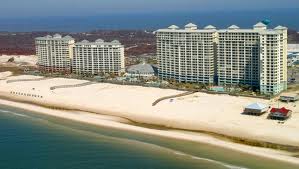
Once upon a time, this coast was a sleepy backwater of fishermen, pecan farmers and easy living off the land.  All of this life is gone.  Ugly condominiums hastily thrown up over the past twenty years line most of Alabama’s pristine white beach Gulf Shore.  From the beach road there are few openings where you can even see the water. Originally a haven for lesser snowbirds who couldn’t afford or didn’t care for the tonier parts of Florida, the Alabama Gulf Shore today has become the vacation mecca for nearby residents of Mississippi, Louisiana and Tennessee who lack their own expanse of “sugar sand” beaches. This coast isn’t called the Redneck Riviera for nothing.

imgres

Every chain known to man lines the coastal strip, along with local honky-tonk competitors hawking t-shirts, surf boards (I’ve never seen anyone actually surfing), the “best gumbo” in town, bottomless beer bottles, girls in bikinis, fun parks and arcades, even a new zip-line attraction soaring over little more than a parking lot.  The only thing missing is gambling.  You have to drive over to Biloxi to lose your money.

Much like Las Vegas, the coastal tourism industry has spawned a burgeoning local population, which in turn has brought the commercial infrastructure to support the growing needs of a new community.  And, as with my father, those early snowbirds who came to the Gulf Coast thirty years ago to escape the harsh winters of the Midwest, have now retired to golf course enclaves benefiting from low taxes and hot weather.  The occasional hurricane doesn’t seem to dampen anyone’s enthusiasm.

Then there are the churches.  There are miles and miles of roads where every other building appears to be a church. All the usual suspects are well represented: the prevailing Baptists, along with Catholics, Methodists, Lutherans, Presbyterians, Episcopalians, 7th Day Adventists, Pentecostals, Christian Scientists, and countless churches of unknown-to-me sects—the New Life of Christ, Family Revivalists, New Beginnings, Family Tabernacle, White Dove Ministries, Victory Life,–the sects are endless. Most are poor looking with dire signs proclaiming things like “Eternity is a long time to be wrong.”  Fundamentalism appears to be rampant.  Crosses are everywhere. I’ve never seen a synagogue.

church_sign_the_lighthouse_united_pentecostal_1415

Yet there are a few places that resemble the old, original Gulf Coast before it was spoiled by progress sand developers.  Bon Secour National Wildlife Refuge is one such sanctuary:  7000 acres of bird watcher’s paradise, nesting sea turtles, and humid trails snaking under the scrub pines and along the sea-oat dunes, a reminder of what the Gulf Coast once looked like. There are backwater rivers where alligator eyes sparkle at night.  Even in the manicured golf resort community where my father lives, nature breaks in. Osprey, Great Blue Herons and Ibis fish the man-made lakes; alligators occasionally emerge on the fairways, Cottonmouths curl on sunbaked patios.  Gruesomely, by father’s Bichon was taken by a coyote from his backyard.

images-1

Leaving The South turned out to be as depressing as the ruined Alabama coastline.  I was scheduled to depart Pensacola on a noon flight, connecting in Dallas, and arriving at 5:20pm in San Francisco. As we approached the airport I was notified by American Airlines that the 1:00pm flight had been cancelled due to mechanical problems, and I was rebooked to depart at 3:15pm, with my Dallas connection also changed to coordinate with the later arrival.  My new arrival time in San Francisco was 7:45pm.  No problem.

My fellow passengers and I boarded the small American Eagle plane for the 3:15 flight.  Before the plane left the gate, the pilot announced that there was a small mechanical problem, requiring the airport engineer to replace a switch.  The repair would take no more than five minutes.  All good, except that it took over an hour to find this engineer, and during the wait one of the flight attendants had “timed-out.”  She had to be replaced and, adding insult to injury, her replacement was in Dallas and had to be flown into Pensacola.  Dallas!  We were on our way to Dallas.

images-2

We then had to leave the plane.  Because the plane was so small, all carry-on luggage larger than a briefcase had to be valet checked.  We had at minimum a three-hour wait, meaning of course all Dallas connections were missed.  Nearly all of the sixty passengers had connections.

Are we having fun yet?  Oh, no—fun began when we discovered that American Airlines had only one representative supervising two different gates.  So, instead of checking new flights to replace the missed connections, the unfortunate woman had to deal with arriving and departing flights from both gates, running back and forth between the two.  During the intervening minutes, she attempted to take care of us, searching for late connecting flights out of Dallas.  Meanwhile there were passengers who wanted to bag it and just go home.  But they couldn’t because there was no one to take all of the checked bags off of the plane.  These folks were not happy campers.

Outside a gale force tropical monsoon was raging.  Rain was coming down in black sheets obscuring the far side of the runway.  The airport was close to shutting down.

Eventually, the Dallas based flight attendant arrived and our flight was now going to take off.  Only a few people had had their Dallas connections resolved.  At this point the frazzled—but stupendously patient and friendly—AA rep announced, “Please just board the plane and deal with your connections in Dallas.  There’s nothing more I can do.”  This AA rep deserved the highest possible commendation!

I arrived in Dallas long after the last flight to San Francisco departed. American provided a voucher for a night in the airport Ramada Inn, surely the worst one in the Ramada chain.  The only dining option was a 24-hour Denny’s across the highway.

imgres-1

I’m not sure it’s even snobbish to say I’ve never eaten at a Denny’s.  To me it represents the nadir of American restaurants.  My imagination however wasn’t even close to the reality.  Never, ever, have I been to a more woeful, doleful, sorry approximation of a roadside eatery.  I’m willing to entertain the possibility that this particular Denny’s was not representative of the chain in general.  After all, it matched the wretchedness of its near-neighbor Ramada Inn.  Perhaps this was American Airlines’ idea of a joke on its stranded passengers: pay for lodging and a meal, but make the experience as miserable as possible since the circumstances that caused the unexpected overnight were so bad the traveller was never likely to fly AA again anyway.

My Denny’s was vast, empty, cold, not very clean, and staffed by very tired and rundown women.  These ladies—all were women, telling in and of itself—had all seen better, younger days.  Their hearts weren’t in it anymore.  Glacial slowness prevailed.  My waitress lacked affect, expression, much less a smile.  Her speech was as slow as her gait.  I felt badly even ordering.  It seemed possible that this Denny’s was exploiting those who might not have been able to secure a better job.

imgres-2

A Denny’s menu is illustrated with photos of all the food items.  I assume this is because a portion of its clientele can’t read.  Not wanting to consume 1500 calories on any of the entry items, I chose the “healthy choice” option of an avocado and romaine salad, along with a cup of delicious looking chili.  My waitress informed me they were out of avocados, so I switched to the apple and spring mix salad.  When the chili arrived it looked nothing like the picture in the menu.  In fact, it wasn’t really chili at all.  It was chili-flavored broth with a few desultory kidney beans floating around.  The salad, arriving about twenty minutes after the chili, had no apples.  I asked the waitress what happened to this key advertised feature, and she said she didn’t know, perhaps they were out.  AA’s $11.00 coupon was more than sufficient to cover the cost of the meal.  By the time I left, I was the lone diner.

I was booked on the first flight out of Dallas to San Francisco the next morning, departing at 7:00am.  All went smoothly until once on board.  First the safety video had to be played three times because during the first and second showing, a passenger had been in the rest room and the FAA requires everyone to view the safety instructions.  Then, the pilot comes one and begins his message with, “I don’t know how to even tell you this…”  Based on some complicated logistics necessitating the plane’s computer program being updated once a month, and this plane having to proceed on to Tokyo from San Francisco, there was no time to switch out the program so it had to be done in Dallas.  This would take three hours, during which time we had to remain on the plane.  So three times in two days I was on consecutive American Airlines planes troubled with mechanical problems.

Finally we took off, making our way to San Francisco, albeit three hours late.  Despite cold, foggy weather, The Bubble never looked better.  With all the joys of the city back at hand, I was grateful to be home.  I wish I didn’t have to leave again tomorrow morning for two weeks in New York.  At least it isn’t The South.

imgres-3