The Gift Unwanted

I find myself in an ironic, conflicted state of mind. Despite the absence of sex and genuine affection, I liked being married to my wife. The status quo was OK.  I would have continued on for years in this state of —as Werner would say—tranquillized obliviousness.  Life had a routine, a comfortable sort of familiarity, its own petty pace.  It was almost like having a home.  Maybe I just liked being married.  As my wife let me know, married men live longer.

Now, on my own, my future is entirely in my hands.  Of course it always was. I let a relationship substitute for a future.  Having the possibility of creating a future for myself that wasn’t going to happen is a gift my wife gave me.  I didn’t want it, fought against it, suffered because of it.  I harbor complex emotions about her because of what she did. Instead I should simply be grateful.

Months ago I wrote in this chronicle about my gratitude to her for the many things in my life made possible by our relationship.  Her closest friend harshly criticized me for being “back-handed.”  That wasn’t my intention.  She opened the door to my near entire experience of California.  She introduced me to my best friend.  She re-introduced me to the joys of swimming in the Bay.  She initiated our adoption of a dog.  I’m even mostly vegan because of Brenda’s diet.

In the movie Beyond Rangoon, a Buddhist from Burma explains to a visiting American, “We are taught that suffering is the one promise life always keeps. So that if happiness comes we know it is a precious gift, which is ours only for a brief time.”

My happiness with my wife was a precious gift—which was ours only for a brief time. Being gone, the future is mine to write.

65435668_10214169248975757_6535347148127469568_n

Lost, in North Beach

Walking down Columbus Avenue in North Beach early last evening I was dismayed to see so many empty, boarded up storefronts. North Beach was the first neighborhood I grew to know when I moved to San Francisco in 2008. I lived in the soulless Golden Gateway apartments on Battery Street, and North Beach was a short walk away.

Nearly all my favorite shops and restaurants are gone, along with the people who owned them. A few favorites remain: Il Pollaio, with it’s grilled chicken and salad dinners, and Jimmy Schein in his antique print and frame shop on Upper Grant. City Lights Bookstore remains a beacon of literary civilization.

My friend Conor Fennessey abandoned his antique and design shop years ago, a victim of his own fate. Essentially a scoundrel and a thief—but oh what a charming scoundrel and thief!—Conor was blessed with exquisite taste mixed up with Irish wit and an unerring eye to detect an easy sucker to overpay for whatever he was selling.

o

Nothing in Conor Fennessey Antiques was priced, and everything was expensive. It was commonly understood that Conor would size up a potential customer and price the desired object in question accordingly.

His Yelp reviews were awful. People would come into the shop and ask the price of let’s say a chair and Conor would off the top of his head say $5,500. When the astonished customer would respond with something like, “wow, that’s really expensive,” Conor would look them up and down behind his large black glasses and reply, “well, then I guess it’s not for you.”

Once, when foot traffic and sales were lagging, Conor decided to have a sale, and posted a sign in the front window announcing 20% Sale on Selected Items. As always, nothing in the large store was priced or otherwise marked. Customers would walk in and not seeing any evidence of a sale, ask politely, “which items are on sale?” If Conor suspected the person was merely a tourist walking up Columbus from Fisherman’s Wharf, he would tell them, “the sale is over.” If they looked more promising, he might ask, “what are you interested in?” Then the dance would begin. The customer would point to an item, and Conor would say, “oh, that’s not on sale today.” Or, he might say, “that’s $1,200” to which the customer would come back, “is that the 20% sale price?” and Conor would confirm ,”yes.” All pricing was entirely arbitrary. Inevitably, the customer would become annoyed and muttering some insult, leave the shop.

Eventually Conor’s shady financial dealings with consignees caught up with him and he had to close the store. Nothing was ever the same after that, and too few years later Conor died of a heart attack.

Conor was a special friend, one who showed me a side of San Francisco I would never have known—from the 21 Club bar in the Tenderloin where the Fijian owner would hand me my Diet Coke as cheerfully as serving up hard liquor to the drag queens, prostitutes, and the near homeless regular clientele, to his fancy Pacific Heights friends like Dede Wilsey.

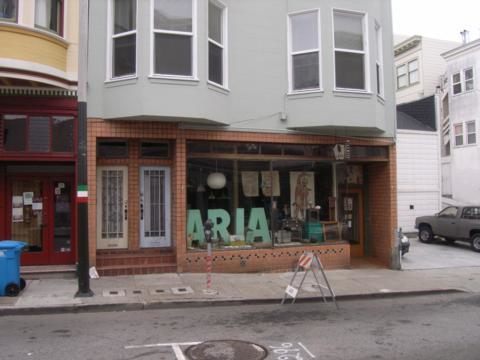
Bill Haskell’s quirky French flea market shop Aria on Upper Grant is gone.

7892818

Yone SF is gone—as one Yelp reviewer wrote: Yone is AMAZING!  Seriously, you rarely find places with as much character and uniqueness as this store.  Such a gem.  However, it is the kind of place you should only visit if you have a lot of time and are mentally prepared to fall into another world… totally fairy tale.

Rose Pistola—once the most famous Italian restaurant in the city—gone. So many others, too numerous to relate.

Washington Square is entirely closed and fenced for reconstruction that while not permanent gives the focal point of the neighborhood a desolate, unconstructed air.

I’m told it’s rising rents from greedy landlords, coupled with the length of time it takes to get permitted. The small independent shops can no longer make it.

I’ve been drawn to these tiny one-of-a-kind shops my entire life. And nearly all are gone, the most poignant, and painful, being my beloved Patina Antiques on Bleecker Street in the West Village in New York—gone now for decades.

The size of a shoebox, Patina Antiques was owned by a modest and quiet gay guy and his much younger handsome equally quiet lover. They specialized in small objects of unimaginable oddity and uniqueness.

Years after I left the Village—our apartment was on 5th Avenue at Ninth Street—I learned that the store was robbed and the young assistant murdered during the robbery. The day after, the owner shot himself in grief.

These losses weigh heavily on my heart, some, like Patina Antiques, because of the time in my life it occupied; and others, like Conor Fennessey, because of my friendship with him, and the time we together spent unearthing a city I didn’t know.

And one loss leads to another, the loss of my marriage with my wife weighing me down most recently, and sadly.  Inconstancy comes in many disguises.  When disguised as love, its appearance hurts the most.

Universe Speaking?

I’m sitting in the 2nd floor waiting area at Kaiser Hospital in Oakland while my son Adam is having a chemotherapy port inserted in his chest. It’s unimaginable that this is happening—my beautiful boy diagnosed with Hodgkins Lymphoma a week ago—and yet the step-by-step, procedure-by-procedure regimen leading up to treatment feels weirdly routine and obviously necessary. I’m where I need to be now, and grateful that I can be at his side, now, when he needs the support.

The universe has a mysterious way of speaking. I attach no spiritual significance to it, but is it just coincidence that I’m living here in Oakland, now, close to Adam and all the facilities for his treatment?

Had my wife not dissolved our marriage I would still be living with her in San Francisco. I only moved out on September 1st, a few days before learning from Adam about his condition. Had my good friends Robin and Ken not offered me their house in Oakland god only knows where I’d be living today. Had I not, after twelve years of not driving, decided to get a California license back in June, I would not be driving Adam to appointments. Coincidences? Whatever they are, I’m fortunate to be where I am right now.

Despite the resulting convenience for me, I do not absolve my wife from her decision to end our marriage. She has lost her right to be concerned about me, or my family, however genuine. She gave that away when she gave me away. It still hurts.

Sam came from Boston this past week to cheer up Adam, and me, with his congenitally happy personality and positive spirit. It made an otherwise sad situation joyful and light and filled with cheerful energy—a world of difference.

abaHjqAMQGCUprpp8P9nCg

The peculiar aspect to this is that as the next six months progress, all the chemo, treatments, and new scans will become routine. I hear this from the too many friends I have either undergoing cancer treatment or have done so in the past. Too many. What once was something that happened to other people is now suddenly, from nowhere, happening to my son. And he will deal with it as he must, and we will, too. His intention is to persevere with his 4th year medical school program, with the full support of his faculty and administrators. Everyone is with him.

Soon Adam’s mother will visit, and his older brother David, and perhaps his good friends from high school. His life will be full on all fronts, filled with people who love him.

Best of all he has his lovely wife Rachel, wife as of last Thursday when they moved the date of their marriage up from May 9th, 2020, to right now, immediately following Adam’s biopsy.  Already a physician, Rachel knows what Adam is facing. They face a happy future together.

Diary -January 15, 2018

Angie Mattingly was the leader when I participated in the Landmark Forum four years ago.  Many of the things she said still resonate.

Being up to something

Landmark Insight by Angie Mattingly, Landmark Forum leader

What marks a visionary is dedication to a possibility, a dedication that rejects outright the complacency of those who prefer the status quo and insists that there has to be another way. Instead of reaching for the nearest, most convenient conclusions, their commitment causes them to push hard against the limits of what others might see as possible.*

When we are up to something, we are called to step forward, to be and act in wholly new ways, to risk what we already know for something beyond the predictable. To be up to something calls forth strength and creativity—it generates energy and excitement that attracts and invites the participation of others. When we are up to something, we step outside the constraints of our circumstances, and stand for a possibility. We don’t reference what’s possible against who we’ve been or what’s been done in the past, what’s predictable or expected, but rather against what we stand for and see as possible. Conditions and circumstances begin to reorder and realign themselves inside of what we stand for. Our relationship to possibility moves from an abstract ideal or remote objective to a viable, living reality.

Diary January 8, 2018

In brief, people with self-respect exhibit a certain toughness, a kind of moral nerve; they display what was once called character, a quality which, although approved in the abstract, sometimes loses ground to other, more instantly negotiable virtues. The measure of its slipping prestige is that one tends to think of it only in connection with homely children and with United States senators who have been defeated, preferably in the primary, for re-election. Nonetheless, character—the willingness to accept responsibility for one’s own life—is the source from which self-respect springs.           Joan Didion

Diary January 6, 2018

My plan for the year is to write a periodic diary, in the vein of Alan Bennett in TLS.  Short entries, sparked by some event, or person, random idea, or thought for the day.  Bennett is a master at this.  I won’t be so droll.  But, here goes:

Went for a late morning swim which while the water is cold the sun was shining so 51 degrees didn’t feel so stunning.   Nevertheless when I got out I found my friend Stevie Ray stretched prone on the floor of the showers, unable to stand for fear of passing out (he’s done that many times) due to hypothermia.  The winter water has claimed several victims in the past weeks, with a few times paramedics needing to be summoned.

Being at the South End Rowing Club this morning resulted in an confrontation I hadn’t planned but wasn’t unhappy to experience.  I’m on the board (an eye-opener to dysfunction, ego, and human frailty); during the last months of 2017 a drama ensued regarding the disposal of two thirty-year old rowing shells, both having been deemed unseaworthy in the open Bay by one of the owners of the company that manufactured them.  Neither had been rowed in years, and both required repairs before they could even be put back in any water.  The needed to go.  Two brand new shells were purchased to replace them.  That should have been the end of the matter.

Not so.  A non-board member rower (fire captain and assistant rowing coach at a San Francisco high school)–largely absent from the club for many years but “Now I’m back!” on the scene again–ranted and bullied the Boat House Captain, Vice-President, and President (who instigated the entire controversy) into keeping at least one of these old tired shells as a training vessel for new rowers.  The sitting Rowing Commissioner and most of the board were against the idea, though our protagonist enlisted the support of the newly elected naive 2018 Rowing Commissioner.

I’ll refrain from describing the illogic of this plan, or the backroom politics of their campaign.  ALL the serious rowers at the club were against keeping either boat.  Nevertheless, duplicitous behavior and spineless decision making (the Boat House Captain changed his mind no less than four times) resulted in one inappropriate boat being retained.

My confrontation this morning was with the new 2018 Rowing Commissioner, a thin-skinned fellow constantly espousing “transparency” when in fact a key participant in the duplicitous deeds.  He once had my, and other rower’s support, but that’s all lost. He, and the lily-livered Boat House Captain, backed out of an agreement they had reached only the night before.

All of this is small time politics.  In the era of Trump, when every day is more ghastly than the one before, who could care whether two old boats stayed or went at a tiny rowing club in San Francisco.  But the issue was never about the boats.  It was about–as most issues are–people and their egos.  I should neither be surprised nor disappointed but I am.

Friendship

Once I knew a woman who shortly after the first time we met said friends come to us for three reasons: for a season, for a reason or for a lifetime. What a load of crap. Of course it was a set-up, a hedge against the future, a way out opened up at the very beginning.

irish-wall-1

Yet, there aren’t many lifetime friends, at least in my life. And some friends do come and go, sometimes with rupture, sometimes quietly, sometimes from inattention, time moving on.

I’ve been thinking a lot about friendship. Maybe it’s age. There are friends we have from our youth, from school days and college, sometimes from work, sometimes from shared interests, from shared fellowships. We inherit friends from our families; gain friends from partners, our children. Why some people move from acquaintances to friends isn’t often a mystery. Why they move from friends to the most essential people in our lives often is.

img_1264


In my life I have had two true, unconditional friends: one gone and one lost; both complicated and enriching at the same time. I’ve had a several close friends that couldn’t survive my former marriage, lost because of it. I have one close friend in my life today. I have three or four other friends whose friendship I would very much regret losing. I’m speaking here of male friends, guys with history, my own Spartan brigade, living in my self-defined circle of trust. I have two or three women friends, too. Both did survive that former marriage and deepened afterwards.

img_3147


But let’s add that up: ten in all, not all present. And of the group, I see only two on a reasonably regular basis. I’m not going to name names but each of my friends has played a role in defining the man I am, some more some less. I would not be who I am having never had the two great friendships in my life, distant though that they are. Their influence and importance, a product of time and place and circumstance, remains undiminished. Rarely a day passes when I don’t connect something I’m doing or thinking to one of them. They were early guides to life. I see much of the world through the lenses of their erudition, emotion and instruction. A legacy of the past into the present.

15508166


I have a few friends whom I’ve known for more than sixty years, childhood friends who remain today, not closely, but with a lifetime of shared memories that can’t be duplicated. I wish I saw them more often. I have friends who were once close but for reasons unexplained, have left my life. I have college classmates who hold a special place in my life, sharing experience of a very special time. I count one among my closest friends.

college-photo_19126


I have several friends with whom I feel a close bond, yet rarely see.  They live far away, in other countries.  Their friendship is as real to me as friends I see more frequently.

alansean-1

New adult friendships are hard to form—real friendships, not the dozens of “friends” who inhabit our social nexus. These social friends are important, too; without them we would be awfully isolated, even lonely.

ser-swim-cap-png


I remember once on a flight from New York to Singapore sitting next to a guy and telling him my complete life story, every intimate, grisly detail. And he told me his. He knew more about me than 98% of the people I know. I never saw him again, and don’t recall a single detail of the conversation but that it happened. Was he a seventeen-hour friend?


I know the categories I create, the friendship buckets into which my friends fall. The delineations and distinctions are clear, based on shared experience, shared history, shared revelations.

img_2129


I no longer would want the level of intensity my old, close friendships offered. (I’m open to being surprised.) I have my wife and my sons and their families, and my few good friends—all sustaining and continuously enriching.

3boys

Still, I wonder: are there new friends out there?

img_0145


A Man Like Any Other

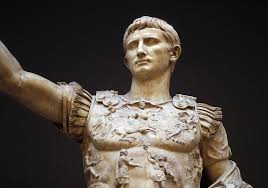
“He is a man like any other…He will become what he will become, out of the force of his person and the accident of his fate.” *

*Athenodorus, speaking of his pupil, Gaius Julius Caesar Octavianus (Augustus Caesar). John Williams, Augustus.

imgres-6

Are we ever the person we wanted to be?  The dreams of youth fulfilled, even the regret-tinged longings of middle age?  Or have the accidents of fate diverted us from those early ambitions, for better or worse?  Were our original intentions ever feasible, or even appropriate? Looking back with the presumed wisdom of hindsight is always misleading because we can’t know what we never knew. What we know, then or now, is such a thin slice of reality that it can barely be trusted. I waiver between these near extremes—on the one hand believing in the force of my person and on the other feeling diverted by these accidents of fate. Why the choices I made versus any others? Why this friend rather than that one; this marriage rather than another? There are many, many forks in my road, choices that either I make or were made for me.

And those we believe are made for us are also choices we made ourselves.

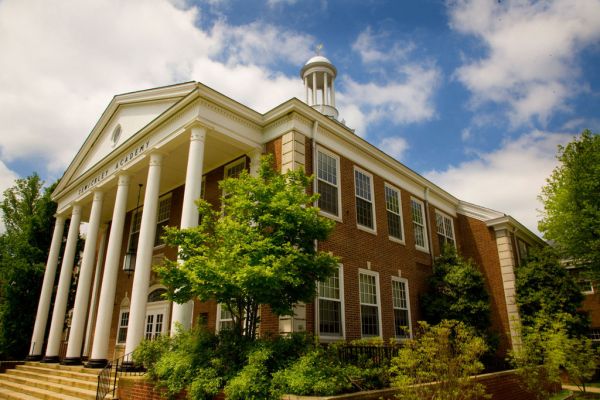
From the time I was in middle school I wanted to be an English teacher. Literature was my reality and I saw that there were people who made that reality their career. I read and read and excelled—the top English student at my small school in Sewickley, Pennsylvania. I won the English Prize at graduation (having barely passed chemistry that year.)

sewickley-academy-lower-school

In college I majored in English and attained high honors. I wrote my junior thesis on Virginia Woolf and my senior on W.B.Yeats. My favorite course was C. Douglas McGee’s Literature as Philosophy—a profound experience, coming as it did at a traumatic time in my life. It bound me to Doug and his wife Phoebe until both were gone many years later. One of the last letters Doug wrote when dying in Austria was to my son David. I can recall a few of the many books we read in Doug’s course even now: Conrad’s Victory, Doctor Faustus and The Magic Mountain by Thomas Mann, George Santayana’s The Last Puritan, Eliot’s Four Quartets.

doug-mcgee

We shall not cease from exploration 
And the end of all our exploring 
Will be to arrive where we started 
And know the place for the first time.


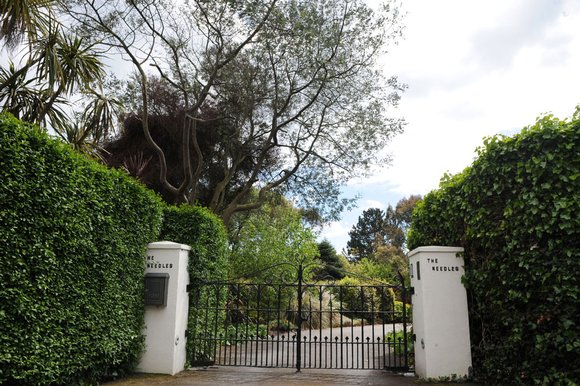
My passion for Yeats and the Irish Revival led me to a graduate degree in Anglo-Irish Literature at Trinity College, Dublin. I rented the near empty shell of a once grand Georgian house called The Needles on a cliff above Dublin Bay in Howth and my dream was a reality. The Howth Light cast its revolving and spooky beam though all the curtainless windows night after night. A ghost resided in the empty wine cellars beneath the basement, the caretaker claimed. My living space was carved out of the former servants’ hall, beneath the main floor of the house, though opening out to the back tangle of overgrowth leading to the cliffside and the banks of gorse and wild roses concealing the rocky slope down to the water. The house had no functioning central heating, only fireplaces and one electric heater that followed me around during the chilly months like a faithful dog. Next door was the rhododendron filled border of the desmaine of Howth Castle. The Earl of Howth came by once to inspect his young American neighbor. I would see him walking his wolfhounds along the cliffs early in the morning. This reality was indeed like a dream.

timeandplacehowth_156923k


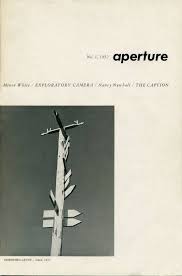
How does one sustain this kind of dream? After graduation I returned home, having been accepted to the PhD program in literature at the University of Chicago. I never went. Instead I moved to my mother’s cousins in Darien, CT and looked for a job in publishing in Manhattan. On a whim I wrote to Michael Hoffman, the publisher of Aperture, the renowned photographic quarterly and book publisher. He responded and asked to meet at his townhouse on East 37nd Street. From the moment I walked in the door he assumed I would come to work with him at Aperture’s editorial offices in Millerton, in Dutchess County. I became the managing editor— an accident of fate that changed the entire course of my life. I can’t call it force of my person beyond the decision to write in the first place. Events unrolled with their own force.

imgres


I moved to Millerton, first renting a room in a Gothic boarding house in Pine Plains called The Pines. It was straight out of Charles Addams. Michael was deeply amused. Later I moved to Salisbury, CT over the New York line, then later yet back to Pine Plains to the Willow Tree House, my tiny cottage shrouded under an immense willow and covered in Dutchman’s Pipe.

imgres-1


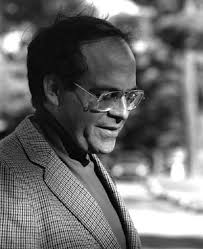
Michael’s vision was to create a commune on his Shekomeko property. Though it never came to pass, I spent many days at his handsome 18th century farmhouse, many dinners, many weekends there with his friend and patron Authur Bulowa, visiting photographers, and itinerant fellow travelers such as Jonathan Williams and his Jargon Society cohorts.

jw_middlecreek


People come and go in our lives, and all of the friends I had then have all disappeared. Christopher Hewat. Ann Kennedy. Mike McCabe. Mark Goodman. Jay and Steve, gentlemen farmers from whom I rented the Willow Tree House. Some are gone entirely: the complex friendship with Michael Hoffman. Paul and Nancy Metcalf. Dale McConathy, a friend and another fork in the road, life’s pathway.  Now dead nearly two decades. What a long time ago. I wonder about these friends often, those gone and those lost.

imagesimgres-2imgres-3shelf_life5imgres-4

Those days are like yesterday.

Forks abounded with what seemed quick succession: New York, Artists’ Postcards, marriage, business school, advertising, children, Spain, Singapore, Australia, back to New York, Midwood and Joan,  flights everywhere, Paris then Japan, divorce, San Francisco, swimming, remarriage, grandchildren, today. That’s thirty years of life, by force of my person and the accidents of my fate.

midwood_front_door


Today’s my second wedding anniversary with Brenda. Was it fate that we met? Was it force of person that we married? A lovely conjunction of both. That’s the way life is lived.

img_5919


The Big Swim

It’s been a year of big swims at the South End Rowing Club: Steve, Andrew and Cameron across the cold, challenging North Sea; Asha in force five winds across the English Channel; Sue checking off all twelve bridges in Portland’s Bridge swim; Sofra nailing both Catalina and the length of Tahoe, only weeks apart. Ryan setting the record time for another length of Tahoe; Melissa’s Catalina butterfly. Kim will soon swim for over forty-five hours from Sacramento to San Francisco. There have been other Tahoe lengths, by Susie, Scott and Elaine. More Catalina’s.
_DSC5564


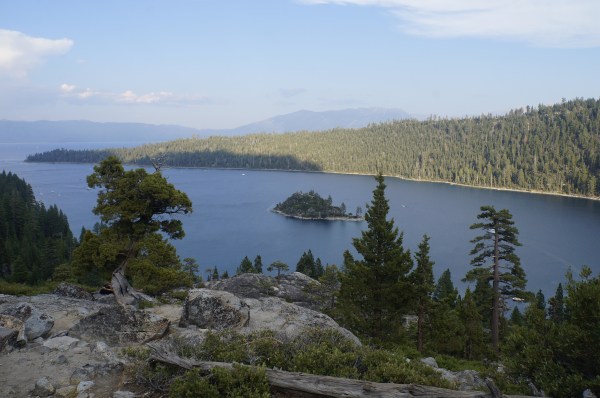
My swim this past Monday morning wasn’t quite so big (‘though champ Simon called it “a big effort”) or quite so challenging as these, but big enough for me. It was a challenge I set for myself to celebrate turning 65: swim across a diagonal width of Lake Tahoe. Swim Commissioner and Tahoe swim master pilot Tom Linthicum devised the route he’s dubbed The Viking: Cave Rock on the Nevada side of the lake to the top of Emerald Bay in California. It’s called The Viking because to complete the distance the swimmer must walk up the beach at Emerald Bay and knock on the door of Vikingsholm, the 1929 Scandinavian inspired mansion that sits at the head of the Bay. It’s hoped that Odin might answer. It’s been a popular swim this summer, with Mina, Cathy, Robin, Kim, Andrew and Zach already completing it.

fullsizeoutput_2362


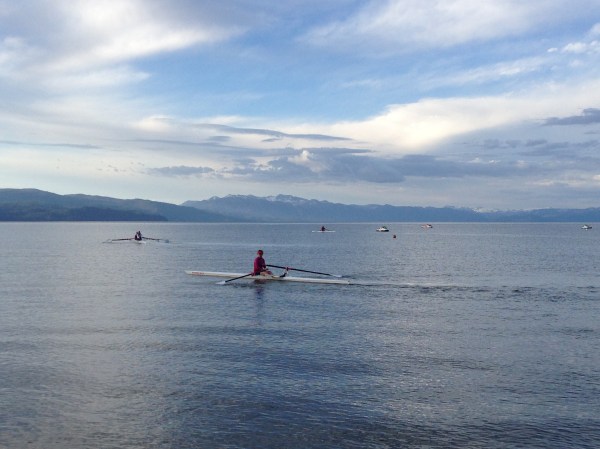
Inspiration came the year before when I swam in Tahoe’s mountain ringed, azure waters for the first time while accompanying my wife Brenda at the North Tahoe Rowing Regatta. The fresh crystal clear water transfixed me. I knew about the Olympic Club Trans-Tahoe Relay, but wondered aloud whether anyone swam across solo. Brenda said of course and that’s when I decided perhaps I could do this.
IMG_0196


Things got serious after my birthday in January, when feeling older in body than in mind, I made the commitment to swim across the lake. I joined the USF master’s swim team to improve my speed and technique and with Brenda’s expert help laid out a program of training swims once the Bay began to warm up in May.


The journey leading up to the swim has been as rewarding as completing the swim, the biggest surprise being my delight with being back on a swim team and competing. From the time I was eight until senior year in college I was a competitive swimmer, with a few records and achievements to bank on. I swam on and off over the years since, but never competitively again until this year. Now, with both the Pacific Masters short and long course championships behind me, I’m back in the competition groove, enjoying my team, Coach Val and improving my times. Our team has a healthy older contingent so I look forward to years of active participation.

IMG_0253


Training in the Bay has had its own rewards, both in increasing my endurance and improving mindset. After swimming nine continuous coves, for over four and a half hours, I knew nothing could be as bloody boring as that. I tested feeding routines, settling on a combination of CarboPro mixed with Hammer Gel, with a few Gu’s and suckable baby food (apples, blueberries and oats) in between. (But, I never acquired the skill to pee and swim at the same time without stopping.)


From beginning to end, Brenda guided my planning. There wasn’t any question that my crew would be Brenda together with our good friends Jim and Michele Knight—Jim being a fast and expert swimmer himself. Tom Linthicum would captain the boat and lead the swim.


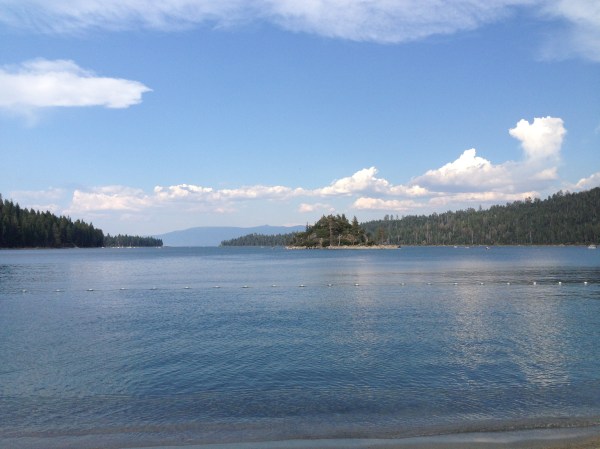
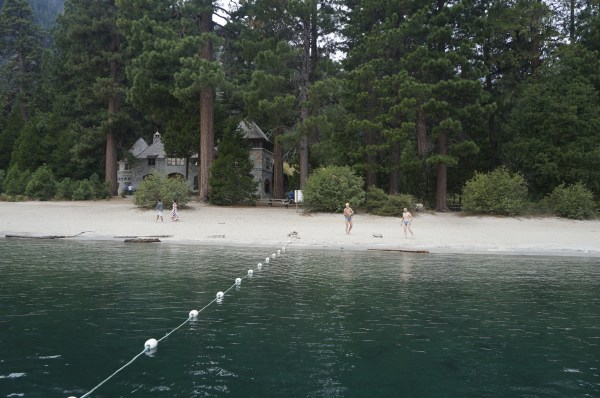
We arrived in Tahoe on Saturday afternoon and headed straight to Emerald Bay so that I could see my destination—get a good fix on the house and the beach where I would be finishing. We walked the mile down to Vikingsholm beach, where Jim and I took a test swim in the warm water. Any anxiety I had about getting cold while swimming was alleviated. Compared to San Francisco Bay, the clear fresh water was balmy.
IMG_0436


After dinner made by Michele at home (we had rented fellow SERC member Trudy Molina’s house near Tahoe City for the long weekend) we all turned in around 5:00pm, since we were getting up at midnight to meet Tom at his boat—the Ghost Rider– moored in South Lake Tahoe at 2:00am. Once there, we made final preparations, securing glow lights to the kayak, organizing my feeding bottles, making little last minute adjustments to how the swim would proceed. We set off from the dock and motored over a few miles to the small boat launch at Cave Rock in Nevada, ready for the 3:00am start.


The night was cool, not cold. Light from a half moon behind overall cloud cover barely broke through the general darkness. Brenda was my first kayaker. Once she had the kayak in the water, we were ready to go. Tom moved the boat out into the lake, Brenda began paddling, and I walked down the boat ramp and swam out into the black, flat mysterious water.


Swimming is always solitary—even on a relay. Swimming in open water is doubly so since nothing is remotely in control of the swimmer except his own movement, his own thoughts. Swimming at night in the dark, in the dark lake water, creates its own watery cocoon of awareness. The only things to see are the glow sticks glimmering ahead on the kayak.


During one of my training swims I had counted my strokes from the end of the South End dock to the flag at the west side of the Cove: 335 strokes, about a quarter of a mile. I used this mental yardstick as I swam across the lake. One cove down, two, three…Sometimes I would lose count, especially if interrupted by a feeding, and start over; or just count 100 strokes, multiple times. It passed the time. By the end I was counting 10 strokes, 10 strokes, 10 strokes.

IMG_2958


At dawn I figured I was about half way across. Oddly, time passed more slowly in the daylight. Maybe it was because distances are so deceiving on the water, especially from the swimmer’s point of view. When I reached the opening of Emerald Bay I knew I was on the home stretch. It seemed to come easily up to that point—despite often veering off course, swimming away from my kayaker. Then my boat crew—Brenda, Michele and Tom—would all yell out “stay with the kayak, stay with the kayak!” Tom even held up a sign at one point STAY WITH KAYAK. Did I swim an extra quarter mile all those times looping back to my guide? I have no explanation why I often swam off to the left. Pulling harder with my right arm?

_DSC5590


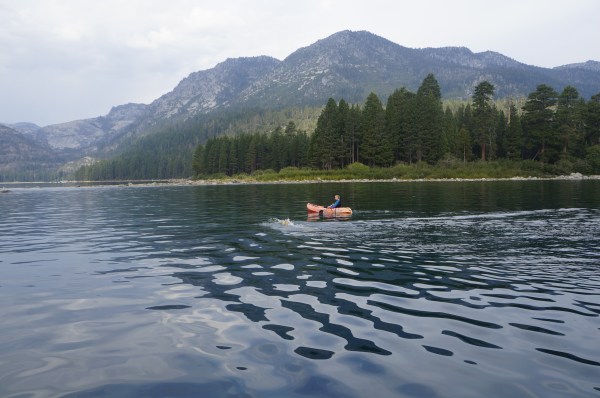
Swimming the length of Emerald Bay, in the early morning, is a magical experience. Tiny Fannette Island, the only island in Lake Tahoe, floats near the end, with it’s ruined stone “Tea House” perched on top. The length of the bay is over a mile long and again the distance looks deceivingly close. I thought I would never get to the island! About a hundred yards from the beach Jim jumped in and swam along side me. As evidence of how tired I was feeling, Jim swam sidestroke as my freestyle was slowing down. Mostly it was due to my hip muscles aching.
_DSC5600


Once walking out on to the beach, I had to make my way up to Vikingsholm’s front door and knocked. Oden didn’t answer, and only a few tourists were about, no doubt wondering what this hobbling guy with the white Desitin covered back was doing. Jim and I swam back to Tom’s waiting boat, the kayak already having been brought on board, and we headed back to the marina in South Lake Tahoe. I shivered—cold for the first time—and grinned like the happy swimmer I was. Six hours and fifty-one minutes. My goal was to make it under seven hours.
_DSC5657


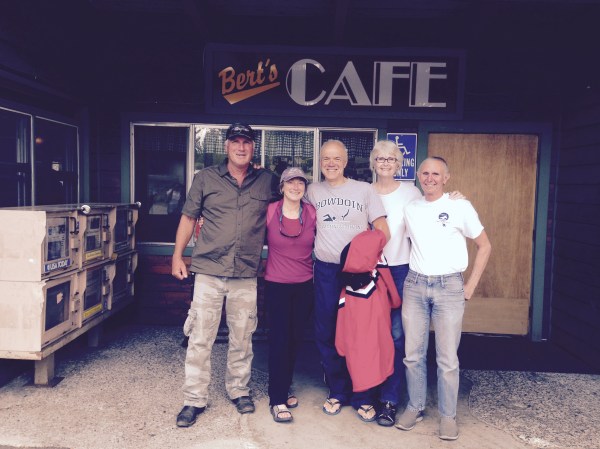
Once everything was packed up at the marina the five of us—up all night—went to Bert’s for breakfast and celebration. My swim was over, a success, a goal achieved.
fullsizeoutput_2360


Las Vegas

IMG_0308


Las Vegas. Everything about this town is absurd. There’s no reason I should like it. I don’t gamble. I don’t drink. I don’t smoke. I hate 115-degree afternoons in July. I can’t afford half the merchandise in its glittering high-end shops. None of the hotel swimming pools are any good for lap swimming. Many of the visitors are wholly objectionable. But for a few days, every once in awhile, I really like Las Vegas.

IMG_0310


If you abandon all sensibility Las Vegas is a tiny wonderland. Days of the week disappear. Day and night can disappear. Time disappears. It’s so funny that watch stores abound, yet there are no clocks anywhere. Inside the vast casinos there are no windows. No daylight. Music descends from the sky, inside and out. Inside the Forum at Caesar’s inside looks like outside. Everything is ersatz, nothing is real. That’s the magic of it all.

IMG_0306


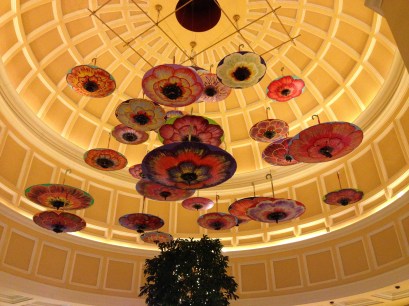
I spent five days in Las Vegas this week attending COSMOPROF, the huge cosmetics trade show. (A cosmetics trade show is as unreal as the town itself.) I stayed at the MGM Grand, where I had stayed once before—years ago back when COMDEX was a separate computer event, not combined with the Consumer Electronics Show. I remembered a huge, 100m+ long pool, ideal for workouts. That pool is gone, replaced by acres of many pools and bars and a snaking river of water that on one 110+ degree afternoon was crowded with couples, families, bands of about-to-be drunk young men, all holding exotic drinks in pastel cups, winding along the waterway in a trance of overheated happiness. Too hot, too crowded for me.

fullsizeoutput_1cdc


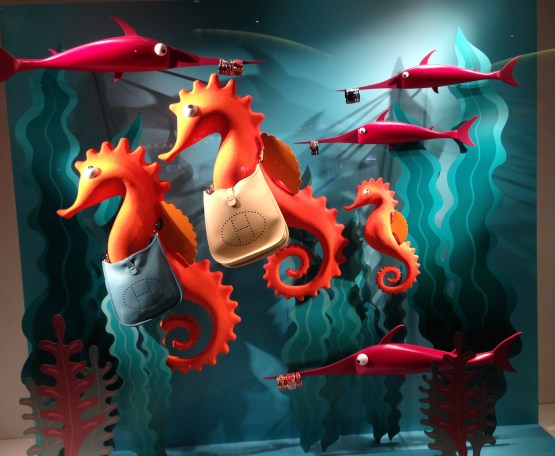
In the daylight Las Vegas is a sad construction, an outdated amusement park without the thrills. At night, though, Las Vegas turns on its charms. The fountains sparkle, the brilliant lights on Las Vegas Boulevard flash, the silly hotels suddenly become palaces of delight. Are we in Paris? Venice? Ancient Rome? The Middle Ages? Water jets play their fantasy; walls of water cool the street. Nowhere is shopping fancier, more experiential and concentrated. Where else in the span of about half an hour could you buy a half million dollar Richard Mille watch, a hundred inch strand of Mikimoto pearls, a fifty carat Harry Winston diamond ring?
fullsizeoutput_1ce3

Las Vegas sits in a basin on the floor of the Mojave Desert, surrounded by mountains.  By any reckoning there shouldn’t be a city here.  A make-believe city in a make-believe landscape. Natural water resources are scarce yet water is everywhere, like manna from Heaven.

IMG_0338

Returning to San Francisco, to a cool foggy evening, was a relief on many levels.  Back to reality.  Yet I’m grateful for those few days of heat and fake glamour and wild diversity.  I’m glad Paul Smith had my missing blazer button–small pleasures add up.

IMG_0352