August 31, 2020

I meant to write about our last walk.

We had nothing to do but gaze—

Seven years, now nothing but a diverting smile,

Dalliance by a river, a speeding swan…

the misleading promise

to last with joy as long as our bodies,

nostalgia pulverized by thought,

nomadic as yesterday’s whirling snow,

all whiteness splotched.

Robert Lowell

One year ago today we said goodbye in her living room, me behind the leather coach, she standing in the open space reserved for yoga. She said she was sorry our marriage didn’t work out, or a few words to that effect. I said I was, too. That was all. The end lasted perhaps less than a minute. Then she was gone– as I had requested, in order to spend the last night alone before moving out forever on September 1st.  No sad goodbyes at the garage door, at least not sadder than the one we had standing in the living room.  Sad enough.

I saw her briefly twice since that August afternoon: once, fleetingly, when she handed me mail and lied to me at a South End Rowing Club members’ meeting; a second time at the South End holiday party where she refused to acknowledge my presence.

Misleading promises…that might be the swansong of our marriage. Promises never kept. Both guilty as charged. Nothing lasting with joy as long as our bodies. No joy. No bodies.

One year is a short time in a person’s life and an eternity. From that afternoon a year ago, still standing in her house, to today in my apartment in Boston, I chart a journey measured in more than the 3,100 miles that separate us: a journey of renewal.
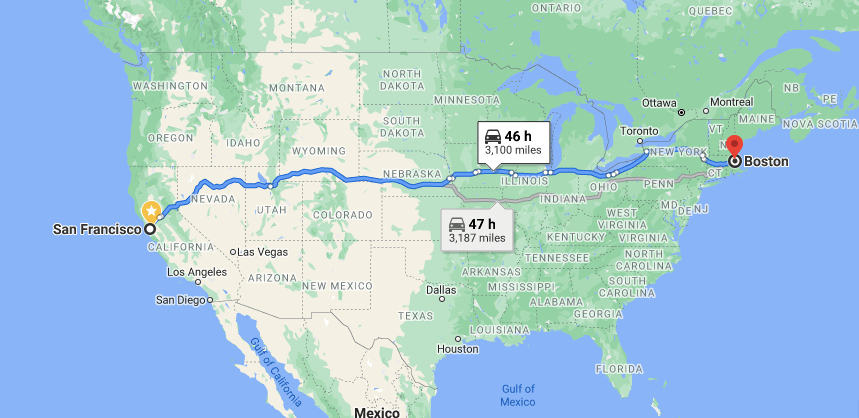
She always said, “Plan the work, work the plan.” That’s what I did—(though she accused me of inconsistency.) The pieces fell into place, in sequence, on the schedule she allowed me to set: complete the spring teaching semester; acquire a driver’s license; take the leadership course at UCLA; undergo hand surgery; pack up all my belongings; rent and load the Pod; move out September 1st. Clockwork.

Through the exceptional generosity of friends I was given a house in West Oakland in which to live for the remainder of the year, a gesture for which I will be always grateful. The house, combined with my friends’ support, proved to be the transitional respite from the deadening despair of divorce that I badly needed. My friends understood; they knew her longer than I did and saw what I had failed to see.
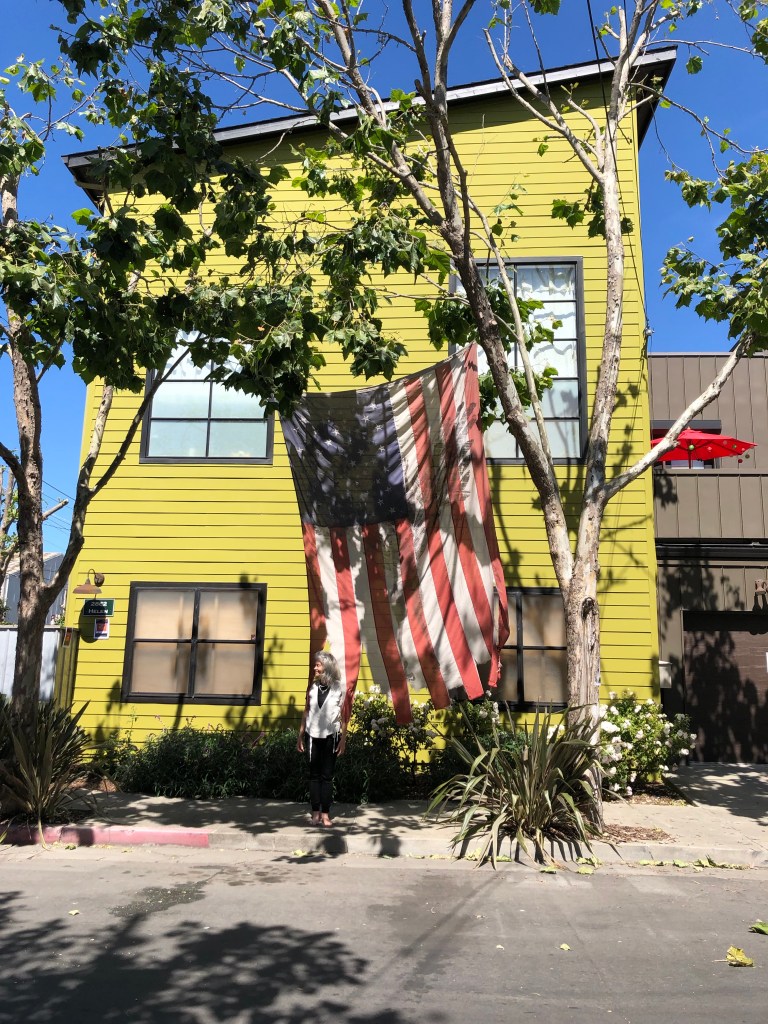
Days after moving being in West Oakland took on a new significance. It couldn’t have been foreseen. On September 5th I learned from Adam that he had been diagnosed with lymphoma. Treatment was nearby at Oakland Kaiser Hospital. I was able to accompany him to the bi-weekly chemo sessions, drive him home…be there with him when it mattered most.

The autumn sped by: teaching at Hult, weekends with Adam, Adam’s Point farmer’s market, walking to West Oakland Bart, discovering open studios, swimming at the South End.  Sam visited. David visited. Thanksgiving and Christmas with Rachel’s family. Then it was time to move. I was sad to be leaving Adam during his final weeks of chemo. He was in good hands with Rachel, her family, and his Bowdoin friends.

I loaded a final lot of boxes, my bike, odds and ends, into the Pod, stored close by in West Oakland.  It would wait for shipment until I had a place to live. Work the plan.

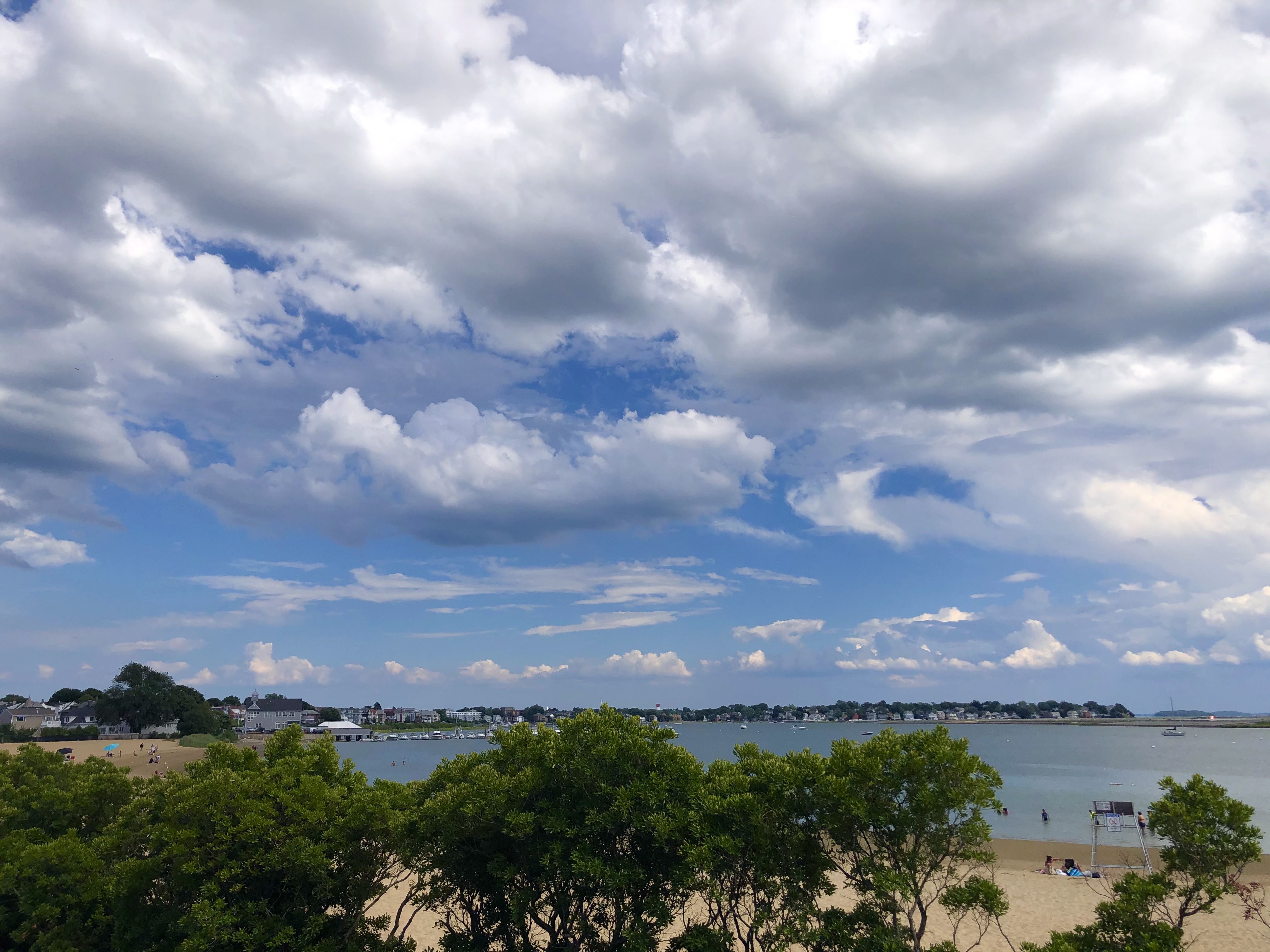
January/February with Sam, Saga, Miki, and Ethan: a safe and comforting haven.  On March 1st I moved to my apartment in the Orient Heights section of East Boston, directly across from Constitution Beach. Purposeful for open water swimming, a walk to Sam’s, and a lucky choice once grounded by Covid-19.  I’ve suffered little if at all.

It’s the last evening in August, an evening one year ago I spent alone in a house that was never my home, least of all on that night. I had only my packed suitcases to remind me I once lived there. Tonight, while only a rented apartment, my place is truly my home. Maybe it’s the privilege of all single dwellers, that everything is ordered to one’s own taste. Sharing space can be harder than sharing a life.

I’m listening to a classic recording of Victoria de los Angeles singing Madame Butterfly. I found the CD set in a used bookstore in West Stockbridge only a week ago. I’m a sucker for the pure glorious rapture of this opera. I’ve heard it at the Met, the Berlin Opera, and the Munich Opera.  It never fails. I thank my late friend Ray, and his legacy CD collection, for rekindling my joy in music—especially now.

What have I learned during this year away from her, and my life with her, and my life in California?

That the northeast is my home. The golden hills never sparked joy or any sense of belonging. I was always an expat.

That neither Ellen nor Brenda were mistakes. But establishing these relationships as a piece of my identity was.

That my own freedom to be, freedom to act is not dependent on another.

That I love open water swimming.

That my best friends remain my best friends.

That marriage is no longer a desired state.

That being close to the geography I love is important.

That life isn’t as long or as happy as we want it to be.

That happiness begins inside.

That I miss my dog, but don’t want one on my own (as much as a solace he would have been during this novel shutdown).

Now, a year away, I’m glad not to be there. I didn’t feel that then, or even know it was possible. I think the outcome could have been otherwise had there been a will to make it so.  She didn’t have that will, and I realize now the end was inevitable.

I am back where I belong.
Late August Afternoons

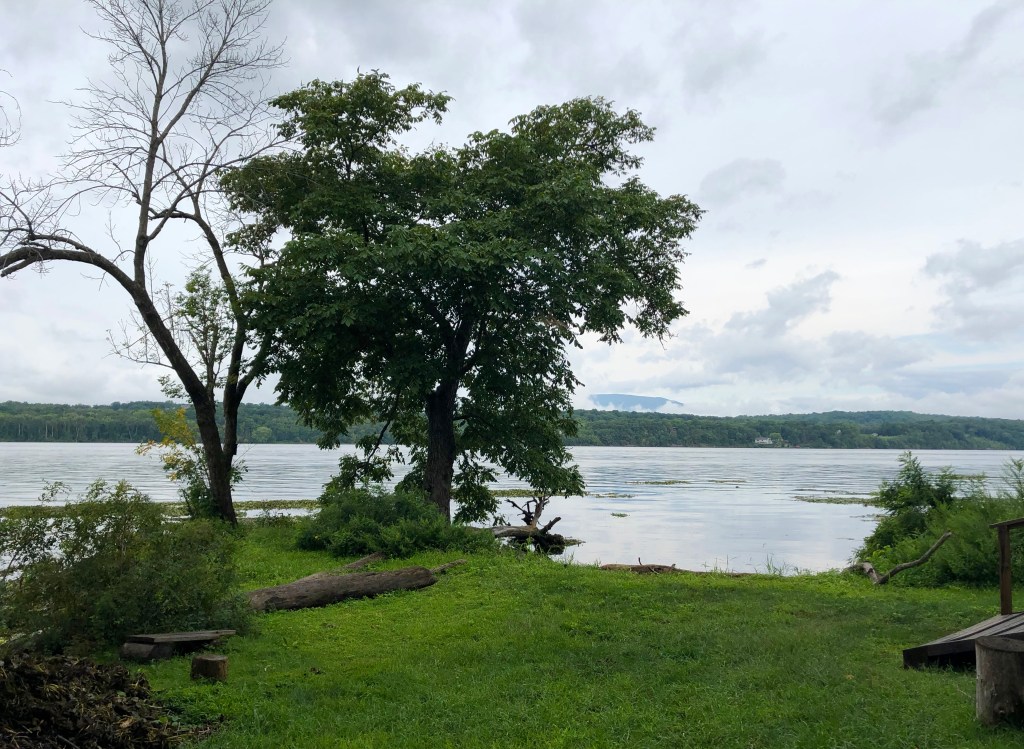
The immense privilege of late August afternoons at Midwood, the wide expanse of the upper Hudson River flowing beyond the lawn, the dark hills of the Catskills, and the lady of the house seated on the great porch overlooking a view that could have been painted by one of the luminous Hudson River School artists living just up the road.

The immense privilege of these late August afternoons at Midwood: a respite from all the many ills that afflict this summer of 2020.  The Covid-19 pandemic, Trump, George Floyd and racial discord, protests, fires consuming California—the ancient Anderson Redwood Forest in Guerneville burnt to stumps some nearly a thousand years old. It’s hard to find hope in any of this. Yet, here on the Hudson River in Columbia County, time stands still. Morning mist on the river lifts to sunlit afternoons and dazzling sunsets before the stars come out at night, and the lone green channel marker blinks across the water. No other lights mare the darkness of the night horizon on the farther shore.

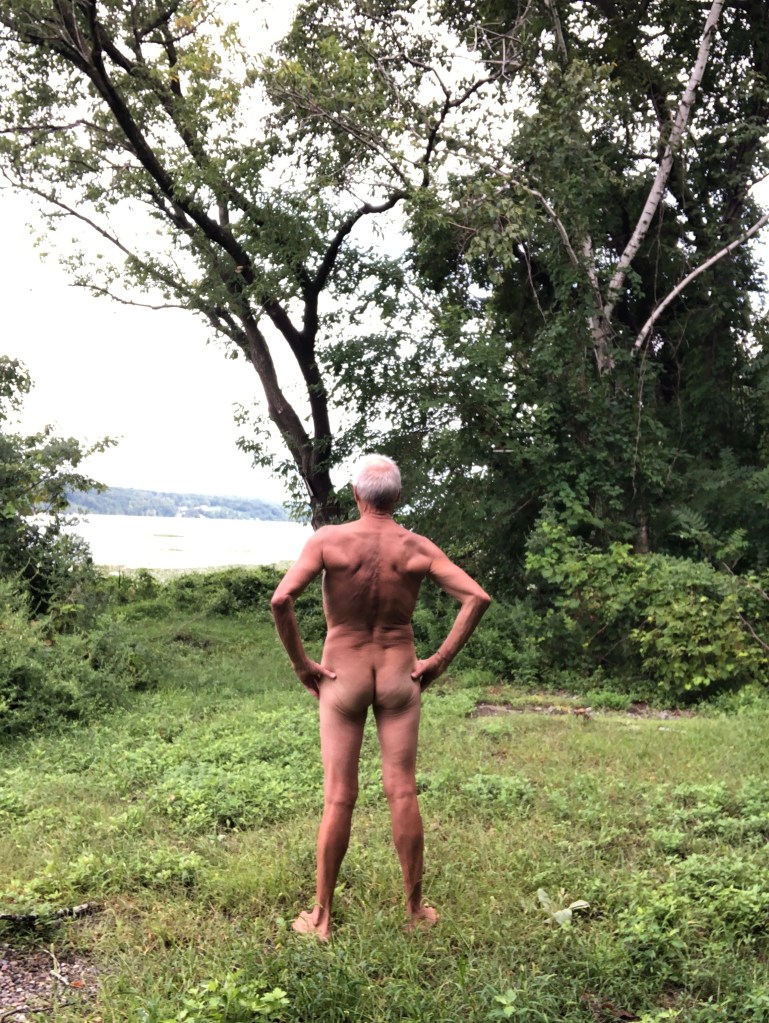
The immense privilege of these late August afternoons at Midwood: in this solitude I swim naked in the warm river, snaking through the water lilies to reach open water, the current at times so strong I swim in place. The rare freedom of my unclothed body only matched by the clouds floating above. Free to be, for a moment in time.

Can this be real?

Time can never relax like this again.

I’m reminded of Richard Murphy’s most beautiful poem, The Woman of the House. I’m not writing an elegy here, as he was, but I, too, am writing of a woman of the house, the woman who created this gracious home from a Livingston family legacy, a place where grace resides and beauty is a by-word of everyday living. Every time I’m here I wonder if it will be my last. The lady of the house is ninety-three. And yet another late August has come and I’m here again, participating in the immense privilege of life at Midwood.  Life is slower but undiminished. Time itself seems to have slowed down.

It was her house where we spent holidays,

With candles to bed, and ghostly stories:

In the lake of her heart we were islands

Where the wild asses galloped in the wind.

No wild asses here, but oh the wind did blow on Thursday when the sky erupted in thunder and lightning, downpour obscuring the river and mountains in a tremendous grey blanket of rain. By night the stars were back and dinner on the veranda with friends, to me one old, one new.

And those happy days, when in spite of rain

We’d motor west where the salmon-boats tossed,

She would sketch on the pier among the pots

Waves in a sunset, or the rising moon.

I’m thinking of other times here, times when I brought the women in my life to share this out-of-time experience of hospitality and warmth.  The many shad parties with Evelyn, the one with Ellen, the last time here with Brenda. Did she know then she no longer loved me, would find a way to end our marriage? It was the last thing that would have occurred to me then… but now, when I remember back it’s only the wistful end I see. I see it in her eyes, in the way she never held my hand, or showed any loving affection, the way she never touched me, never held me close. No lovemaking in our bedroom named Washburn, its antique quilt covering only a bed for sleeping.

They are gone, those women in my life. And yet I am here in the immense privilege of Midwood. Does friendship trump love? It’s lasted more than forty years—so the answer must surely be yes.

Maybe that’s love by another name.

This time I’m in the far bedroom, Bamboo, named for the eight-piece craftsman bedroom set adorned with bamboo inspired carving, a charming period piece of whimsical delight. I fall asleep at night to the sound of cicadas coming through the river -facing  windows, broken only by the occasional northbound Amtrak train.

Back in Boston this time away is a healing memory, late August afternoons in my blood. I have jam from Montgomery Place to see me through the winter (peach, apricot, blueberry, blackberry, raspberry, black currant) and a small painting of the Hudson at Midwood to revive what fades in my eyes. I will paint many more scenes myself as the season wanes.

The immense privilege of late August afternoons at Midwood will last when the inevitable more ephemeral days to come alter life in petty ways that must be fought against with all the energy I can muster, a debt repaid every day.

Please one more time. One more afternoon at Midwood, with the lady of the house laying the table for dinner, with friends old and new, civilization realized, out of time, out of place in this dumbed-down, tragic world and time we live in.

Through our inheritance all things have come,

The forms, the means, all by our family ;

The good of being alive was given by them,

We ourselves limit that legacy.

August 2020

August 2019 was the last month we lived together. It was the seventh month of living under the dark cloud of our marriage dissolving.  Month by month, day by day, without much drama, the life we once had together, thin as it turned out to be, edged closed to exit. Communication ceased. The drawn-out timing was my request to which she reluctantly agreed. It was hard, maybe terrible, for both us.  As I expressed myself here as elsewhere, she retreated deeper inside the protective shell that shielded her from explanation, responsibility.  She feared quotations of the truth and went to extreme, even legal, lengths to suppress any revelation.  The truth can bear only so much sunlight.

August 2019 was a difficult month. Recovering from surgery with a bandaged and unworkable left hand, I had to sort, sell, and pack all of my earthly belongings to be ready to move out of her house on September 1st.  Tension in our house while rarely breaking the surface was in the air we breathed. I have said before thank god we had our dog Bebe-a loving distraction from the lack of love between us. It was a time of unrelenting sadness. Was what could have been ever possible?

August 2020.  I have been gone nearly a year. We have had no communication but for a few lawyer letters summing up the divorce and an impersonal forwarding of my mail. She refuses to communicate. The Covid-19 shutdown and restrictions have undoubtedly not given her the return-to-life-before-Niland she envisioned, though I’m sure she’s happier on her own. A shared life is not in her DNA, as her many marriages and broken off relationships prove. Already always leaving is a thwart to commitment.

I’m beginning my sixth month in Boston. I moved across the country to be away from her, and to be closer to roots and geography I love. The pandemic has slowed my plans, too. I rely on my friends in San Francisco, unable to begin making new friends here. I am lucky and grateful to have family, my son Sam and his wife Saga and twin boys, nearby. Since moving in January one of my three closest friends in San Francisco has died. My best friend Josh remains in close contact and will remain so. We miss one another and compensate with video calls and our book club of two. My other friend Michael while a special presence in my life is occupied with his role as director of City Center at the San Francisco Zen Center—especially consuming in these viral times.

Do I resent her for ending our marriage?  I resent her more for not being the person I thought she was. I’m better off now, on my own, in nearly every way. A loveless, sexless, judgmental marriage isn’t what I ever wanted. The 2019 upending of my life that she caused is past–the past put in the past drawer of life. The logistics all fell into place, with help of generous friends and family who provided shelter, support, and love. I was never alone.

What’s so right now is the continuing pandemic with all its attendant uncertainties; the daily horror of Trump and his sycophantic Republicans; BlackLivesMatter and social unrest. And just last week a fatal shark attack on a swimmer off Bailey Island in Maine!

Amidst this atmospheric gloom, I swim in Boston Harbor nearly every day, teach my students, paint watercolors, read, listen to Ray’s huge collection of classical CDs, attend Zoom meetings, connect with friends virtually. My life is full.

I miss my dog. I miss companionship and the intimacy that love could inspire. I don’t miss her.

Already-always listening

We talk in Creating Course Leaders about climbing a mountain with no top.

What I have discovered about my already-always listenings is that they exist in a well with no bottom.  As soon as one already-always listening is distinguished, another one is revealed, one layer beneath, down ever deeper into the person I wound up being.

I’m reminded of the final lines of Wallace Steven’s Sunday Morning:

And, in the isolation of the sky,

At evening, casual flocks of pigeons make

Ambiguous undulations as they sink,

Downward to darkness, on extended wings.

Downward to darkness, on extended wings: I experience an expansion of self-awareness as I dwell deeper and deeper in my already-always listening.  I have come to realize that everything I perceive is through these already-always listening multi-layered filters.

I meet another person and before they ever speak I have processed my perception of them though a complex system of signs and codes that calibrate my acceptance of their very being. Speech adds another set of filters. Prior or newly acquired background information about them fills in the gaps.  All this before actual experience.

Years ago I took a two-day interviewing skills seminar and the facilitator claimed that the majority of hiring decisions were made in the first ten seconds of an interview.

One story I tell about myself is that I have escaped the WASP strictures of my privileged white male upbringing, that I have grown into a progressive liberal man free from all the conservative stereotypes that label implies. And while this is true in a political sense, I know, now, that my already-always listening ingrained since birth is grinding away in the background. I know my hierarchies of what I regard as human acceptability.  I have been able to distinguish between openness in my head versus openness in my life.

I realize that while I may say I have few prejudices of race, sex, education, origin, style, or other markers of human potential, my comfort zone of friendship lies in a narrow range of parameters—very particular parameters defined idiosyncratically by the things and characteristics I value most, and aspire to, in my own life.

I once compiled a list of the one hundred books one must have read to be regarded as a civilized human being; and I meant it. I have preferential, already-always listening, hierarchies of colleges and universities, States, musical taste, countries and nationalities, clothes (shoes!), physical size (obese people trigger an automatic negative response: they’ve lost control of their lives), food and dining, the list goes on and on—or deeper and deeper into that bottomless well of already-always listening. All of the boxes are rarely ticked.

While once I might have characterized these traits as discriminating, in a good sense, I realize now how confining these already-always listening filters have narrowed my life experience.

Distinguishing these layers of already-always listening is heavy going, revealing layer under layer. Ultimately it’s liberating, allowing for the possibility that I can be free to be and free to act.

A final story (with due respect for our avoidance of storytelling).

Five years ago I was traveling alone on a month-long trip centered on my son’s wedding in Finland. I was visiting Tallinn, Estonia for a few bitter cold days between Christmas and New Years, having come directly from Finnish Lapland a hundred miles south of the Arctic Circle. There were few tourists in Tallinn, and the nights were long, cold, and dark.  Having spent many enjoyable evenings in old-style, wood-fired saunas in Finland with the brother of my new daughter-in-law, I decided to find something similar in Tallinn.

I located a likely candidate outside the old city walls of the city. I walked through an unfamiliar working class neighborhood to find the place, hesitant to enter given its down-market exterior and sketchy environs. Nevertheless I went in. A group of guys in the undressing area were in the final stages of a drunken post holiday celebration. They paid no attention to me. I showered and entered the dark, exceptionally hot sauna, where about ten men were sitting in silent steamy contemplation.

There’s not much to know about ten naked men sitting in a sauna in a foreign country. Doctors or ditch-diggers? Professors or thieves? Old school communists or progressive reformers? No way of knowing. My already-always listening feared the worst and I was apprehensive.

After a while one guy observed, in perfect English, “you’re not from around here.”  I explained I was from San Francisco, en route from my son’s Finnish wedding. Immediately I had ten new friends: instant chatter about Obama and the American elections; the silliness of Mitt Romney, the emerging dangers of conservative politics. The men wanted to know everything about me and my life—all well-informed, in comprehensible English. With no embarrassment one man offered to beat me with his bound birch leaf branches, and I accepted. I stayed for hours. The evening turned out to be one of the most enjoyable, profoundly human, experiences of my trip.

Locked Doors

We are living in times of a global virus pandemic with no known end, a collapsed economy, and under the spiteful administration of, in the words of The Washington Post fact checkers, “the most mendacious President in U.S. history.”

Yet I dwell on the end of my marriage.  When I come to think I could care less about her—the “her” who forbids her name to be mentioned for fear her identity could reach the future ex-cons whom she’s interviewed over the past few years—something happens that makes me realize what a mistake of judgment I made.

On this past Wednesday my son Adam graduated from medical school, receiving an outstanding student award. Without comment I sent his graduation announcement to my ex-wife, thinking she would be interested in seeing this, especially given the past year Adam endured successfully battling lymphoma. She had once liked Adam, had helped him with advancing his medical prospects, for which both he and I were grateful. She didn’t respond.

There was no need for a response, and I question my emotions for being disappointed.  My own dictum has been put the past in the past. She told me about her resolve to end our marriage that she had clarity of vision, and now apparently her vision clearly tells her never to communicate with me, even to say anything about Adam.  The doors to her heart were never open, and now they’re locked.

She never regarded my family, my boys, as being part of any family unit we shared together. Family was—I assume still is—a charged, unhappy concept for her, especially one’s true family. Still, I had hoped there could have been one last moment of shared happy experience, having nothing to do with us. 

But no.

Just a boy

Apparently a joke went around in Wuhan during the current virus pandemic:

Client: My wife and I have been quarantined together for 14 days and we’ve decided to get back together. I don’t want to go ahead with the divorce. Can you refund the fee?

Lawyer: 14 days…hmmm….Let’s not rush it: I think we’re still in business.

Having lived under the same roof with my wife for seven months under the dark clouds of impending divorce, the joke is only semi-funny. Maybe it wasn’t meant to be funny, only droll in a sick sort of way. Divorce isn’t funny, ever. And neither my wife nor I saw any humor in the circumstance; it was sad and painful. The lawyer was definitely still in business.

For the past two days, continuing again tomorrow, I’ve been engaged in a refresher Landmark forum for graduates of the in-person Forum. This three-day marathon is online via Zoom, not an ideal platform for such personal work. On the whole it seems to be working well enough.

We’ve been revisiting all of the basic principles, grown “crusty” in our own practice as the forum leader puts it. Rackets, life sentences, always already listening, the way we wound up being, winning formulas, the genesis of identity. The goal—indeed, the title—of this online forum is Free to Be, Free to Act. Only transformation can achieve this. Not knowing anything, or insights, or figuring anything out. Being on the court with the reality of our lives is a lot different than being in the stands. Recognizing that the “I am” we say we are is a created identity, drawn up from our past, described in language.

Much of the material remains fresh in my mind having been core to the UCLA course last summer, and continuing with the bi-weekly reading of the 1978 Forum lead by Werner Erhard, Speaking Being. At UCLA, Werner Erhard led a third of the sessions, driving home the points in his intimate, sometimes confrontational, always compassionate style. It was an immense privilege.

I’ve been revisiting the work I did then, relevant in my life today.  I cry, still, when I read the letter I wrote to my wife about the racket I was running. That she said nothing in response, nothing at all, never acknowledging what I wrote in any way, remains a wound that can’t be healed. Perhaps she thought that any acknowledgement, even a Fuck You, would be providing some kind of satisfaction that she was so very unwilling to provide. She once told me she refused to be compassionate because she knew that’s what I wanted.

I wrote then:

Dear……,

Currently I am engaged in the Being a Leader leadership course. During the course I came to realize that I have been running, what in this course is called, a “racket” with you. I have come to see this is not a productive way of being and it has actually cost our relationship something I am no longer willing for you or me to continue paying.

While it is probably obvious to you, what has not been working for me, or you, is that my default way of being is being the “good” man in our relationship. By this I mean I have defined myself as the flexible partner, the one always trying to please and willing to compromise, as though these behaviors were admirable.

What I now realize is that the issue identified above has persisted because there has been a payoff for me in running this racket.

The payoff that I now see is that this racket has allowed me to be right, to occupy a moral high ground that when not appreciated by you allows me to be the wronged party. My racket has been based on the paradigm that there is always a right and a wrong in any situation.

What I have also come to realize is that running this racket on our relationship has cost me your trust, your love, and our marriage. 

I leave you with my word that in any new future we may create this racket will be no more.

Love always,

This racket of being the Good Man is my self-imposed life sentence, the way I wound up being. Somewhere deep in childhood I developed the idea that if I were not the good boy, I would be the bad boy. There were no boys in life, only good boys and bad boys. Bad boys lived in bad houses with bad families and did bad things.

I remember once, I must have been in fourth grade, I went home after school with the class bad boy, Eddie Messner. Funny how I remember his name to this day. He lived literally on the other side of the tracks, in a run-down house, with a run-down family. Cars on blocks outside. He was incredibly exciting. I don’t remember what we did, but at some point in the late afternoon his mother shouted out the back door that I had to go home. How I would get home had never occurred to me. There was no one at the Messner household to drive me home (that wouldn’t have occurred to them) so I set off walking in an unfamiliar neighborhood, not sure of where to go. Meanwhile my mother, having learned from one of my other friends where I had gone, had set out in her car looking for me, eventually finding me half way home, in tears. I wasn’t punished—I was never punished for anything—but firmly made to believe that something dreadfully bad had occurred, that I had skirted horrible consequences by the skin of my teeth, that befriending a bad boy like Eddie Messner would only lead to ruin. Good boys didn’t have bad boy friends.

Years later, long after I was sent to a private school where no bad boys went, I came to realize that Eddie Messner wasn’t bad, he was poor. And that to my family associating with a boy who lived in the squalor of poverty was behavior beyond the pale of their self-defined, and fragile, dignity.

To succeed in life, I would need to be a good boy, a refined boy, a reasonable boy. I couldn’t worry my mother by going off with the likes of poor Eddie Messner. At the same time my genteel mother covertly communicated that I couldn’t follow in my father’s footsteps, either. Poverty wasn’t the issue, very much the opposite. He was a handsome, successful businessman, a sportsman, hunter, fisherman, champion shot. He had played minor league baseball. He played golf. Turned out he was philander, adulterer, too. He divorced my mother to marry his best friend’s secretary. Oh no, don’t be like him.

The way I wound up being is to be the good boy, always. Good boys inevitably wind up being victims to their own scheme of life. Good boys try to please, not to provide pleasure but to avoid displeasure. Always waiting for the next shoe to drop, good boys try to anticipate where those shoes are treading, and head them off in another direction.

What I have learned from the women who have been in my life is to be fearful: fearful of their censure, fearful that they will leave. Twice I have been with women who were always already leaving, incapable of commitment. I wanted so desperately to please them, have them love me, have them recognize all the good boy attributes as something to admire, not grow to hate.

Being the good boy among other liabilities didn’t work.

It’s time to move on. No more good boy. No bad boy, either; maybe be just a boy. A man.

Free to be. Free to act.

Why I Don’t Unfriend Facebook


This morning I opened Facebook to discover something remarkable, a message from the past that I welcomed with a smile.

Years ago—more than twelve years ago—when I worked at FCB’s offices on Herald Square in Manhattan, I would frequently go over to the dingy Post Office in the Empire State Building. One day after waiting in line for the usual interminable amount of time, I was greeted by the guy behind the counter who, noticing a paper shopping bag I was carrying, said, “Where’s Yellow House Books, it’s a bookstore I don’t know?” I think I said something like, Come again? not believing that this ordinary postal worker had asked me about a used and rare bookstore in Great Barrington, Massachusetts.

This began a many year at-the-counter friendship with a man who was no ordinary postal worker. He was a reader, a deep, avid, fascinating reader from Staten Island. We shared our favorite authors, favorite bookstores, offered suggestions, all the while ignoring the irritated customers standing behind in the inevitable line. He paid no attention to their growls of displeasure, and instead told me about his latest find.

In mid 2008 I moved to California and have never been back to that Post Office. I’m not sure it’s even there anymore. On many occasions I’ve thought about my postal worker reading buddy, but thought him lost among the many people we meet in life in one circumstance or another and never see again.

Until this morning. There in my Facebook Messenger inbox was a message from RK:

I don’t know if you remember me – I used to work at the Empire State Building Post Office- we used to talk about literature & recommend books to read … You turned me on to Murakami & I recommended Par Lagerkvist’s “The Dwarf” to you. Anyhow I just read Joyce Cary’s (an Anglo – Irish author) “The Horse’s Mouth” – never read anything quite like it – took me a while to get into it … but the language & writing is so unique, quirky & funny! It’s more than a bit politically incorrect for these times – so I wanted to share it with someone- but couldn’t think of anyone who could appreciate it – And then I thought of You! If my memory of you is correct – I think that this book will be right up your alley – well written , funny, quirky, odd

I literally burst with delight! Of course I remember! How but for Facebook could this reconnection have occurred. I know young people today scorn the platform, thinking it’s for old folks– like me. But what a joy to discover, or be discovered, by a long lost acquaintance. And to begin a conversation as though there had been no hiatus at all.

I’m not unfriending Facebook any time soon.

R.A.B./RIP- 04/10/2020

Yesterday I learned late in the afternoon that one of my closest friends had died the evening before, alone in his Pacific Heights apartment, in circumstances not fully known. He had been battling lung cancer since last summer, enduring months of chemotherapy followed by debilitating radiation; he recently learned that these treatments had not eradicated the murderous cells and that more treatments were necessary to continue living. He was scheduled for a full scan on Monday–tomorrow–with his doctors’ prognosis coming on Thursday. Earlier he had told me, and other friends, that if more radiation was recommended he would refuse treatment. He accepted his condition, was at peace with it, and didn’t want more months of misery.

What we know is that he had a call on Friday at 3:00pm with one of his doctors. I had spoken to him the day before, on Thursday, and we planned to speak again Friday. Earlier in the day on Friday he texted me to say that after two Zoom meetings and then the virtual call with his physician, he would likely be all talked out for the day–breathing was increasing difficult–and that we could talk on Saturday. Saturday never came.

Did he hear bad news from his doctor, news that convinced him to throw in the towel? We’re not exactly sure how the end came. The investigating policeman told the coroner natural causes/probable heart attack. Apparently, according to the person who found him dead in his apartment, all the police really wanted to confirm was that it wasn’t Covid-19. All that person is saying–he’s one of his longest time (fifty years) friends and is 85–is that he found him in the bathroom and “it was ghastly,” and “I won’t describe it.” He said his old friend’s apartment–he lived in the same Pacific Heights apartment with stupendous views of the Bay and out the Gate for the past thirty-six years–was completely organized, nothing out of place, not a dish in the sink, phone positioned in the center of his dining table, and a file with the cremation documentation on his desk.

What’s heartbreaking is the thought of my friend alone, and isolated, due to the coronavirus, from anyone who could possibly have come to aid him, making this fateful decision in loneliness and despair, without any hope, or human comfort. Perhaps it was a heart attack. I want to think so. There’s no way to know. He will be cremated on Monday.

He was the second friend I made after moving to San Francisco, in 2008, and over the years he (together with the first friend I made) have been two of my three closest friendships. On my first Thanksgiving in a new city where I knew no one, he invited me to accompany him to an annual Thanksgiving dinner at Serenity Knolls, a treatment center where my friend had got sober the year before. He valued his sobriety with near religious commitment, and his community of friends at our Cow Hollow men’s group a much loved fellowship: a very special, and lasting bond, for many of us.

Elegant with no pretension, learned with no academic gloss, unfailingly kind, he was a mentor, guide, patient listener, spiritual adviser who doubted the existence of God, sponsor to many, friend to all. I was honored to be included in his own pantheon of closest friends, the others of fifty years or more. He was the only friend to give my then fiancé and I an engagement party. He was steadfast at my side when five years later she ended the marriage. He accepted my anguish with compassion and grace, as all three of my closest friends did, supporting me through a very difficult period,  That they could all be together at my farewell dinner, hosted by my third friend and his wife, is a joy I will always hold close to my heart.

His loss is deeply felt by many.

Today, when going about my routines,  I found myself thinking often, “what would Ray do?” While not a man of great formality, he maintained standards of dress and table manners worth emulating.  I will be sure to always use a sterling napkin ring, and the “good” dishes every day. Why save them, for what? Today is the day I’m living, not some time in the future.

RIP R.A.B.

Much love.


What Matters Most is Friendship After All

I leave San Francisco in twenty days, Boston bound. In twenty days my California adventure will come to an end. It wasn’t a chapter in my life that I intended to be temporary. I moved from New York in mid 2008 to create a new life, away from the turmoil and drama of an ugly divorce and unmanageable behavior. A new job in San Francisco facilitated the move.

I have created a new life here in this city on the Bay, the bay being a huge part of the life I’ve created. I have loved my life here, and yet, again, I am moving away to change the music following another painful, if less ugly, divorce. Failed marriages seem to be my catalysts for change: the first one an urgent necessary, the second not: calmer and sadder. It needn’t have been.

What I have come to realize, and appreciate, is that the friendships I have here are more important and more lasting than the two romantic relationships that occurred during these eleven and a half years. My friends will remain my friends forever; the two women are gone from my life. Forever.

Last night my closest friends Josh and his wife Peggy hosted a farewell dinner. My two friends whom I’ve known the longest in San Francisco, Michael and Ray were there. New friends Ross and his husband Greg, and Alan and Zena were there, too. Old friends meeting new friends, all present at the dining table for me.

Adapting the lyrics from Barbra Streisand’s beautiful song by Marilyn and Alan Bergman  called “What Matters Most,” Ross wrote and sang his version to me:

It’s not how many swims shared in the bay

What matters are the friends who swam together

It’s not how far we traveled on our way

But what we found to say

It’s not the springs we’ve seen

But all the shades of green.


It’s not how far apart our homes may be

What matters is how sweet the years together

It’s not how many summer times we had to give to fall

The laughter and the smiles we gratefully recall

What matters most is friendship after all.


I’m not ashamed to say it made me cry.

What matters most is friendship after all.

She can’t take that away from me. She can upend my life, but she can’t take away friendship. My friendships.

Josh, Michael, Ray, these three men in my life—each so different from one another and each occupying such large swathes of geography in my heart. I love these men in a way that romantic love can’t equate. My love for them is like the foundation of a building, on top of which romance builds a house. The house blew down in a storm—it was made of straw– but the foundation remains rock solid and secure.

The irony, if irony is what it is, is that my friendship, my best friendship friendship, with Josh came about because she was friends with him; he swam with her for years before meeting me. She introduced us and asked Josh to take me on my first South End bay swim. We swam out of the Cove and behind the Balclutha. Of the many things for which I’m grateful that she gave me—there are many—my friendship with Josh touches most deeply.

Version 4

It’s rare when later in life you meet a new friend, another man, who comes to occupy so important a place in your life, as though friends since birth. Josh was the first person I called after she told me she no longer loved me and wanted to end our marriage, that clear cold day in February when I biked to the center of the Golden Gate Bridge and stared down at the dark water for an hour, realizing that my life could be renewed in ways I couldn’t yet imagine. He and Peggy came immediately, and have been there for and with me every single day.

She can’t take that away, what she gave to me she can’t take away from me. Only herself.

Part of the sadness that pervades the dissolution of our marriage and the resulting disassociation is that I can’t share my gratitude for what she gave me. She closed that door. She won’t speak to me, pretends not to see me when I’m a few feet away.

She broke my heart, yet provided the tools for its mending. My friends, and the life I created being with her.

Also at dinner last night Peggy, too, composed and sang a song, to the melody of Silver Bells. Many stanzas, with these sweet refrains:

Ni-l-and…Mortimer

It’s almost time for departing

Off you go, to the snow

Soon it will be sub-zero!


Niland…Mortimer

It’s almost time that you’re heading

To the east, take your fleece

You’ll be a Bostonian!


Niland…Mortimer

Soon you’ll betaking your leaving

The Club will care, you’re not there

You will be missed everywhere!


Niland…Mortimer

It’s almost time for departing

Soon you’ll go, to our woe

Maybe you’ll find a new beau!


Niland…Mortimer

Do stay in touch with your old friends

We implore, so therefore

You must comeback evermore!

Niland…Mortimer

We wish you sweet adventures

Paint more art, mend your heart

Swim in Boston Harbor!


Eyes again filled with tears, and smiles.

 Michael wrote, “I have always liked the Michael I saw through your eyes.”  Michael was my very first friend I made in San Francisco, beginning before I even moved here. I learned the city through his generosity of time and friendship. His six years at Tassajara and subsequent life commitment to the San Francisco Zen Center have been a beacon of integrity, hope, and a model for life, one I could never achieve but so admire. The Michael I saw, and see today, is a man for all seasons, all ages–wise, funny, generous, kind, intelligent, with a voice I could listen to forever. I hope I do.

And Ray, dear Ray, for whom 2019 has been a year of health emergencies and hardship, what can I say. I spent my first California Thanksgiving with Ray, scooped up when he hardly knew me to not be alone on this first holiday in a new city. Michael and Ray have seen me through both romantic break-ups, have been there even when the “there” was histrionic and overwrought. They never judged. Ray knows me I suspect better than I know myself. And smiles.

They will be there long after. She can’t take them away from me.

My friends live all over the world: Janine in Australia, Sean in Germany, Alan in France, John in Chicago, Richard in New York.

Now three in San Francisco.

They will all be with me long after this. They come with me to Boston, to what life will bring, to what new future that doesn’t yet exist.

May I honor them and keep their love and respect.

What matters most is friendship after all.

download

It’s not how long we held each other’s hand
What matters is how well we loved each other
It’s not how far we traveled on our way
Of what we found to say
It’s not the spring you see, but all the shades of green
It’s not how long I held you in my arms
What matters is how sweet the years together
It’s not how many summer times we had to give to fall
The early morning smiles we tearfully recall
What matters most is that we loved at all.
It’s not how many summer times we had to give to fall
The early morning smiles we tearfully recall
What matters most is that we loved at all.


I am I am

All the things I had ever heard, and read, and all those hours of practice, suddenly fell into place. It was so stupidly, blindingly simple that I could not believe it. I saw that there were no hidden meanings, that everything was just the way that it is, and that I was already all right…I realized I was not my emotions or thoughts. I was not my ideas, my intellect, my perceptions, my beliefs…I was simply the space, the creator, the source of all that stuff. I experienced Self as Self in a direct, unmediated way. I didn’t just experience Self; I became Self. Suddenly I held all the information, the content, in my life in a new way, from a new mode, a new context…I am I am.                                     Werner Erhard

Everything that shows up in life is living.

It’s just the way that it is. Everything else is storytelling.

I am working on internalizing the concept that I am not my emotions, my thoughts, my ideas, my intellect, my perceptions, my beliefs. That I am only the space where all that stuff occurs, without meaning. That I am already all right. All right with the world, and with myself.

A lot has shown up in my life this year. The dissolution of my marriage. Moving from my house and living in temporary lodging. Downsizing. Losing my dog. My son being diagnosed with lymphoma. Planning to move across the country. Hand surgery. Accepting the finality of the woman I married no longer loving me. Being alone.

Obviously of all these occurrences, my son’s cancer is the most concerning. My dislocation is minor, and temporary. He appears to be responding well to treatment; time will tell. Still, this shifts the earth in an unanticipated and unwanted way. Nothing that’s happened this year has been “wanted.”

Last night I dreamed of my wife, and our dog Bebe, for the first time since moving out. In my dream we met unplanned on the street. At first Bebe didn’t recognize me but then suddenly he did and was overjoyed with doggie emotion, leaping onto my chest, licking my face. My wife was just there, a bystander. I didn’t want to talk to her.

I don’t want to talk to her. I don’t want to see her. Let her live her life alone away from me. She has been the cause in the matter, inflicted the damage, no doubt saving me from the tranquillized obviousness of our passionless, sexless marriage. I don’t need her to remind me. I dread accidently seeing her.

But then, this too is only my internal state: sulky emotions, bittersweet regrets, fears and anxieties. (She always told me I was an anxious man.)

Nicolas Kristof in the New York Times today wrote about loneliness:

Loneliness increases inflammation, heart disease, dementia and death rates, researchers say — but it also simply makes us heartsick and leaves us inhabiting an Edvard Munch canvas.

Heartsick. Yes, that’s what I’ve experienced this year. I’ve recovered from a far worse case before, and will again. Friends help; my sons help.

I don’t fear living on my own, though enjoy the companionship of living together with someone. I enjoyed living with my wife, even when she was not for me, not really with me. She was with me only a very short time.

I want to be reunited with my books, my things, the stuff that makes my daily life mine. I am grateful for where I’m living now, but I’m housed, and yet homeless. My mail will be screwed up for a year.

I am I am. I am the man I am. I can’t be another. Aging scares me, as it should. I see too many people dying. Adam’s chemo nurse told me the cheery news that at our age, a third of the people we know will die before we do. Likely of cancer.

Still, I strive for selfhood. To experience Self as Self. And not all these emotions. All this storytelling.

I’m tired of the story.

1dYjee6xSK6rFonYZr3