Breaking bonds is so hard

It’s so hard to break the emotional bonds with someone you still love who is divorcing you. I’m in a coffee shop reading an article I know my wife would like and my immediate impulse is to forward it to her.  Then I ask myself why?  Why is my first thought of her, now when I need to let go.  Though still legally married she really isn’t my wife anymore, not in any ordinary sense of the word–a word actually she asked me never to use because to her “wife” implies a man’s property, not a relationship.  So I don’t forward the article and then I feel churlish, small-minded.  She would have liked it.  Why can’t friendship survive the dissolution of our marriage, our life together?

wallpaper-49523

My wife said to me that she’s a better friend than a partner.  She’s friends with another former husband–I’m the third–and several other former boyfriends.  She has said she would like to be friends with me, too, later when the separation is complete and I’m gone from her house and life.

That hasn’t been my practice.  I have had very few romantic relationships in my life, three in fact.  When my former girlfriend broke up with me, several years before I met my wife, I erased every scrap of evidence that she had ever been with me.  I had a fireplace in my Russian Hill apartment and for several days I burned everything she had ever given me: letters, cards, programs from concerts we had attended together, even the lovely collages she had made only for me.  I sold everything she had ever given me on eBay, or threw it away.  Digital evidence was harder.  I deleted over 7000 emails, and hundreds of photos stored in iPhoto or on Facebook.  Eventually all that remained were a few photos on Google Images for which I could never locate the original source files to delete.

photo

Am I sorry today, eight years later?  No.  Memories, such as they are, serve me well enough.

The question I keep asking myself over and over is why is my emotional well-being so deeply invested in these relationships–and in this admittedly disappointing relationship?  Perhaps if I had had more girlfriends and lovers in my life any one of them wouldn’t be so shattering when it ended.  It would be easier to move on.  My wife seems to have no problem ending relationships and then incorporating those men into the more casual, uncommitted, fabric of her life.

When I told my wife I liked being married, that I was committed to the idea of marriage, and to this marriage, and that I wanted the two of us to find a way to remain together, her response was of course men like being married because statistically married men live longer, whereas single women live longer. As though I checked the actuarial tables before asking her to marry me.

IMG_0436

Even writing this blog is part of the obsession to remain connected to my wife who has asked me to leave.  If I write enough, think enough, maybe I’ll come to realize and accept the fact that our marriage is no more, that the incomprehensible is deathly real.

And that I will be OK.

images


Grateful

The sadness of my wife ending our marriage is mitigated, so slightly, by the apparent inevitability of its collapse.  So many of my wife’s long time friends, who have known her far longer than they have known me, have told me now that this is her history: she ends relationships.  Whether or not my own needs and behavior hastened this end may be a moot point.  I accept the blame she has placed on me, as it’s the reality she experienced.

One friend even told me I may have received the very best my wife had to give, for as long as she was able or willing to be committed.  I can’t know these things, and she, no doubt, would object to these observations.

Perhaps people tell me things they think I may want to hear. And other people’s married lives are always, truly, a mystery.  No one can see what goes on inside a marriage, regardless of its principal’s past histories.


In the face of this, I’ve been thinking of all the many reasons I have to be grateful to my wife. In the short time we’ve been together—less than six years—she has given me many gifts that will last a lifetime.

Don Draper in Mad Men famously pitched a new Kodak slide projector as the Carousel—technology playing on emotion and nostalgia.   He showed pictures of his wife and family that evoked happiness, joy, and connection, and he said that in ancient Greek nostalgia literally meant a pain from an old wound.  In the show he was losing this happiness in his personal life, and in his pitch the images and memories shared were his wounds, his pain. It’s the most poignant scene in the entire series.

maxresdefault

As these are my wounds, twinges in my heart, more potent than mere memory.

IMG_0771

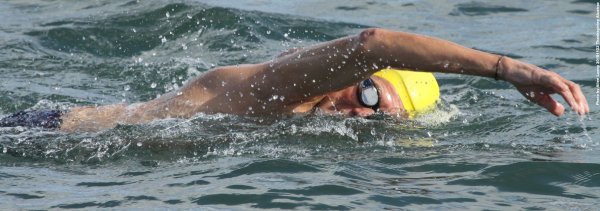
My wife re-introduced me to the joys and challenges of open water swimming.  I remember so well that first time we swam together in Tomales Bay, at Heart’s Desire Beach. I’ve been back many times since that afternoon and every time it’s is a reliving of that first time we swam there, the water warm and encompassing.  It was indeed my heart’s desire.

2013-10-05-12.09.37-Medium

After letting my membership lapse at the Dolphin Swimming and Boating Club, my wife introduced me to the next door neighbor South End Rowing Club. She had been a long time South Ender, and in fact, when we first arranged to meet after corresponding on a dating platform, it was at the front door of the South End. She told me later that her friends were watching from behind the door. Since then the South End has become an integral part of my life, a focus around which so much of my life in San Francisco revolves. I am in my second term as an elected Board Member, with many many friends. Leaving the South End will be perhaps the saddest part of leaving San Francisco.

IMG_0186

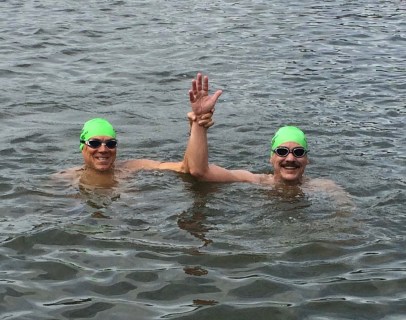
At the South End Rowing Club my wife introduced me to a fellow swimmer who has become one of my very best friends, a friend for life. In fact he married my wife and me. His friendship has sustained me through this recent difficult period. Is the lifelong friendship of a true friend more valuable than the loss of love?  Romantic love is sure always to fade, but friendship deepens and grows stronger with years.

Version 4


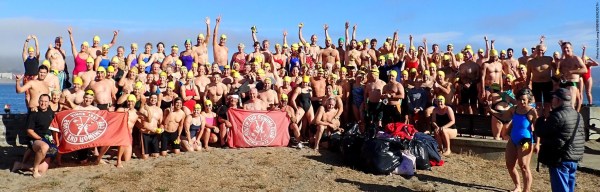
Swimming at China Beach in Sea Cliff, and joining the group of China Beach swimmers on sunny days, has been a happy pleasure I wouldn’t have discovered–or had easy walking-distance access to–had I not married my wife.

IMG_0618

My wife shared her love of Northern California by introducing me to many of the places that had been dear to her. Big Sur and Detjen’s Big Sur Inn. Yosemite and the legendary Ahwahnee. Both were trips she planned as birthday gifts.

Yosemite-Ahwahnee-frontext-719x502

home2

She introduced me to the swim adventure company Swim Trek, and organized a trip with other South Enders to the Galàpagos Islands. This was an experience I never would have seized on my own–a gift of our marriage.

We traveled together to Ireland, too, again with South End friends. In hindsight, this was when she had already decided she no longer loved me. Perhaps on the Galàpagos trip, too. There was companionship, which I thought good enough. It didn’t occur to me that love was slipping away.  It looked so real.


Another time we explored the Oregon coast together, my first time.  Looking at my photos from this trip, early in our romance, brings me back to a time and place where I know I was loved. It was real, then.

Together we decided to get a dog–our little rescue doodle-dog Bebe. He has been a loyal companion and joy.  I will miss him deeply.

Version 2

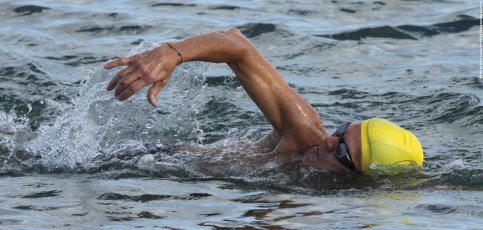
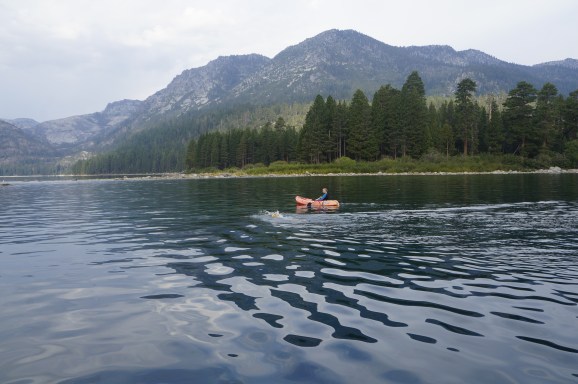
My wife encouraged me to challenge myself to swim the eleven-mile width of Lake Tahoe. She helped plan the training and was one of my two kayak pilots on the swim. At her suggestion to improve my stroke and endurance, I joined the USF Master’s swim team, which has become an important part of my physical life here. I will miss my friends on the team when I move back East.

_DSC5600

Yoga. Pilates. A plant-based diet (mostly.)  All introduced to me by my wife—lasting enhancements I will carry with me into the future. Thank you.

I know there are more reasons to be grateful–sentimental bonds.  Reasons not to regret. For me these were foundational blocks upon which our life together was built. They made all the other, disappointing, aspects of our marriage less important. My wife has said we lacked equity.  For me, not so. Equity is built on more than years.


I wish our marriage wasn’t ending.  I wish my wife could have seen the same foundation I saw, a solid rock on which to rebuild our relationship.  It’s not in her DNA.

These are places where I ache to go again.

My life has been enriched by her–and for that I am grateful.

I try not to tear up thinking about these things.

urb-0411-1

What Did I Miss?

What did I miss? What didn’t I see when I fell in love with my wife, and asked her to marry me, that would have been a forewarning of things to come? That a short four years later she would tell me she no longer loved me, had lost her love for me for three fourths of our marriage, didn’t trust me, and was ending it. Was I blind to signs I ought to have seen?

The four most anxiety provoking words in the English language: We Need to Talk. Nothing good ever comes after these words are spoken.

Word of our marriage ending has slowly filtered out. The reactions, to me, have been consistent.

When I asked my wife how she wanted to handle telling our friends that our marriage was ending, her twice-repeated response was, “Why do you care what people think?”

Many of our friends, some who have known my wife far longer than having known me, have now told me that this is her history. That she is a difficult person to please. That her strength is her weakness, a barrier to forming a lasting close relationship. That she’s a harsh judge of people, intolerant. That she doesn’t have a capacity for happiness. That there’s always been an expiration date to her relationships. That perhaps I received all she was capable of giving. One friend exclaimed, “has she gone back to being a communist?”

Two friends have told me that when seeking advice about their own relationship issues her uncompromising advice was exit the relationship—no rebuilding.

A longtime friend of hers wrote to me, “the psychologist is the role of power and this is the one she plays on me for years. Unfortunately she plays it mostly on herself.”

Other friends tell me they never saw her be kind to me.

Perhaps people tell me things they think I may want to hear. And other people’s married lives are always, truly, a mystery. No one can see what goes on inside a marriage. She was kind to me for a while, even if outward affection didn’t come naturally.

She has told me, now, that she warned me before we were married that her independence and need for self-sufficiency, her committed self-reliance, were paramount. That having taken her own destiny in hand as a young girl, no one would ever attempt to control her again. There was always the ghost of this troubled past that haunted our time together—unspoken fears and the thick protective armor that surrounded her, untouchable and inviolate. So damaging was her youth that she condemned all of New England, the entire North East, as hostile territory. She always refused to travel with me to Maine, and visit the places I love most on earth.

Dm-ycStXgAAMobA

I didn’t listen, or I only heard what I wanted to hear. I wanted to be with her, and ignored her words that my attentions were unwanted. Was I too much? She’s told me I violated her boundaries. Her need for complete independence and my need for integration proved a fatal clash.

Because my life was not an experience she cared to share, I tried to share all aspects of her life. Our mutual friends were her friends. We went to the places she loved and enjoyed. She was kind and generous showing me these places, places I had never been. It filled me with warmth and happiness to experience California, and places further north, through her eyes. So complete was my happiness I didn’t think about her unwillingness to experience my world through my eyes. The only times we traveled east were times she had other commitments to fulfill.

home2


Later she told me my need to share all aspects of her life was invasive. She had never asked me to please her, and objected that I had tried.

Trust, too, was an issue. She never gave me her trust. From the very beginning I was deemed an untrustworthy partner to make decisions about her dying in the event that became necessary. She made a point of telling me I would never be named in her advance directive, that my emotions would override her injunctions against resuscitation.   She trusted long time friends to make those decisions.

During the months when my household financial contribution fell short of the agreed amount, I was told she was not here to support me. Neither of us were comfortable talking about money, especially me. I fell out of integrity by not discussing finances, trying to make up for shortfalls in other ways. That’s on me. Is it a divorceable offence?

A sexless marriage is a divorceable offense. January 20, 2016 marked the last time we had sex—on my birthday at the Ahwahnee Hotel in Yosemite. Perhaps it was a parting birthday present. From that day on we never even held hands.

Yosemite-Ahwahnee-frontext-719x502

Now, three and a half years later, she tells me we lack “equity,” so no foundation on which to remodel our marriage into a workable partnership.

On our fourth anniversary this past October, just before going to dinner at Greens where we had been married—an anniversary tradition—my wife said to me “I’m sorry our marriage has been a disappointment.” I replied that I wasn’t disappointed, but that wasn’t entirely true. I had settled for good enough, hoping that affection, and yes even sex, might come back someday.

download-1

I did not understand the depth of my wife’s unhappiness with me—attributing much of her unhappiness to external factors: so many of her friends dying, her injuries and cardiac stent, the collapse of a career that had been deeply meaningful. She had fallen into a severe depression during that time at the beginning of our marriage when her role at the hospital was being whittled down, sidelined, and diminished. She had nightmares about the person instigating these changes.

Another friend of hers wrote to me, “Well, she is giving up a good man.  I’ve come to the realization that it is rare that most of us are cared for by those of our choosing, and if and when it happens there’s no guarantee it will last!  My personal feeling is that one is better off in their own company than with someone who doesn’t respond to them.”

Will I be better off in my own company? I know that now, now that the divorce is impending, and my days remaining in the same house are numbered, I feel much better when we are not together, when I’m on my own. When together, even when going about the simple tasks of making dinner, the emotional tension is palpable. I know she feels it, too. She’s quick to take offense. She keeps telling me how sad she is, that she’s under stress, too. That she should try to elicit empathy when all is of her doing, that it is my life that’s upended, not hers, I regard a moral failure. It comes from the same narcissism and lack of compassion that refused to try to work things out, the intolerance of an intractable mind.

I will be happier. I will miss the companionship we once had—but no longer share.

I will forge a new story.

She says she hopes we can be friends. She’s friends with a former husband, and several old lovers. She says she’s a better friend than a partner. I think that’s true. She returned today from the most recent of many trips to San Diego to visit an ex-boyfriend from years ago who is dying of cancer. Presumably they have years of equity that sustain the relationship.

Will she visit me when I’m dying? Will I want her to? Or will I want this rupture to be an end.

I don’t know.

Walking_Through_Bowdoin_Pines


OKCupid Fail

I met, if met is the right word, my wife on the online dating site OKCupid.

After returning from a long trip to Germany and Finland, during which while hiking and semi-lost on the frozen landscape of Arctic Lapland I realized that a former heartbreak had been lifted, I created a profile on OKCupid to re-enter the world of possible romance.  I was attracted to the site because of the endless number of questions one could answer, strengthening the possibility that the algorithm could uncover the ideal match. Surely such wide ranging and personal questions, if answered honestly and in great numbers, would discover that perfectly matched person who would be so in sync with my values and desires that my earlier mistakes of hope clouding reality might be eliminated.

winterImage

The result was overwhelming. Dozens of women messaged me. All were in the 90-100% match range. While flattering, I assumed that being a straight, employed, fit, reasonably decent looking guy in my age range in San Francisco might be, if not a rarity, at least an attractive proposition to the many single women in the city.  I answered none of the messages, “liked” none of the possible matches the site served up by the hundreds.  It was all too much.

Until one day I received a message that responded specifically to what I had written in my profile about my love of swimming and books. On top of that OKCupid said we were a 99% match. I answered the message and began a month long email correspondence that only deepened my expectation that an ideal match might be possible.

At the time I was traveling back and forth to New York for work, alternating two weeks there with two weeks back in San Francisco. This delayed meeting my new online friend. When the time finally came, she suggested we meet in front of the South End Rowing Club and go for a walk along Crissy Field. Here the algorithm succeeded beyond its possible calculated knowledge. How could it have known that I had been a recent member of the adjacent Dolphin Swimming and Rowing Club, very likely standing next to this woman on the small common beach between the two clubs, swimming in the same water, enjoying the same open water experience that had sparked the match in the first place?

376144434_ca15a04c9f_m

More dates followed. A match had been made. I proposed. She accepted. My best friend Josh married us at Green’s on October 18, 2014. We were an OKCupid poster couple.


How would I know that some four years later my wife would dissolve our marriage, telling me she no longer loved me, hadn’t loved me for nearly three years, confirming what we both knew—but that I suppressed—that our marriage had been a disappointment.

A few days ago I re-registered on OKCupid, not to renew a search for another match—never that route again!—but to remind myself of the kinds of questions the site posed, and to see if I could locate my old results. I couldn’t backtrack, but answering the questions again has been insightful. So far I’ve answered again over a hundred questions, and already am being deluged with likes and messages. I need to turn this off, but in the meantime seeing the algorithm at work is revealing if only cold comfort.

My wife and I were indeed well matched on all the kinds of questions I’m answering again. Similar political views; nonbelievers; nonsmokers; moderate or non-drinkers; similar attitudes towards sex, exercise, diet, fitness, dogs and cats.

I haven’t come across a question, though, to the effect of “What is your view of marriage?” Or “How much togetherness is too little, too much?” “Is it important to please your partner?” “Is marriage a shared destiny, or two independent destinies?” “Are we now on one road or two in life?” “How much affection is appropriate in a marriage?” “Is our love possible?”

These latter were the essential unanswered questions that doomed our marriage. Our visions of marriage turned out to be profoundly different. Our ideas of compromise, compassion, and commitment proved to be different.

She withdrew her affection and I persevered believing what I had was good enough. I was too much and she was too little. I believed married people trudged the happy road of destiny together. She believed in two roads, two destinies.

When the crisis hit, I wanted to try to work things out, see a couple’s counselor, resolve issues and differences. She said no. She said had we more equity—more time together as a couple– perhaps she might have been willing to try.  Later she told me it would have been futile, at least from her perspective, that our fundamental outlooks, our needs and desires, our ideologies, were too dissimilar. There would always be compromise. One of us would always be unhappy.

I reluctantly agreed.

OKCupid failed to identify those core belief systems that give deep meaning to a relationship, that establish a foundation for a lasting bond and true marriage of shared joy.  It failed to define happiness.

We had shared happiness for a while. I know we did, that it was real. It disappeared too quickly, the fractures becoming evident within a year.


It makes me deeply sad.

Could I have been different? Could there have been a different outcome, a different destiny? I’ll never know.

I’m reminded of the lovely, bittersweet song by Ivor Novello, The Land of Might Have Been:

Somewhere there’s another land
Different from this world below
Far more mercifully planned
Than the cruel place we know
Innocence and peace are there
All is good that is desired
Faces there are always fair
Love grows never old or tired
We shall never find
That lovely land of might-have-been
I can never be your king
Nor you can be my queen
Days may pass and years may pass
And seas may lie between
We shall never find
That lovely land of might-have-been
Sometimes on the rarest nights
Comes the vision calm and clear
Gleaming with unearthly lights
On our path of doubt and fear
Winds from that far land are blown
Whispering with secret breath
Hope that plays a tune alone
Love that conquers pain and death
Shall we ever find
That lovely land of might-have-been?
Will I ever be your king
Or you at last my queen?
Days may pass and years may pass
And seas may lie between
Shall we ever find
That lovely land of might-have-been?

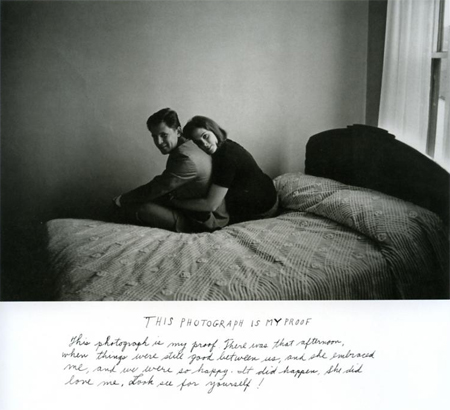
duanemichals01


Grow Bigger

When did I realize that the collapse of my marriage was an opportunity, not a failure?  An opportunity to grow beyond the self-imposed limits of the compromise I was living? An opportunity to become the possibility of being bigger than myself?  An opportunity of independence free from judgment?  An opportunity to connect more deeply with the world, and with myself?

I didn’t understand this sense of opportunity on February 9th, the day my wife told me she no longer loved me and no longer wanted to be married.

It’s ironic that this verdict was delivered on this day. At the South End Rowing Club February 9th is known as “the dreaded 9th,” allegedly the day the water is the coldest in San Francisco Bay. The idea was coined by South End swim legend Bob Roper, who annually scheduled a long and difficult swim on that day, to test the mettle of the strongest swimmers. That my wife and I had just returned from Bob Roper’s memorial service on this February 9th only deepened this irony.

Bob Roper

It was a cold day indeed. The details wounded. They hurt. My conception of love, stability, security, of the marriage commitments a man and woman were meant to hold sacred, was shattered. I wasn’t sure I even wanted to face the consequences of what my wife was doing, what she was saying, why she was saying these things. Jung wrote that if you want to understand why someone did something, look at the consequences and infer the motivation.

The classic Kübler-Ross model of grief has five stages: denial, anger, bargaining, depression and acceptance. They are not necessarily sequential. I have been through them all since the dreaded 9th—and have come to add a sixth, and final, stage: celebration. This isn’t a narrative I’m creating to make myself feel better. I know that the journey getting to celebration will be rocky, with detours, roadblocks, speed traps, and maybe even a few short-cuts.

I can’t yet see the destination—maybe it’s always only about the journey—but I know in my heart there is one, unlike on the 9th of February where the only view I saw later that afternoon was the cold gray water and cloudless blue westward sky contemplated from mid-span on the Golden Gate Bridge: a windy, thoughtful place on a cold thoughtful day.

fullsizeoutput_349e

I remembered Matthew Arnold’s lines from Dover Beach about the sea’s eternal note of sadness:

Sophocles long ago

Heard it on the Ægean, and it brought

Into his mind the turbid ebb and flow

Of human misery; we

Find also in the sound a thought,

Hearing it by this distant northern sea.


The briskness of that afternoon brought clarity, too—clarity that the only solution the ocean offered was to swim in it, to surround myself with the life-affirming currents, the ebb and flow, that yes, can remind me of human misery but also opens me to a welcoming oneness with a power greater than myself, a power that lifts me out of whatever puny state of mind I happen to be wallowing in.

IMG_0773

Plan the work and work the plan. That’s the deal I’m making today: downsize my life to what’s essential, and yes, what sparks some joy.  Move out of my wife’s house.  Live lightly, temporarily, until the end of the year.  Move to Boston.  Plan and transfer work to Boston and the east coast.  Look forward to swimming in Boston, being closer to my family, old friends.  Reconnect my past with a new future, a future that’s both familiar and uncharted.  Grow bigger.

When I once asked my therapist Dr. Ralph, about a different heartbreak, whether the pain inside my heart would ever go away, his answer was, “No, the pain will never go away. But you will grow bigger.”

Bigger indeed.

imgres-2


May 2019

It’s May 2019 and my wife of four years is dissolving our marriage, and I’m facing an immediate future of dislocation, laced with emotion, sadness, anxiety, and uncertainty. There is no drama, no anger. At least none expressed.

This isn’t a time in my life that I either anticipated or wanted to build something new. A new chapter is being thrust upon me, not by my will but by hers.

This drama in my little world leaves me cold to the drama in the greater world; yet it’s inescapable. The country’s a mess. The world is a mess. Maybe it’s always been, though Trump America is unlike anything I’ve lived through before, not Vietnam, not Watergate, the Clinton impeachment, the Bushes and their wars. Trump America is utterly dispiriting. I can’t listen to the news anymore. It makes me physically sick.

I wake up at 3:00am, my mind racing with too many thoughts. Why this, why me, is any of this worth it, is life worth it, who would care if I were gone, where will I live, how will I live. I don’t go back to sleep, then drug myself on caffeine as soon as I’m up to make it through another day.

download

Life is suffering. This is undeniable. Whether a believer or not, all religions embrace this basic precept.  Life embraces it.  Everyone dies. We experience the pain of others’ deaths, of loss, of sickness, of heartbreak. It’s only a matter of time and scale.

To make someone else’s life better is the only salvation: to not inflict unhappiness on another person; to find goodness in a person despite their flaws; to honor one’s word, one’s commitments; to do what’s right, not what’s expedient; to not be a jerk. These are not easy.  I often fail.  But they are the only way out, the only way to make sense of the tragedy of the world, to not turn tragedy into a living hell.

If you resent someone, for something that person has done to you, it’s said that to be free of that resentment, pray for the person you resent. Pray for their happiness, their success. Buddhists say that prayer can be setting an intention. It’s not asking a sky-dwelling God for gifts from heaven.

sky-3650411_960_720

So I’m praying for my wife. May she find peace. May she find happiness. May she make someone else’s life better.

I’m setting that intention for myself.

IMG_4162

Diary -January 15, 2018

Angie Mattingly was the leader when I participated in the Landmark Forum four years ago.  Many of the things she said still resonate.

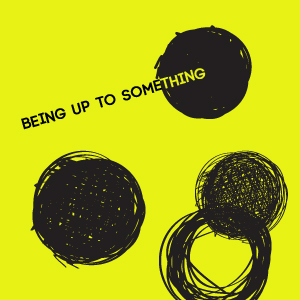
Being up to something

Landmark Insight by Angie Mattingly, Landmark Forum leader

What marks a visionary is dedication to a possibility, a dedication that rejects outright the complacency of those who prefer the status quo and insists that there has to be another way. Instead of reaching for the nearest, most convenient conclusions, their commitment causes them to push hard against the limits of what others might see as possible.*

When we are up to something, we are called to step forward, to be and act in wholly new ways, to risk what we already know for something beyond the predictable. To be up to something calls forth strength and creativity—it generates energy and excitement that attracts and invites the participation of others. When we are up to something, we step outside the constraints of our circumstances, and stand for a possibility. We don’t reference what’s possible against who we’ve been or what’s been done in the past, what’s predictable or expected, but rather against what we stand for and see as possible. Conditions and circumstances begin to reorder and realign themselves inside of what we stand for. Our relationship to possibility moves from an abstract ideal or remote objective to a viable, living reality.

Diary January 8, 2018

In brief, people with self-respect exhibit a certain toughness, a kind of moral nerve; they display what was once called character, a quality which, although approved in the abstract, sometimes loses ground to other, more instantly negotiable virtues. The measure of its slipping prestige is that one tends to think of it only in connection with homely children and with United States senators who have been defeated, preferably in the primary, for re-election. Nonetheless, character—the willingness to accept responsibility for one’s own life—is the source from which self-respect springs.           Joan Didion

Diary January 6, 2018

My plan for the year is to write a periodic diary, in the vein of Alan Bennett in TLS.  Short entries, sparked by some event, or person, random idea, or thought for the day.  Bennett is a master at this.  I won’t be so droll.  But, here goes:

Went for a late morning swim which while the water is cold the sun was shining so 51 degrees didn’t feel so stunning.   Nevertheless when I got out I found my friend Stevie Ray stretched prone on the floor of the showers, unable to stand for fear of passing out (he’s done that many times) due to hypothermia.  The winter water has claimed several victims in the past weeks, with a few times paramedics needing to be summoned.

Being at the South End Rowing Club this morning resulted in an confrontation I hadn’t planned but wasn’t unhappy to experience.  I’m on the board (an eye-opener to dysfunction, ego, and human frailty); during the last months of 2017 a drama ensued regarding the disposal of two thirty-year old rowing shells, both having been deemed unseaworthy in the open Bay by one of the owners of the company that manufactured them.  Neither had been rowed in years, and both required repairs before they could even be put back in any water.  The needed to go.  Two brand new shells were purchased to replace them.  That should have been the end of the matter.

Not so.  A non-board member rower (fire captain and assistant rowing coach at a San Francisco high school)–largely absent from the club for many years but “Now I’m back!” on the scene again–ranted and bullied the Boat House Captain, Vice-President, and President (who instigated the entire controversy) into keeping at least one of these old tired shells as a training vessel for new rowers.  The sitting Rowing Commissioner and most of the board were against the idea, though our protagonist enlisted the support of the newly elected naive 2018 Rowing Commissioner.

I’ll refrain from describing the illogic of this plan, or the backroom politics of their campaign.  ALL the serious rowers at the club were against keeping either boat.  Nevertheless, duplicitous behavior and spineless decision making (the Boat House Captain changed his mind no less than four times) resulted in one inappropriate boat being retained.

My confrontation this morning was with the new 2018 Rowing Commissioner, a thin-skinned fellow constantly espousing “transparency” when in fact a key participant in the duplicitous deeds.  He once had my, and other rower’s support, but that’s all lost. He, and the lily-livered Boat House Captain, backed out of an agreement they had reached only the night before.

All of this is small time politics.  In the era of Trump, when every day is more ghastly than the one before, who could care whether two old boats stayed or went at a tiny rowing club in San Francisco.  But the issue was never about the boats.  It was about–as most issues are–people and their egos.  I should neither be surprised nor disappointed but I am.

Friendship

Once I knew a woman who shortly after the first time we met said friends come to us for three reasons: for a season, for a reason or for a lifetime. What a load of crap. Of course it was a set-up, a hedge against the future, a way out opened up at the very beginning.

irish-wall-1

Yet, there aren’t many lifetime friends, at least in my life. And some friends do come and go, sometimes with rupture, sometimes quietly, sometimes from inattention, time moving on.

I’ve been thinking a lot about friendship. Maybe it’s age. There are friends we have from our youth, from school days and college, sometimes from work, sometimes from shared interests, from shared fellowships. We inherit friends from our families; gain friends from partners, our children. Why some people move from acquaintances to friends isn’t often a mystery. Why they move from friends to the most essential people in our lives often is.

img_1264


In my life I have had two true, unconditional friends: one gone and one lost; both complicated and enriching at the same time. I’ve had a several close friends that couldn’t survive my former marriage, lost because of it. I have one close friend in my life today. I have three or four other friends whose friendship I would very much regret losing. I’m speaking here of male friends, guys with history, my own Spartan brigade, living in my self-defined circle of trust. I have two or three women friends, too. Both did survive that former marriage and deepened afterwards.

img_3147


But let’s add that up: ten in all, not all present. And of the group, I see only two on a reasonably regular basis. I’m not going to name names but each of my friends has played a role in defining the man I am, some more some less. I would not be who I am having never had the two great friendships in my life, distant though that they are. Their influence and importance, a product of time and place and circumstance, remains undiminished. Rarely a day passes when I don’t connect something I’m doing or thinking to one of them. They were early guides to life. I see much of the world through the lenses of their erudition, emotion and instruction. A legacy of the past into the present.

15508166


I have a few friends whom I’ve known for more than sixty years, childhood friends who remain today, not closely, but with a lifetime of shared memories that can’t be duplicated. I wish I saw them more often. I have friends who were once close but for reasons unexplained, have left my life. I have college classmates who hold a special place in my life, sharing experience of a very special time. I count one among my closest friends.

college-photo_19126


I have several friends with whom I feel a close bond, yet rarely see.  They live far away, in other countries.  Their friendship is as real to me as friends I see more frequently.

alansean-1

New adult friendships are hard to form—real friendships, not the dozens of “friends” who inhabit our social nexus. These social friends are important, too; without them we would be awfully isolated, even lonely.

ser-swim-cap-png


I remember once on a flight from New York to Singapore sitting next to a guy and telling him my complete life story, every intimate, grisly detail. And he told me his. He knew more about me than 98% of the people I know. I never saw him again, and don’t recall a single detail of the conversation but that it happened. Was he a seventeen-hour friend?
 

I know the categories I create, the friendship buckets into which my friends fall. The delineations and distinctions are clear, based on shared experience, shared history, shared revelations.

img_2129


I no longer would want the level of intensity my old, close friendships offered. (I’m open to being surprised.) I have my wife and my sons and their families, and my few good friends—all sustaining and continuously enriching.

3boys

Still, I wonder: are there new friends out there?

img_0145