Singapore Revisited

Thirty-eight years ago, I was posted to Singapore to be the managing director of the recently merged DDB Needham Singapore office. This posting followed my initial international division role as managing director of Needham’s office in Barcelona, overseeing its merger with DDB. This was at the beginning of Omnicom, announced in the New York Times the morning of our second son Sam’s birth. My role in Singapore, unexpected as it was, came after false starts in London and Dusseldorf.

On the eve of moving to London, having rented a house, and leased a car, and found a school for our son David, I was told that, no, in fact, there was no job for me there, the boss I was meant to have having been terminated. My mentor in New York, John Bradstock, formerly the president of Needham International, simply said, hang out in Barcelona while we find a solution. In the meantime, the chairman of DDB Europe, Nicholi von Dellingshausen—Count Nicholi von Dellingshausen—came to Barcelona to check in on the merger and while there, offered me a role in Dusseldorf.

Then, on the eve of moving to Germany, I received a call from an Australian who asked, “My name is Alan Pilkington, do you know who I am? I’m president of DDB Asia-Pacific, and we need you in New York tomorrow.” In New York, I learned that I was being sent immediately to Singapore, allegedly to calm the waters of a failed merger between DDB and Needham there. However, while on my way, I was told that on my first day I needed to terminate the entire staff, begin extricating the agency from existing client agreements, and assist in the search for a new DDB Needham agency.

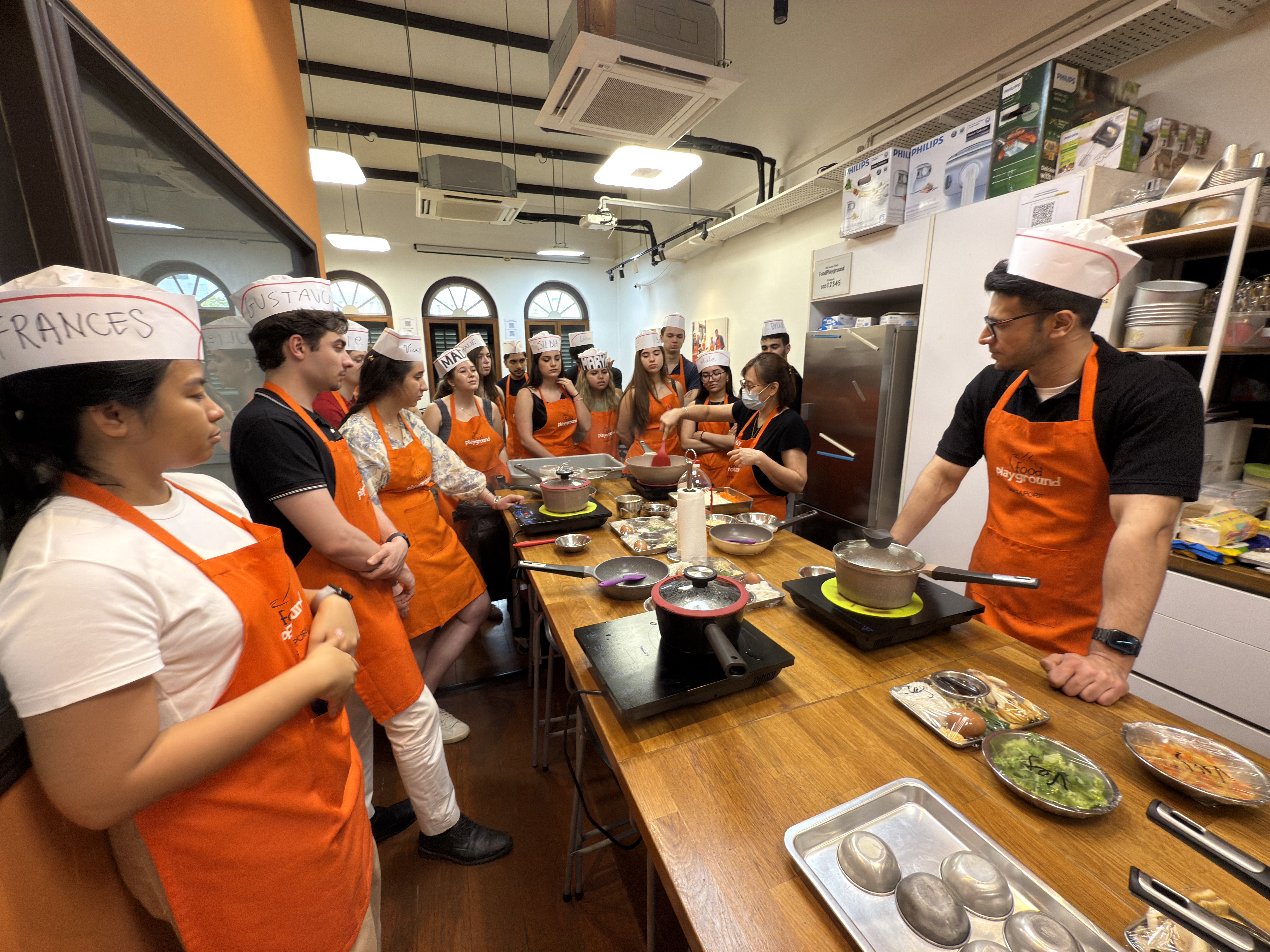
I write this only as background to my stay in Singapore this week, leading, along with my London colleague Nikhil Soi, Hult’s Singapore City Seminar/Doing Business in Asia.

In the expat community, the idea of the Asia bug is well known. It’s not new: the French in Viet Nam, the Dutch in Indonesia, and the British in India, Hong Kong, and Singapore. Asia gets in your blood—the mysterious allure of the East, the tropical heat, the exotic foods, a way of life so drastically different from back home, wherever that home in the West might be.

I have experienced the attraction of that Asia bug myself, formed first in Singapore those thirty-eight years ago, and experienced since in Hong Kong and especially Japan. I’ve been there, done that.

I felt it again this week in Singapore, thinking of all the ways I could possibly return to this life. This time, though, with a difference: Singapore isn’t the heated background of a Somerset Maugham novel; it’s a vision of the future; being here is like stepping into a more perfect future.

I am no longer a young man in my thirties with a whole career ahead of me. I have roots and family back home. I have attachments to my schools where I teach. I haven’t missed out on life in Asia. I have been here, worked here.

I think, as well, that this time I would come with a life’s worth of insight—maybe self-learned wisdom. I could give back to Asia while absorbing all that Asia has to give to me. It could work.

It’s clear that we’re moving into the Asian Century, dominated by China. Trump in the States has made it abundantly clear that our once friends must now go it alone, that the USA isn’t their lodestar. China is already to many and soon enough will be to all. Tiny Singapore shines even brighter.

Would I move if the opportunity presented itself? Would I leave the New England I love, so familiar and filled with a lifetime of memories? Would I leave the closeness of my sons and their families, my six grandchildren?

I wrote before that the well-worn quote by Gertrude Stein, We’re Always the Same Age Inside, pulls me back to those earlier times, when all experience was fresh and the foundations of the man I was to become were poured. Age plays tricks like that, the chance of one more time at the bat.

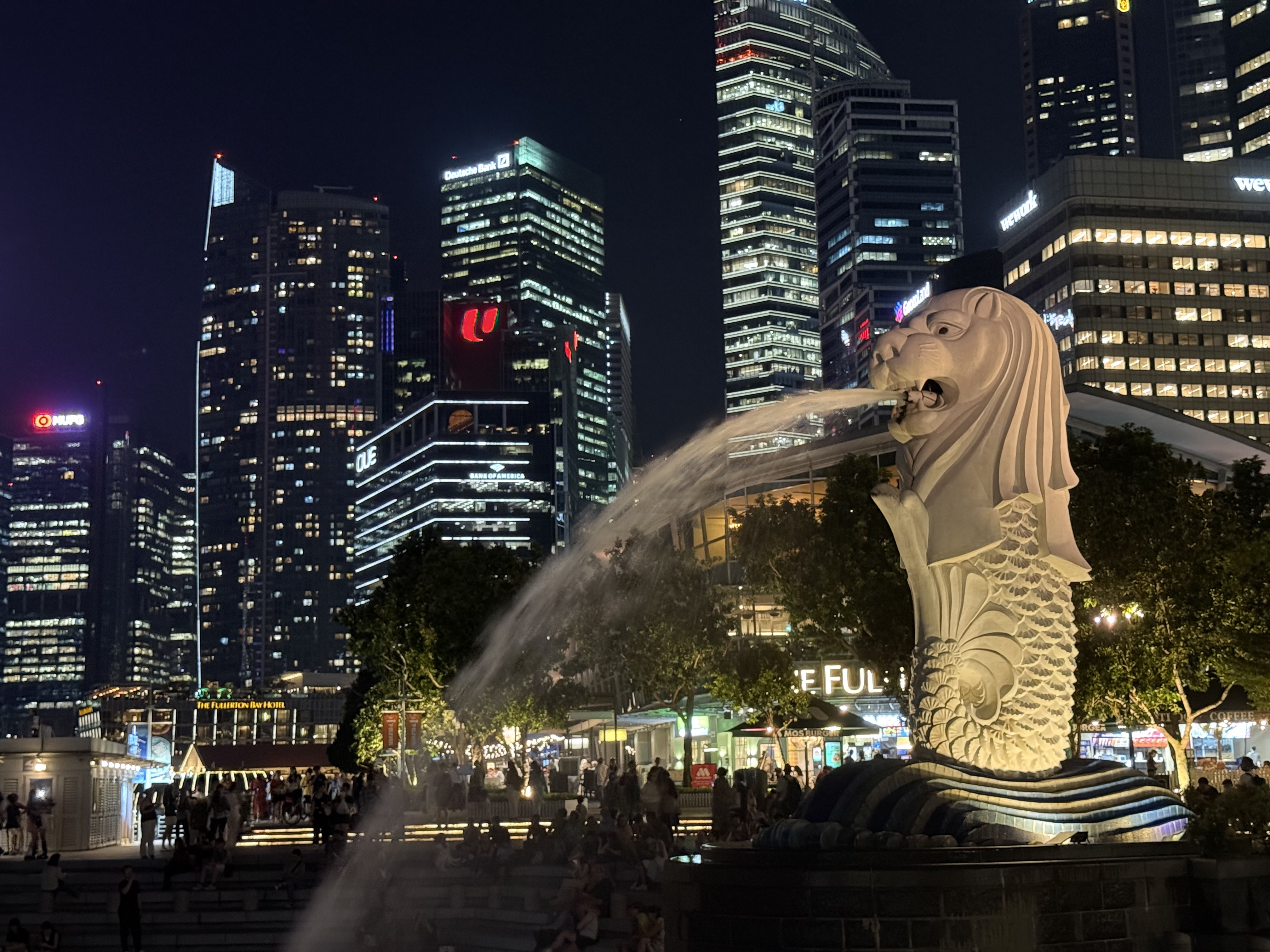
I fell in love with Singapore again this week. It’s a different Singapore than the city-state I lived in thirty-eight years ago. But even with all its astonishing modernity, there was a pull of familiarity that reawakened those distant memories. Time glosses over the difficulties, leaving only the nostalgia of romance. This time would be different.

My office then was in the old Shaw Tower on Beach Road—not a glitzy building even then. Today it’s being reconstructed, as is so much of old Singapore. Back then, Raffles Hotel, just a block away, was in its last days of threadbare decrepitude, surely destined to be torn down. I remember lunching in the old Tiffin Room, still serving up its tepid, sanitized Indian curries to traveling British matrons and their tired husbands. Once, when DDB’s illustrious creator director emeritus Helmut Kron came to Singapore, ostensibly to visit the dying agency, we could only see him as he drank all day in the Raffles’ lounge with its moth-eaten tiger skin rug on stained wooden floors. The ghosts of English writers still haunted the place—or so we fantasized.

Today, Raffles is a restored, five-star, $1000-a-night luxury hotel—a miracle of historic preservation. I had lunch on Sunday in that Tiffin Room—now a bastion of 19th-century elegance with a pricey Indian menu. Not a whiff of resemblance to the old room. Yes, both the décor and the food were immeasurably better. I didn’t really miss the old room; yet, those old ghosts had also been banished. Conrad wouldn’t recognize it.

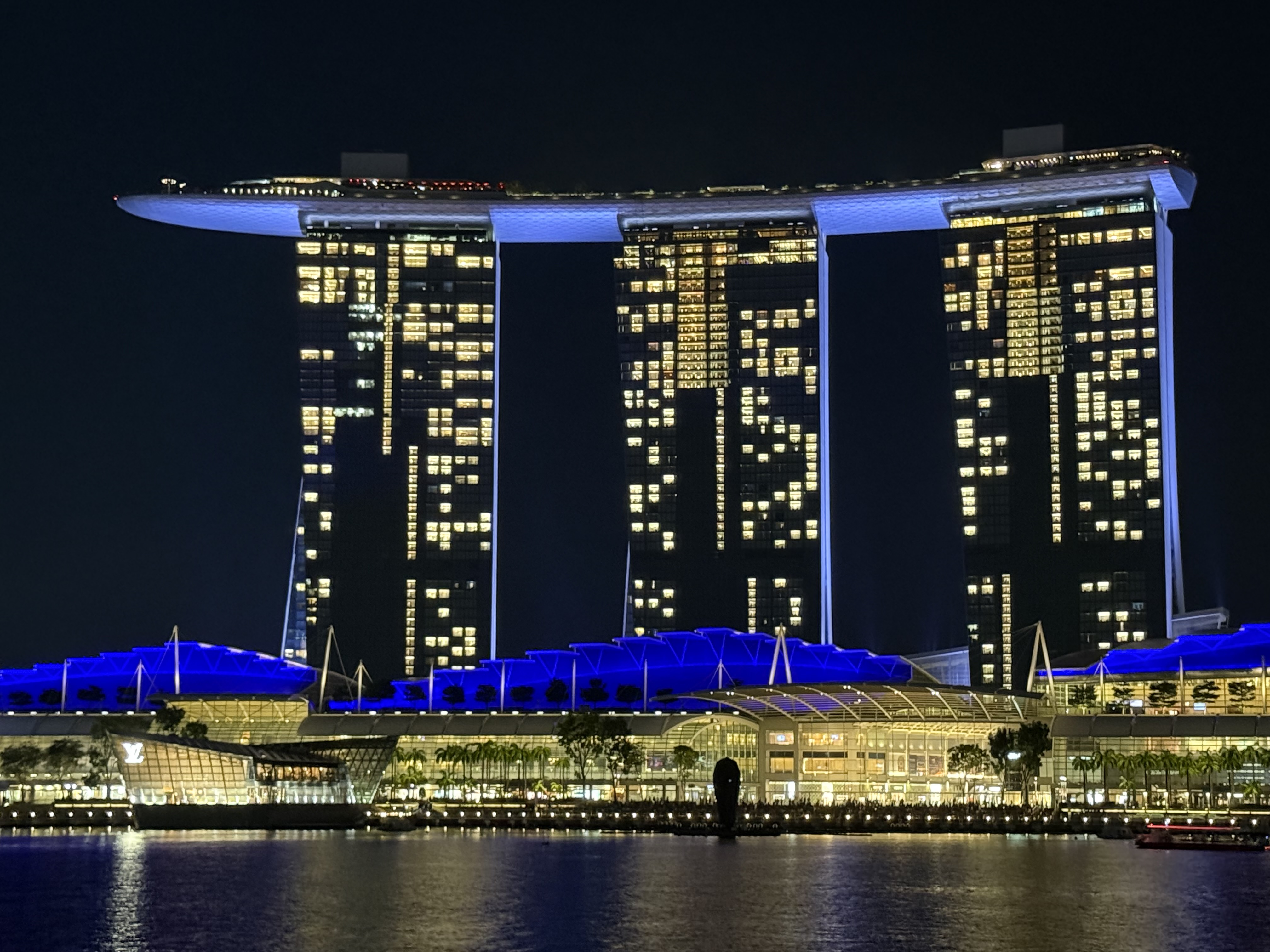
Today it isn’t Raffles that symbolizes the allure of the East, but the glamor of Marina Bay Sands, an icon of futuristic architecture dominating the eastern skyline. I was fortunate enough to be invited to dinner atop that truly dazzling structure—to call it a building seems a diminishment. The views from the 57th floor dazzled, though peering over the edge left me faint with fear.

The skyscraper skyline didn’t exist back when I first lived in Singapore. To imagine how the city will evolve and change in the next thirty-eight years is unimaginable.

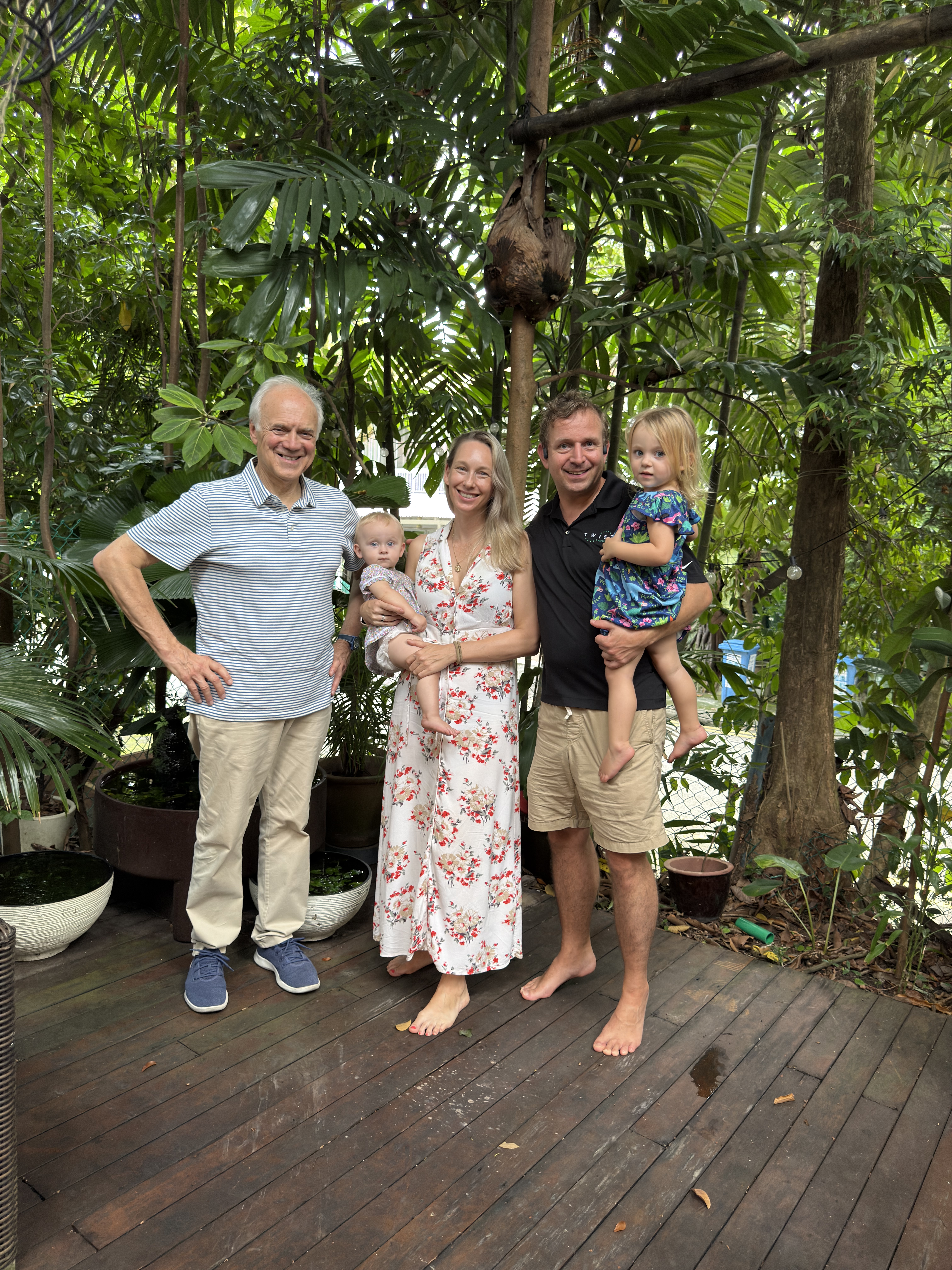
What Singapore has given me this time is a wealth of new friendships. These will remain even when I’m on the other side of the globe. Through my friend Sean in Germany, I was introduced to his friend Tamara and her husband Bernd—new, lasting friendships. Tamara in turn introduced me to business associates who are now mine as well. This is how the world of friendship works.

The week has also given me the friendship of my London colleague Nikhil, and with the nineteen students who came on the seminar week. We formed a special cohort, a bond of shared experience none of us are likely to forget.

I do hope to return…and not in too many years hence. I don’t have those thirty-eight years again. Work or pleasure may bring me back. I committed to it when parting on Sunday from an afternoon spent with Tamara and her family.

I feel, too, that this return to Singapore is like the completion of a circle I began to draw those thirty-eight years ago. It’s a full circle now. New circles may be drawn, but this one feels complete. I’m so fortunate to have been given it.

Then and Now

Things fall apart; the centre cannot hold;

Mere anarchy is loosed upon the world,

The blood-dimmed tide is loosed, and everywhere

The ceremony of innocence is drowned;

The best lack all conviction, while the worst

Are full of passionate intensity.

W. B. Yeats wrote these lines in 1919, soon after the First World War and as the Irish War of Independence was beginning. They are quoted so often that they are cliché, a statement of the obvious. Time and again they are the exact right words to describe the times we’re in. They’re the exact right words today, when the fabric of a reality I believed to be foundational and constant is being torn into shreds, leaving only a memory of what we had and the deepest of resentment towards all those who, quite willingly, brought this on. November 2024 didn’t happen by accident.

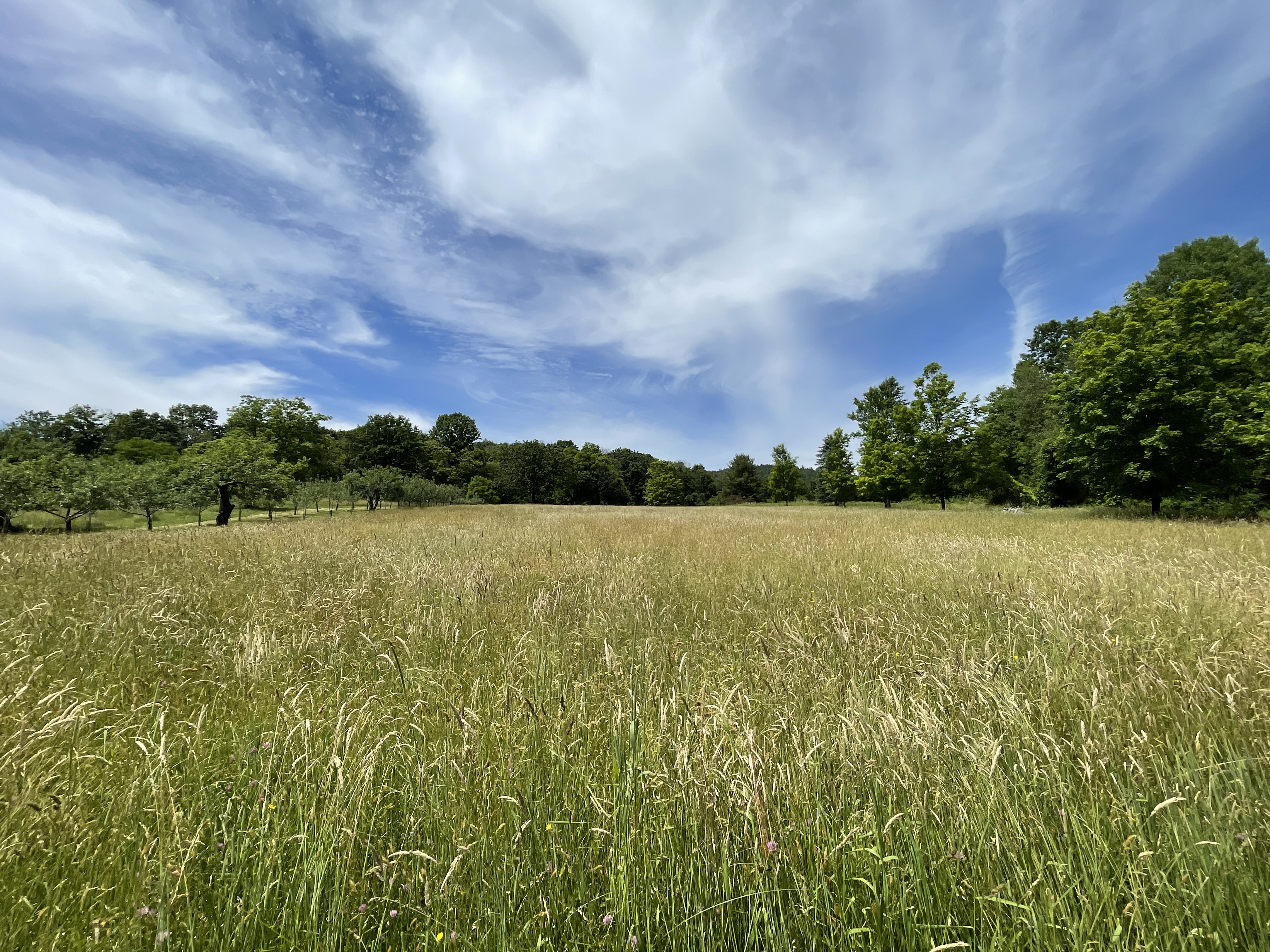
I’m here in the Berkshire countryside, alone in a part of the country I have loved for fifty years. The strangeness of all the time between then, when as a young man in my first real job I lived in Salisbury, Connecticut, the northwestern-most town in the state, and now, fifty years later, staying in my son’s house just over the Connecticut line in Egremont, Massachusetts. Time has barely changed the landscape. The same white New England houses face the road. Development has been scant, if at all, limited by affluence and distance from urban centers. How to connect the dots—the journey from then to now—is what I’m thinking about.

I’m thinking, too, of all those who were once part of my life then and who are now gone, either passed away or passed out of my life. It amounts to the same.

Michael Hoffman, Aperture’s complicated publisher; Arthur Bullowa, Michael’s great friend and Aperture’s lawyer; Dale McConathy; Jonathan Williams, poet and Jargon Society publisher; Paul Metcalf, Herman Melville’s great-grandson, and his wife Nancy. Dinners at the White Hart Inn with Mr. Woods, Aperture’s aged, Communist accountant, and Mike McCabe, friend and owner of Lion’s Head Books.  I learned he lives in Santa Fe now.

They are all in my thoughts tonight.

And others I no longer know where they are: Ann Kennedy, Aperture’s manager; her first boyfriend Christopher Kent, both living in the hunting lodge on the Hitchcock estate in Millbrook.  And most of all Christopher Hewat—still just down the road from where I am in Egremont. He remains unreachable. What would I say to him if I saw him now? We swam naked in his parents’ luminous pool on warm summer nights. His artwork hangs in my house. I haven’t seen him in forty years.

Am I the same man now as the young man then? Gertrude Stein said we’re always the same age inside. My inside is driving down Rt 41 South in 1975, from Salisbury to Millerton, New York , just over the state line. (You curve on to Rt. 48 W in Lakeville.)   I’m driving to Michael Hoffman’s antique house in Shekomeko, an old, historic parcel of Pine Plains; so many dinners there, often with whichever famous photographer was visiting.  My life is literally in-between, balancing in a wonderland between the then that came before, Sewickley, Bowdoin, conventionality—and a future I didn’t yet know but changed everything I was then living in. It was a precious, confusing time in my life. If I could go back and relive those years, knowing what I now know, would I have made the same decisions? Taken the same left-turn path ahead?

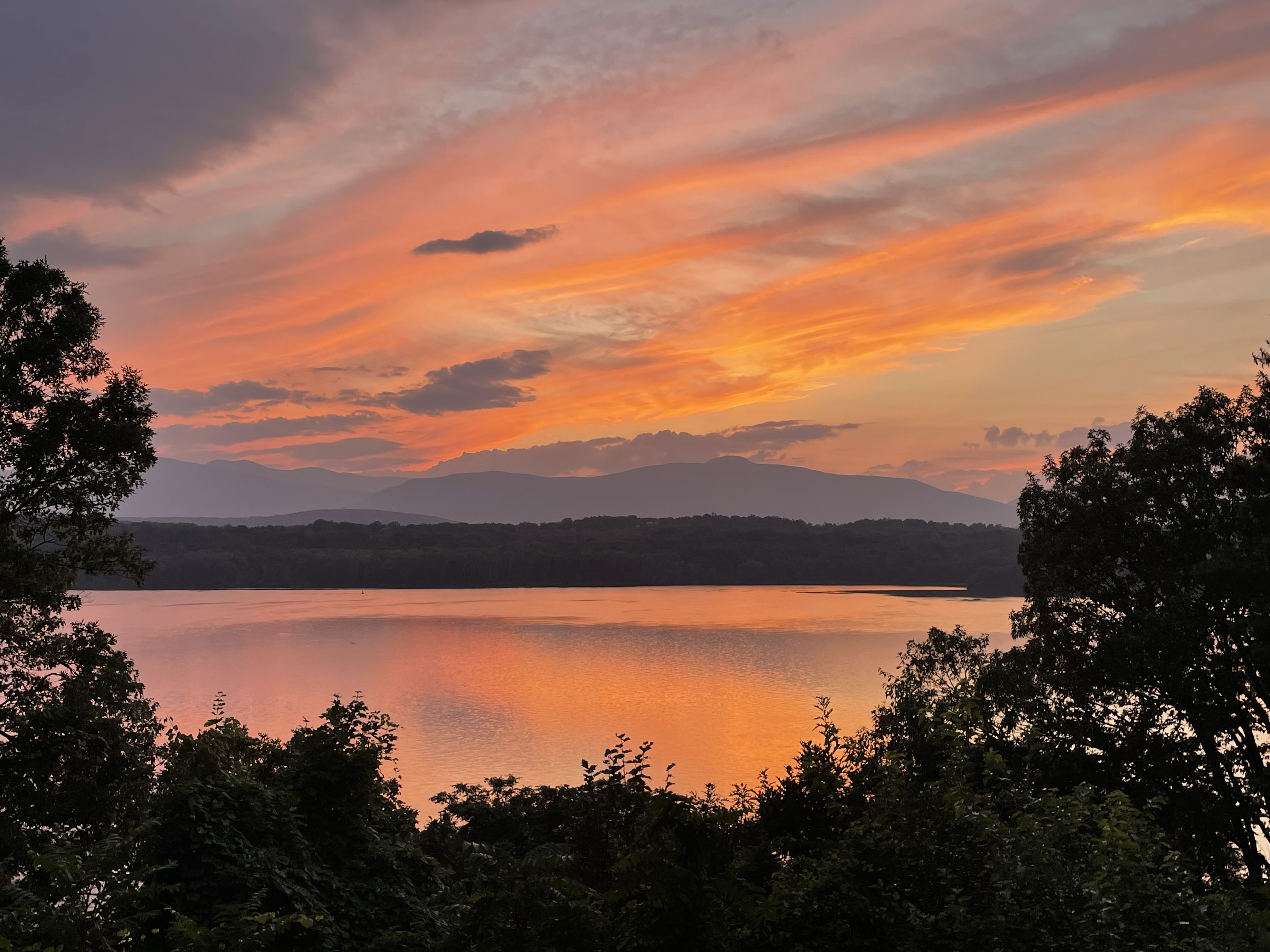
I’m thinking tonight, too, of more recent times here in the Berkshires and adjacent Hudson Valley, and how I’m missing my dear friend Joan Davidson and the civilized—in the very finest sense of the word–life she created, and we enjoyed at Midwood. Those days, those long weekends, the conversations around her dinner table surrounded by illuminated bookshelves and warmed by a fire, dinners on the porch on summer nights when the sun setting behind the Catskills beyond the silver river torched the sky in a blaze of color unmatched in awe and beauty—these times can never come again.

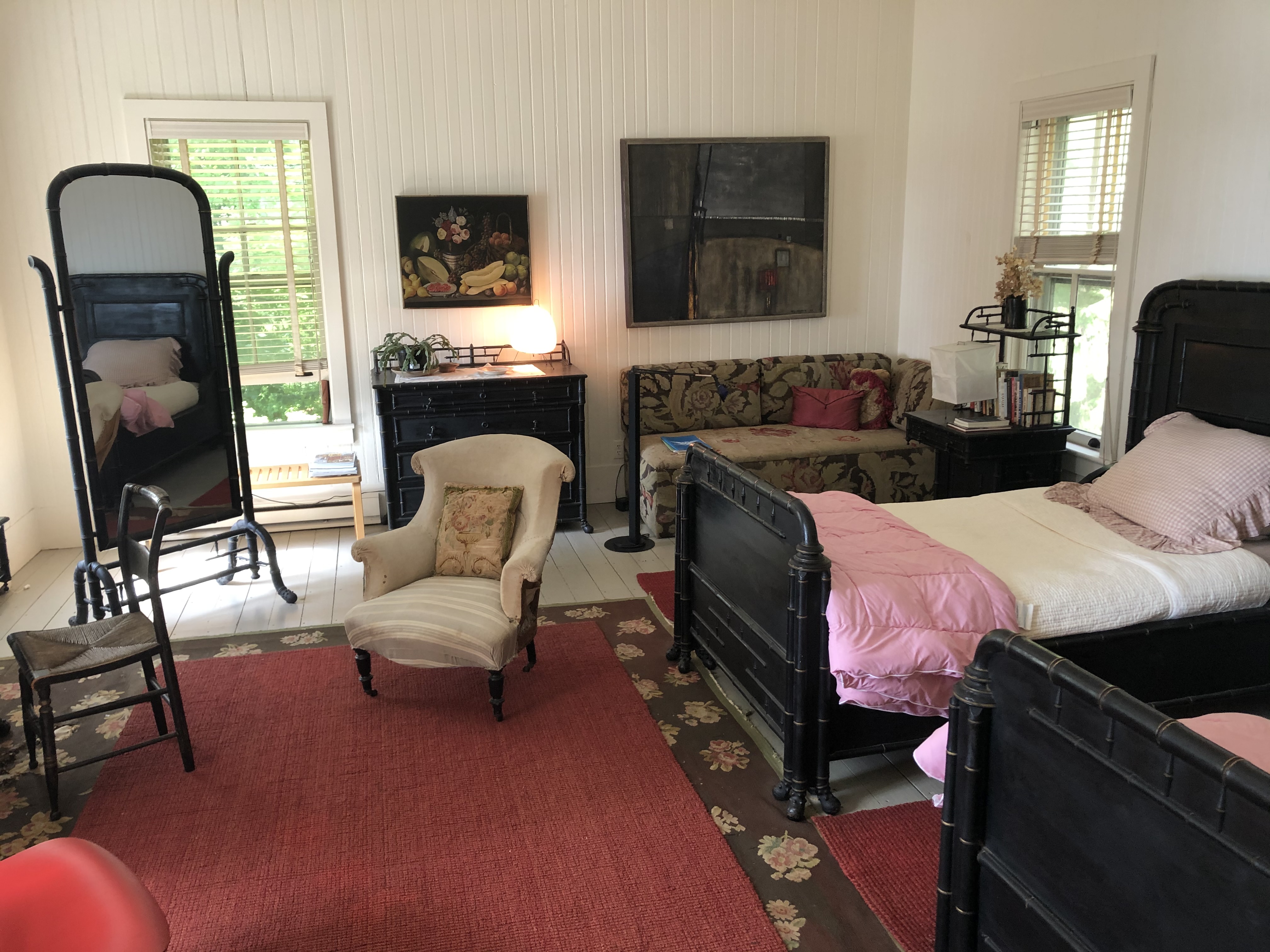
Then, after the last guest retired and all the lights turned off downstairs, going up to my usual room, Bamboo, named for the suite of 19th-century furniture carved to replicate bamboo, and hearing the last night train far down the hill between the house and the Hudson, breaking the silence of the night yet unseen but reassuring in its journey north to Canada. In early spring the peepers would send their chorus thrilling through the windows, a harbinger of warmer days to come.

I’m missing Pat Falk, not gone but confined now to a care home in Manhattan, her lovely farmhouse atop the hill outside the hamlet of Germantown sits empty. Pat and I both worked for Joan at the Kaplan Fund back in the late 1970’s when we created and published Artists’ Postcards. That was the beginning. Pat invited Evelyn and me into her life and the life of her parents Johnny and Pauline, then residing in their East 60’s townhouse off Fifth Avenue where we enjoyed Christmas dinner during those years, and in the summers staying with them at their house on the Jersey Shore. Johnny cooked magnificently and collected rare Chinese ceramics. I have their steamer trunk, with the White Star Line first class labels, in my living room.

I’m even missing Bunny—Eleanor McPeck—Joan’s cranky friend and landscape gardener who designed the Midwood property. I remember one morning at breakfast during a typical weekend house party when the boyfriend of one of Joan’s guests, Bill Griswold, then director of the Morgan Library, asked Bunny what she did. Bunny said she designed landscapes, such as Midwood. The fellow then asked, “Oh, when will you begin?”—an affront Bunny never forgave. I feel badly, now, thinking of my own annoyance at driving Bunny so frequently from Cambridge to Midwood and back, now that she, too, is gone. We spoke weekly during the last painful months of her life, reliving all the times we enjoyed the warm embrace of her much-loved Midwood.

Midwood remains, now owned and managed by Joan’s grandchildren. They’re trying to make a go of it, keep the house, if not Joan’s spirit, in the family. I hope they succeed. I have little interest to return. For me, the fine, handsome house, the gorgeous view across the Hudson, were never the point in and of themselves. Midwood existed as a creation of Joan’s imagination, of her generosity and warmth, of her talent to bring people of all stripes together for lively conversation, for her commitment to New York, the state and city, to liberal causes and civilized behavior. She died a year before the 2024 election, a blessing. I remain friends with Joan’s eldest son Matthew and his wife Amy, a happy legacy.

All those “thens”…and now.

Now is Easter weekend 2025. I’m here in Egremont on my own. I’ve been driving up and over the same hills I’ve driven for more than forty-five years. The White Hart still sits squarely on the town green, fancified since my dinners there years ago. Johnnie Cake Books occupies the same wooden shop that my friend Mike’s Lion’s Head Books once occupied. Some things never change.

Millerton on the other hand—a down-in-the-heels farm town when Aperture had its editorial office there—is now gentrified with art galleries and antique shops, and where the old Saperstein’s once was is now the hip and expensive Westerlind. New Yorkers fill the seats in the local diner. Progress of a kind.

I remember once when I worked at Aperture (this would have been 1976), I was in our tiny shipping room with our shipping manager, Gertrude O., a local farm lady. We shared warehouse space with Arnoff Moving and Storage. On that afternoon, one of Arnoff’s men, a veritable Charles Atlas of a man, was walking up the driveway with a refrigerator on his back. Serenely, Gertrude looked up and said, “That’s not a real man.” Say what? He looked all man to me—a manly specimen if there ever was one.  Gertrude continued, “He only has daughters. It takes a real man to make a boy.” Such was Dutchess County wisdom.

I’m lucky to be here this Easter weekend, so many years later; I, too, have changed, and I’ve also stayed the same. So much of how I see the world was formed in these Berkshire towns, by the people I knew then, and by the landscape I love to this day.

This feels like home.

In Memory of Joan K. Davidson

The Woman of the House

By Richard Murphy

In memory of my grandmother Lucy Mary Ormsby whose home was in the west of Ireland.

1873-1958

On a patrician evening in Ireland

I was born in the guest-room: she delivered me.

May I deliver her from the cold hand

Where now she lies, with a brief elegy?

It was her house where we spent holidays,

With candles to bed, and ghostly stories:

In the lake of her heart we were islands

Where the wild asses galloped in the wind.

Her mind was a vague and log-warmed yarn

Spun between sleep and acts of kindliness:

She fed our feelings as dew feeds the grass

On April nights, and our mornings were green.

And those happy days, when in spite of rain

We’d motor west where the salmon-boats tossed,

She would sketch on the pier among the pots

Waves in a sunset, or the rising moon.

Indian-meal porridge and brown soda-bread,

Boiled eggs and buttermilk, honey from gorse,

Far more than we wanted she always offered

In a heart-surfeit: she ate little herself.

Mistress of mossy acres and unpaid rent,

She crossed the walls on foot to feed the sick:

Though frugal cousins frowned on all she spent

People had faith in her healing talent.

She bandaged the wounds that poverty caused

In the house that famine labourers built,

Gave her hands to cure impossible wrong

In a useless way, and was loved for it.

Hers were the fruits of a family tree:

A china clock, the Church’s calendar,

Gardeners polite, governesses plenty,

And incomes waiting to be married for.

How the feckless fun would flicker her face

Reading our future by cards at the fire,

Rings and elopements, love-letters, old lace,

A signet of jokes to seal our desire.

‘It was sad about Maud, poor Maud!’ she’d sigh

To think of the friend she lured and teased

Till she married the butler. ‘Starved to death,

No service either by padre or priest.’

Cholera raged in the Residency:

‘They kept my uncle alive on port.’

Which saved him to slaughter a few sepoys

And retire to Galway in search of sport.

The pistol that lost an ancestor’s duel,

The hoof of the horse that carried him home

To be stretched on chairs in the drawing room,

Hung by the Rangoon prints and the Crimean medal.

Lever and Lover, Somerville and Ross

Have fed the same worm as Blackstone and Gibbon,

The mildew has spotted Clarissa’s spine

And soiled the Despatches of Wellington.

Beside her bed lay an old Bible that

Her Colonel Rector husband used to read,

And a new Writers’ and Artists’ Year-book

To bring a never-printed girlhood back.

The undeveloped thoughts died in her head,

But from her heart, through the people she loved

Images sprang, and intuitions lived,

More than the mere sense of what she said.

At last, her warmth made ashes of the trees

Ancestors planted, and she was removed

To hospital, to die there, certified.

Her house, but not her kindness, has found heirs.

Compulsory comforts penned her limping soul:

With all she uttered they smiled and agreed.

When she summoned the chauffeur, no one obeyed,

But a chrome hearse was ready for nightfall.

‘Order the car for nine o’clock tonight!

I must get back, get back. They’re expecting me.

I’ll bring the spiced beef and the nuts and fruit.

Come home and I’ll brew you lime-flower tea!

‘The house in flames and nothing is insured!

Send for the doctor, let the horses go.

The dogs are barking again. The cow

Calved in the night? What is that great singed bird?

‘I don’t know who you are, but you’ve kind eyes.

My children are abroad and I’m alone.

They left me in this goal. You all tell lies.

You’re not my people. My people have gone.’

Now she’s spent everything: the golden waste

Is washed away, silent her heart’s hammer.

The children overseas no longer need her,

They are like aftergrass to her harvest.

People she loved were those who worked the land

Whom the land satisfied more than wisdom:

They’ve gone, a tractor ploughs where horses strained,

Sometimes sheep occupy their roofless room.

Through our inheritance all things have come,

The form, the means, all by our family.

The good of being alive was given through them,

We ourselves limit that legacy.

The bards in their beds once beat out ballads

Under leaky thatch to sea-birds,

But she in the long ascendancy of rain

Served biscuits on a tray with ginger wine.

Time can never relax like this again,

She in her phaeton looking for folk-lore,

He writing sermons in the library

Till lunch, then fishing all the afternoon.

On a wet winter evening in Ireland

I let go her hand, and we buried her

In the family earth beside her husband.

Only to think of her, now warms my mind.

Not the End

Why I love Carl Dennis:

Not the End

Don’t let the quarreling near the end

Convince you the breakup would have been predictable

From the beginning to somebody more insightful.

Remember that any suggestion back then

Of the actual outcome would have been swept aside

By the evidence that the joys you shared

With your beloved would prove enduring:

The joy on workdays of cooking supper together,

The joy on weekends of rambling the woods

With no agenda.

The silences weren’t a sign of holding back,

They were calm and easy, your thoughts

Drifting away in a stream of association

And then returning with a sprig of woodland flowers,

Here, this is for you, each said, and meant it.

And remember the climb you loved, to the ridge,

The wide view of the valley that left you both

Feeling open to whatever the day might offer.

Don’t diminish those moments now by wondering

What you could have done to make them last

Had you been attentive enough to cherish them.

You were happy back then, remember,

And knew you were happy.

What you need now isn’t the work

Of regret but the work of gratitude.

And all it takes to be grateful is to feel grateful.

Go back to the beginning and embrace its bounty,

Beneath the story of cause and consequence

Another story is pointing another way.

Getting Over Oneself

“We tell ourselves stories in order to live,” Joan Didion wrote — and, later in the essay, “I was supposed to have a script, and had mislaid it,” recounting “a time when I began to doubt the premises of all the stories I had ever told myself, a common condition but one I found troubling.”

D. R. commented that I was a “sick man,” and to “get over” myself.

Thank you ChatGPT for clarifying what this means:

The expression “to get over yourself” is an idiomatic phrase used to convey the idea of someone needing to stop being self-centered, self-important, or excessively focused on their own thoughts, opinions, or concerns.

It suggests that the person should let go of their inflated ego, self-absorption, or excessive self-importance and adopt a more humble, open-minded, or considerate attitude.

When someone tells another person to “get over yourself,” they are often implying that the individual is being too self-centered, arrogant, or egotistical.

It is a way of suggesting that the person should shift their focus away from themselves and consider the perspectives, needs, or feelings of others.

It is an invitation to develop a more balanced or empathetic approach in their interactions and attitudes.

Thank you for the invitation. Perhaps I’ve mislaid the script. Not remembering correctly, or rather remembering all too well but misinterpreting, seeing the situation, the turn of unfortunate events, from an insular, wounded, self-centered point of view. I can doubt the premise of that story, delete that story from the stories I tell myself.

Unwelcome advice from a secret stalker, a jolt from the blue, seriously taken.

What now? Plenty of other stories to fill life’s pages. New chapters to be written.

Bowdoin College

Major: English

Fraternity: Alpha Delta Phi

Influential Bowdoin Faculty/Staff: Doug McGee, Larry Hall, Franklin Burroughs, Chuck Huntington, John Donovan, Charlie Butt

*

Everything I enjoy in life today can be traced back to my four years at Bowdoin. Some come from straight line connections; some from life’s left turns that eventually bring us back to where we started.

In the fall of 1969, I had my heart set on going to Dartmouth until one day Dick Moll showed up at my small private school in Pittsburgh and changed my life forever. I went home that afternoon and told my parents, “I’m going to Bowdoin.” It was the only school to which I applied, and I have never regretted that decision.

Had I not gone to Bowdoin and fatefully elected to take Chuck Huntington’s ornithology course during my first semester I would never have become life-long friends with Sam and Sally Butcher, John and Cynthia Howland, and their families.

Had I not gone to Bowdoin I would never have taken Doug McGee’s course Literature as Philosophy which redirected my life and saved me from my parent’s divorce.

Had I not gone to Bowdoin I would never have had Louis Coxe as my thesis advisor who encouraged me to attend Trinity College, Dublin for graduate school. Had I not gone to Bowdoin and Trinity the publisher of Aperture would have never hired me as managing editor for my first job.

Had I not gone to Bowdoin and worked at Aperture I would never have met the mentors and friends, some now gone, who have remained in my life to this day.

Had I not gone to Bowdoin I would not have met the woman who became my wife and together have the three wonderful sons we have today, David, Sam, and Adam—two of whom chose to go to Bowdoin, too.

Then a few left turns: an MBA at New York University, a career in global advertising management, life in New York with sojourns in Barcelona, Singapore, and Melbourne, Australia where our youngest son Adam was born.

Divorce. A move to San Francisco where, having always been a competitive pool swimmer, I took up open water swimming every day in the chilly waters of San Francisco Bay—and swam  solo the eleven-mile width of Lake Tahoe for my 65th birthday.

In San Francisco I had the lucky break to lose a job and gain a new career. Finding myself with time and a salary I met a career counselor who asked, “What have you always wanted to do but have never done?” I replied, “Teach.” I had set out from Bowdoin to be a college English professor, but then those left turns intervened. Now I had the opportunity—not English, but graduate level business school. Through the kind help of a stranger (The career counselor had told me to tell everyone I met what my goal was, and someone would help me. Someone did.) I began teaching at Stanford in 2010 and the rest is history.

In January 2020 I moved back East to Boston, just in time for the city and world to shut down, completing the full circle return to New England. Today I teach business at Northeastern University, Hult International Business School, and am responsible for marketing at The Fletcher School at Tufts. Life (work!) is full.

I swim at Walden Pond and in Boston Harbor, spend weekends with friends in Germantown, New York on the Hudson River, and son Sam and family in the Berkshires. I visit Maine and Bowdoin often. Retirement is a concept I don’t understand and am lucky to have found this new career–and life—fulfillment, truly the fulfillment of The Offer of the College.

I am forever grateful to Bowdoin College.

Happiness

Happiness is a shallow boat in a very rough ocean.

Happiness is something that descends upon you; it comes upon you suddenly. And then you should be grateful for it because there’s plenty of suffering and if you happen to be happy, well wonderful. Enjoy it.  Be grateful for it and maybe try to meditate on the reasons that it manifested itself. It can come as a mystery.

You don’t necessarily know when you’re going to be happy. Something surprising happens, and delights you. And you can analyze that. You can think I’m doing something right; I’m in the right place, right now. Maybe I can hang on to that.  Maybe I can learn from that.

You should be pursuing who you could be.

I’m thinking about these words, not mine but Jordan Peterson’s, early this morning, the first morning the clocks rolled back to end daylight savings time. Light brightened the sky an hour earlier only foretelling the earlier darkness too soon to come.

Happiness. Where to find it in a world descending into moral failure, climate failure, political failure? Or better to use the past tense—we’re there already. The news on NPR is unrelentingly depressing: Russia’s war in Ukraine, with unspeakable atrocities; Trump and his great lie—and all those Republicans who carry his torch of conspiracy, racism, mendacity; the abuses of both the far right and far left; the planet heating, melting, disappearing; guns everywhere, killing at random. This listing could fill a dictionary.

Driving to work I switch the station to Cape and Islands NPR and listen to the bird report from Martha’s Vineyard: a rare sighting of an infrequent visitor no doubt lost, too, in this confusing world.

I change the station again to WCRB, Boston’s classical music station and listen to a Handel organ concerto. Not knowing doesn’t make the knowledge go away but at least it’s kept at bay for the remainder of my twenty-minute drive to the Fenway to teach my 8:00am class at Northeastern.

Happiness.  Am I happy?

In the scheme of things, setting the world aside, I have many reasons to be happy. That’s the key: setting the world aside. Perhaps that’s selfish, and in truth impossible most of the time. To live on the court and not in the stands means the world is always with us. We can only steal moments—intimate moments—from the ever-present realities.

My boys give me the greatest happiness: the men they have become, their families, the lives they’re pursuing, their bonds with me and with each other.

My students if not a source of happiness are a wellspring of human connection, and contribution, that bring tremendous satisfaction.

I think about the relationships I’ve had and with the distance of time and blurred perspective find more gratitude than anguish. One gave me the sons I cherish; one gave me the deepest passion I ever experienced; one gave me the self-knowledge to know that complacency doesn’t work.

These women in my life have been enough.

‘Aren’t I enough for you?’ she asked.

‘No,’ he said. ‘You are enough for me, as far as woman is concerned. You are all women to me. But I wanted a man friend, as eternal as you and I are eternal.’

‘Why aren’t I enough?’ she said. ‘You are enough for me. I don’t want anybody else but you. Why isn’t it the same with you?’

‘Having you, I can live all my life without anybody else, any other sheer intimacy. But to make it complete, really happy, I wanted eternal union with a man, too: another kind of love,’ he said.

‘I don’t believe it,’ she said. ‘It’s an obstinacy, a theory, a perversity.’

‘Well—‘ he said.

‘You can’t have two kinds of love. Why should you!’

‘It seems as if I can’t,’ he said. ‘Yet I wanted it.’

‘You can’t have it, because it’s wrong, impossible,’ she said.

‘I don’t believe that,’ he answered.

I forever associate these last lines of Women in Love with the final scene in Ken Russell’s over-the-top film version with Alan Bates portraying Birkin—Bates so unlike Lawrence’s depiction—and so close to the visionary friend I’ve always longed for.

‘It seems as if I can’t,’ he said. ‘Yet I wanted it.’

The early daylight morning is turning into an unseasonably warm, even hot, November day. We blame it on climate change. Outside beckons but I have grading to do. I’m late and my students need their progress reports. If I’m quick and industrious I might be able to fit a last of the season swim in Walden Pond into the afternoon’s waning sunlight.

It’s a goal worth pursuing. Another kind of happiness.

Choices There and Back

Driving south down snow-banked Rt. 41 last Saturday from South Egremont (Massachusetts) to Salisbury and Lakeville (Connecticut), and further down the road to Millerton (New York)—three States so close together geographically yet so immediately, identifiably different—was a journey into my past, a past lived in these exact places more than forty years ago, with my entire adult lifetime lived since then.

I was a young man then, naïve, and fresh from graduate school at Trinity College, Dublin, working at my first job, as managing editor of the nonprofit photographic publishing firm Aperture. That I had been hired with no experience other than my education was a small miracle. I remember the day I first met Michael Hoffman, Aperture’s publisher, at his brownstone on East 36th Street in Manhattan. From the moment I walked in the door he assumed I would be taking the role. Michael loved that I had this graduate degree in Anglo-Irish literature, that I had gone to Bowdoin, that I was this WASPY guy so different from himself. Michael was a difficult, complex man yet throughout the time we worked together he was invariably kind and generous to me. I remember, too, spending my first night at Michael’s historic and beautiful house in Shekomeko, when I was greeted at the door by his very young son and daughter who asked me if I was the new boss. Less than a year before Michael’s wife had been killed in a car accident on the Taconic Parkway, leaving the children motherless. Since that night Michael had alienated more than five housekeepers; hence the children’s question. Was I there to care for them?

He opened a world to me that I could only have dreamed possible. Those four years opened so many doors—and so many that I chose to close.

How could I possibly have seen my future life from my house on Hammertown Road in Salisbury? That of the choices I had then the ones I chose led me to marriage and three sons, one of whom just closed on the house in South Egremont, coming full circle from my past to this present. And that despite the many trials in my life since that time of youthful confusion and exploration I can look back and be content with the outcome, the outcome that has been my life.

What of the choices I rejected: the might-have-beens had I not been so fearful of the consequences, fearful of leaping into a different kind of freedom? Those touchpoints of memory, with people long gone… and long gone from my life but for what they gave me, making me the man I am. I cannot drive down those country roads without these ghosts speaking to me still—as strong today as ever. One friend from those days is still there; we haven’t spoken for more than thirty-five years. He had greatly objected to my marriage and that objection proved too deep to overcome with any kind of continued friendship. It was a choice I made, one of many I made that cut one lifetime from another. Now that these years have passed is there a new opportunity? Or let the nighttime of the past remain sleeping.

To name the names of friends who made my life then, and what it became: Michael Hoffman, Arthur Bullowa, Anne Kennedy, Steve Baron–all at Aperture; Anne’s Millbrook boyfriend Christopher Kent; Jay and Steve from whom I rented Willow Tree House; Jonathan Williams, Tom Meyer and the universe of Jargon: Paul and Nancy Metcalf, Philip Hanes, Doug and Bingle Lewis, Guy Davenport; Leslie Katz and The Eakins Press (and Leslie taking me to lunch with Monroe Wheeler); Lincoln Kirsten; Dale McConathy; Christopher Hewat, still in Salisbury.

Someone else, last seen one snow-filled night at the Red Lion Inn in nearby Stockbridge. I believe she lives in Amherst. Another choice.

Someone else, memories of the Interlaken Inn, and years afterward, gone, died while we lived in Australia. Another choice.

Others that came with my work and turned into friendships, gone. Jonathan and the Jargon Society. More choices.

How could I possibly have seen any of this future, a future that led to Manhattan and Spain and Singapore and Australia and Westchester and San Francisco and now Boston—a lifetime lived with choice after choice after choice. With love lost and found and lost again. Love hinted at but never realized.

Now that we’re almost settled in our house
I’ll name the friends that cannot sup with us
Beside a fire of turf in th’ ancient tower,
And having talked to some late hour
Climb up the narrow winding stair to bed:
Discoverers of forgotten truth
Or mere companions of my youth,
All, all are in my thoughts to-night being dead.

The compensation, the grand reward for all the choices I’ve made—and for those I chose not to make—are my three sons, who would never have become had those other choices been made.

So, for all the choices I chose not to make I’m immensely grateful.

And grateful for all the new choices in life ahead…that I may or may not choose to choose.

The God Who Loves You
BY CARL DENNIS
It must be troubling for the god who loves you
To ponder how much happier you’d be today
Had you been able to glimpse your many futures.
It must be painful for him to watch you on Friday evenings
Driving home from the office, content with your week—
Three fine houses sold to deserving families—
Knowing as he does exactly what would have happened
Had you gone to your second choice for college,
Knowing the roommate you’d have been allotted
Whose ardent opinions on painting and music
Would have kindled in you a lifelong passion.
A life thirty points above the life you’re living
On any scale of satisfaction. And every point
A thorn in the side of the god who loves you.
You don’t want that, a large-souled man like you
Who tries to withhold from your wife the day’s disappointments
So she can save her empathy for the children.
And would you want this god to compare your wife
With the woman you were destined to meet on the other campus?
It hurts you to think of him ranking the conversation
You’d have enjoyed over there higher in insight
Than the conversation you’re used to.
And think how this loving god would feel
Knowing that the man next in line for your wife
Would have pleased her more than you ever will
Even on your best days, when you really try.
Can you sleep at night believing a god like that
Is pacing his cloudy bedroom, harassed by alternatives
You’re spared by ignorance? The difference between what is
And what could have been will remain alive for him
Even after you cease existing, after you catch a chill
Running out in the snow for the morning paper,
Losing eleven years that the god who loves you
Will feel compelled to imagine scene by scene
Unless you come to the rescue by imagining him
No wiser than you are, no god at all, only a friend
No closer than the actual friend you made at college,
The one you haven’t written in months. Sit down tonight
And write him about the life you can talk about
With a claim to authority, the life you’ve witnessed,
Which for all you know is the life you’ve chosen.

Carl Dennis, “The God Who Loves You” from Practical Gods. Copyright © 2001 by Carl Dennis.

Farewell 2021

December 30, 2021

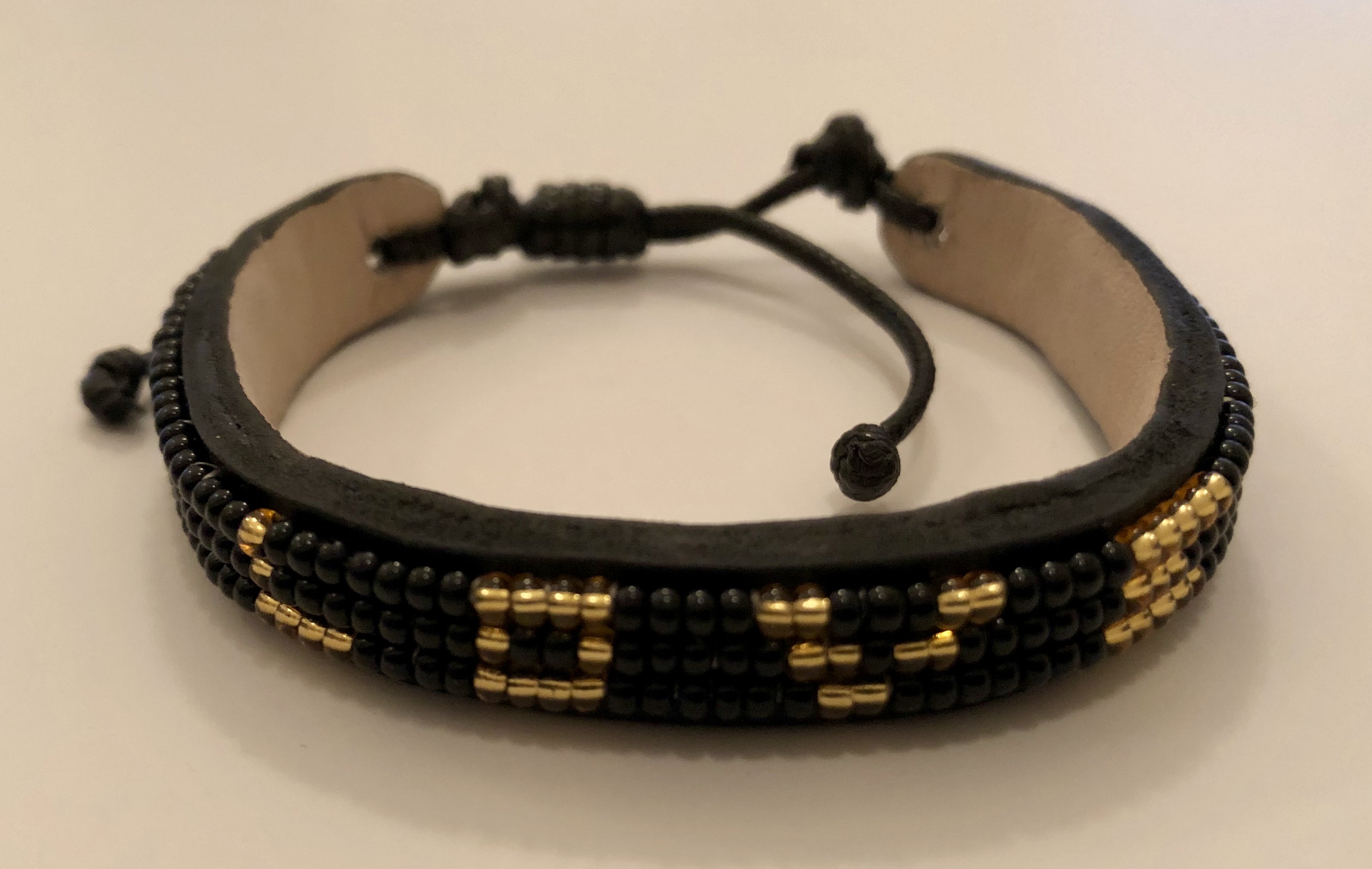
I’m thinking of my final Christmas in San Francisco, Christmas 2019, now a week away from two years ago. December that year had been a month of farewells. Josh and Peggy’s poignant dinner party, my close friends Ray and Michael, Greg and Ross, Zina and Al, there to say goodbye, Ray not well that night, barely hanging on. Christmas was with Adam and Rachel and Rachel’s family, Adam still enduring chemotherapy. 2019 had been a bad year by so many measures: Brenda’s abrupt decision to end our marriage, Adam’s lymphoma, Ray’s cancer. The world had not yet succumbed to a global pandemic—who would have guessed that fate was only a few months away, maybe even percolating as we sat around Josh’s dinner table in Mill Valley. I wore a beaded bracelet that evening that said Love.

Two years.

Ray is gone; he died in April 2020 as the pandemic was just beginning to grip the city. He was so fearful of contracting the virus but died alone in his apartment in still what’s unknown circumstances.  It wasn’t Covid-19.

Adam recovered, graduated from medical school, and began his residency at Highland Hospital. In May 2021 he and Rachel had a baby boy, Oliver Elliott Schwemberger Mortimer. They are prospering.

Josh and Peggy sold their house in Strawberry, organizing their exit while I visited last August, and moved to a rental in Corte Madera.

And I have been in Boston, two years on January 7th, two years—and counting—of living under the cloud of a virus that still keeps us masked and out of casual circulation.

All of us have moved on. For me, Boston has been a godsend. Close to Sam and family, work blossoming at Hult and Northeastern and for a year at Fletcher, an apartment I like across from an East Boston swimming beach, Walden Pond, a few new friends. My close friends in San Francisco have remained close. Josh, Josh and Peggy, Fran, Mark, Don, Robin, Travis. My hopes of being bi-coastal with frequent cross-country trips spoiled by Covid. I miss swimming in the Bay.

I think about those twelve years in San Francisco, the significance of those years in my life, what they gave me, what I lost. What I found as a result of loss. The unexpected passion of love, for the first—and perhaps only—time. The shattering disappointment of that love gone. The tranquility and eventual sadness of a kind of love regained. And lost again. I realize now I was the lucky one, the one who could leave, to start again. I should be, and am, grateful.

Do I want any of those old relationships again? Not with those same women—three strikes, over so many years, and I’m more than out. The times have changed, too. Not with any women. I don’t want any of that possible drama. I’m willing to be surprised, and willing to be open to something different, too. And willing to be free of any relationship. It’s a good place to stand.

For Christmas this year Travis sent me a book titled Ikigai: The Japanese Secret to a Long and Happy Life. Apart from moving to Okinawa the key is keeping busy, being focused, having purpose. Some people I meet ask if I’m retired. I can’t imagine that. I love teaching and have come to see teaching as the purpose I’ve always wanted.

This fall in my strategy class, as a final assignment I asked the students to write a five-year strategic plan for themselves, focused on career goals, their commitments beyond prestige and monetary gain, and their definition of career happiness. I was unprepared to be as moved as I was reading what they wrote, these strong yet still fragile young men and women. As I read their plans, their worries, their hopes, their dreams, I teared up. I want them all to realize these plans, to achieve their goals. That I could be, in some small way, a catalyst on their journeys is a purpose I couldn’t have conceived when I started my own career adventure in teaching. Now I do.

Professor Niland, this is off topic, but I feel I need to address this. I want to say thank you. Thank
you for being an amazing professor for my last semester at Hult and for continuing to further my
understanding of marketing. I appreciate you and the care and passion you have for teaching. Thank you so much. Professor. I hope to see you again!

In such a serendipitous, even mysterious way, this is the gift Brenda gave me by ending our marriage. From that rupture a new life has evolved.

Welcome 2022.

Fathers and Sons

Today is the anniversary of my father’s death. He died a few days after his 90th birthday in 2018. He didn’t suffer—had rarely been ill in his life. The end came fast from the first phone call I received from his wife Sonya informing me he had been admitted to the hospital and the next day call telling me he was gone. She organized a fast memorial at their church and didn’t invite me. She said, “I didn’t think you would want to come.”

I would have gone. Because I grieved for the love we never shared? Because a son, an only child son, ought to attend his father’s memorial? Because my blood bond with him was stronger than theirs, his adoptive children and grandchildren? To prove a point? To be a reminder to all the people I didn’t know, and wouldn’t have wanted to know, that this man their friend had had another life, a life before Alabama, a life that in no way at all resembled the life he lived there in exile from everything that came before? To stand in isolation of all that?

I didn’t grieve his death. As I hadn’t enjoyed his life. Very late in our lives, a few years before he died, I called him and told him I thought he had never loved me. His response was that he believed I had never loved him. A father and son who perhaps had loved one another but never could accept that love and lived in the doubt of being unloved.

I don’t grieve him today on this death anniversary. I have a portrait of him hanging in my bedroom, a tinted photograph of my father when he was perhaps thirteen. He’s a handsome boy. He was a handsome young man. I see myself in that portrait. I see my sons. The bloodlines are evident.

In so many ways I constructed my life to be different from his. I rejected his masculinity, his love of hunting and shooting, of fishing in any kind of water, his pursuit of Pittsburgh capitalism, his flirtatious charm with women, his ready ability to build anything.  I never wanted to be him. I wanted to be the opposite of the man he was. He wanted me to be a lawyer. I majored in English and went to Ireland to pursue a graduate degree in literature. He disapproved—but paid for it all. He never said no even when the distance grew farther and deeper. I don’t think I ever said thank you.

When he divorced my mother, leaving me with the emotional wreckage of her attempted suicide and subsequent dependency, I hated him. I was nineteen, a sophomore in college. He bought me a vintage Austin-Healey in a wordless attempt to say he was sorry. We didn’t speak for three years. He didn’t attend my college graduation or years later my wedding. My life diverged away down pathways he would have found distasteful at best. His disapproval hung like smog over my life, silent but ever-present.

Life repeats itself even when we don’t want it to. I said I would never divorce yet have twice.

Today I ask myself would I have turned out differently, made other decisions, had his influence not been such a heavy weight on my shoulders? Would I have been less fearful of being myself, not some anti-Dad?

I can’t create a life that didn’t happen. The past needs to be placed securely in the past drawer. I don’t need to be the man I wound up being. I’m still trying to figure that out—at this late but not too-late stage.

And I can’t know the effect my life, the deeds of my life, has had on my own sons. They are each remarkable men, making remarkable choices, leading remarkable lives. Having been a burden in the past, perhaps having left unknown scars I can only imagine, I live today knowing that all I can do is not be foolish, not be a burden, build my own future on right decisions, and express my unconditional love in as dependency-free ways as I can.

I will try to think fondly of my father today. Think of him as the man he was and not the father he wasn’t. May he rest in peace.