Things fall apart; the centre cannot hold;
Mere anarchy is loosed upon the world,
The blood-dimmed tide is loosed, and everywhere
The ceremony of innocence is drowned;
The best lack all conviction, while the worst
Are full of passionate intensity.
W. B. Yeats wrote these lines in 1919, soon after the First World War and as the Irish War of Independence was beginning. They are quoted so often that they are cliché, a statement of the obvious. Time and again they are the exact right words to describe the times we’re in. They’re the exact right words today, when the fabric of a reality I believed to be foundational and constant is being torn into shreds, leaving only a memory of what we had and the deepest of resentment towards all those who, quite willingly, brought this on. November 2024 didn’t happen by accident.
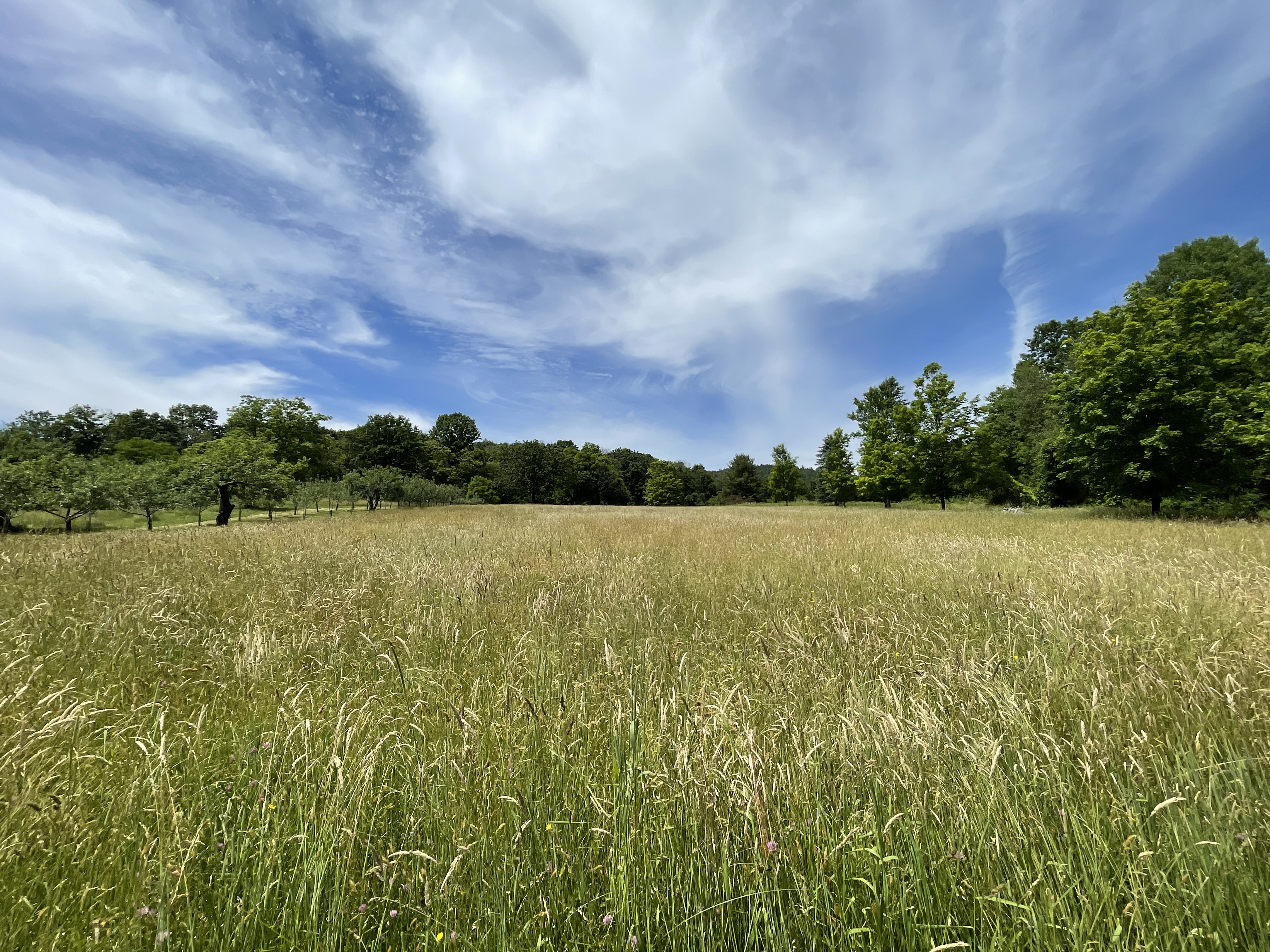
I’m here in the Berkshire countryside, alone in a part of the country I have loved for fifty years. The strangeness of all the time between then, when as a young man in my first real job I lived in Salisbury, Connecticut, the northwestern-most town in the state, and now, fifty years later, staying in my son’s house just over the Connecticut line in Egremont, Massachusetts. Time has barely changed the landscape. The same white New England houses face the road. Development has been scant, if at all, limited by affluence and distance from urban centers. How to connect the dots—the journey from then to now—is what I’m thinking about.
I’m thinking, too, of all those who were once part of my life then and who are now gone, either passed away or passed out of my life. It amounts to the same.
Michael Hoffman, Aperture’s complicated publisher; Arthur Bullowa, Michael’s great friend and Aperture’s lawyer; Dale McConathy; Jonathan Williams, poet and Jargon Society publisher; Paul Metcalf, Herman Melville’s great-grandson, and his wife Nancy. Dinners at the White Hart Inn with Mr. Woods, Aperture’s aged, Communist accountant, and Mike McCabe, friend and owner of Lion’s Head Books. I learned he lives in Santa Fe now.
They are all in my thoughts tonight.
And others I no longer know where they are: Ann Kennedy, Aperture’s manager; her first boyfriend Christopher Kent, both living in the hunting lodge on the Hitchcock estate in Millbrook. And most of all Christopher Hewat—still just down the road from where I am in Egremont. He remains unreachable. What would I say to him if I saw him now? We swam naked in his parents’ luminous pool on warm summer nights. His artwork hangs in my house. I haven’t seen him in forty years.
Am I the same man now as the young man then? Gertrude Stein said we’re always the same age inside. My inside is driving down Rt 41 South in 1975, from Salisbury to Millerton, New York , just over the state line. (You curve on to Rt. 48 W in Lakeville.) I’m driving to Michael Hoffman’s antique house in Shekomeko, an old, historic parcel of Pine Plains; so many dinners there, often with whichever famous photographer was visiting. My life is literally in-between, balancing in a wonderland between the then that came before, Sewickley, Bowdoin, conventionality—and a future I didn’t yet know but changed everything I was then living in. It was a precious, confusing time in my life. If I could go back and relive those years, knowing what I now know, would I have made the same decisions? Taken the same left-turn path ahead?

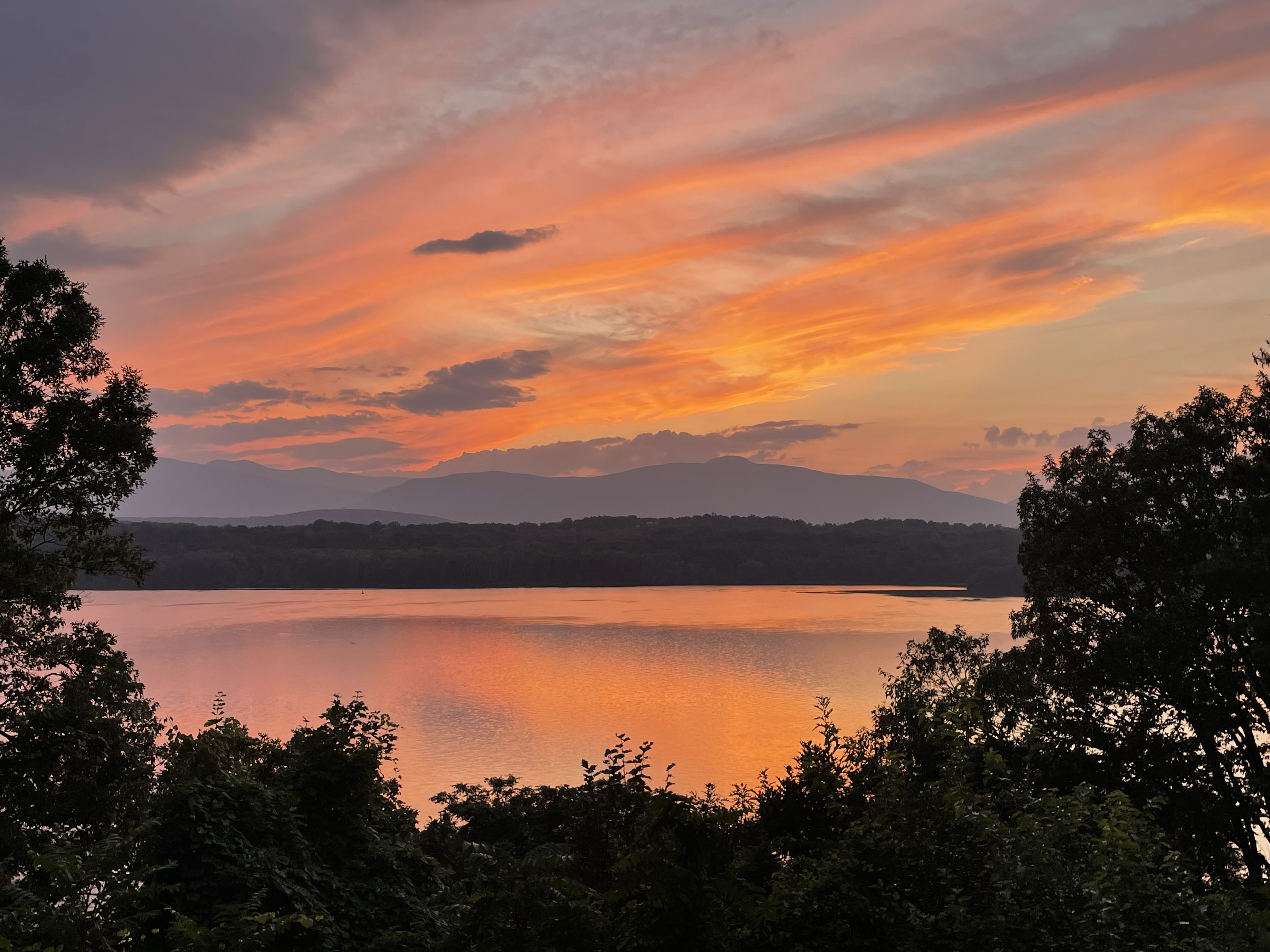
I’m thinking tonight, too, of more recent times here in the Berkshires and adjacent Hudson Valley, and how I’m missing my dear friend Joan Davidson and the civilized—in the very finest sense of the word–life she created, and we enjoyed at Midwood. Those days, those long weekends, the conversations around her dinner table surrounded by illuminated bookshelves and warmed by a fire, dinners on the porch on summer nights when the sun setting behind the Catskills beyond the silver river torched the sky in a blaze of color unmatched in awe and beauty—these times can never come again.
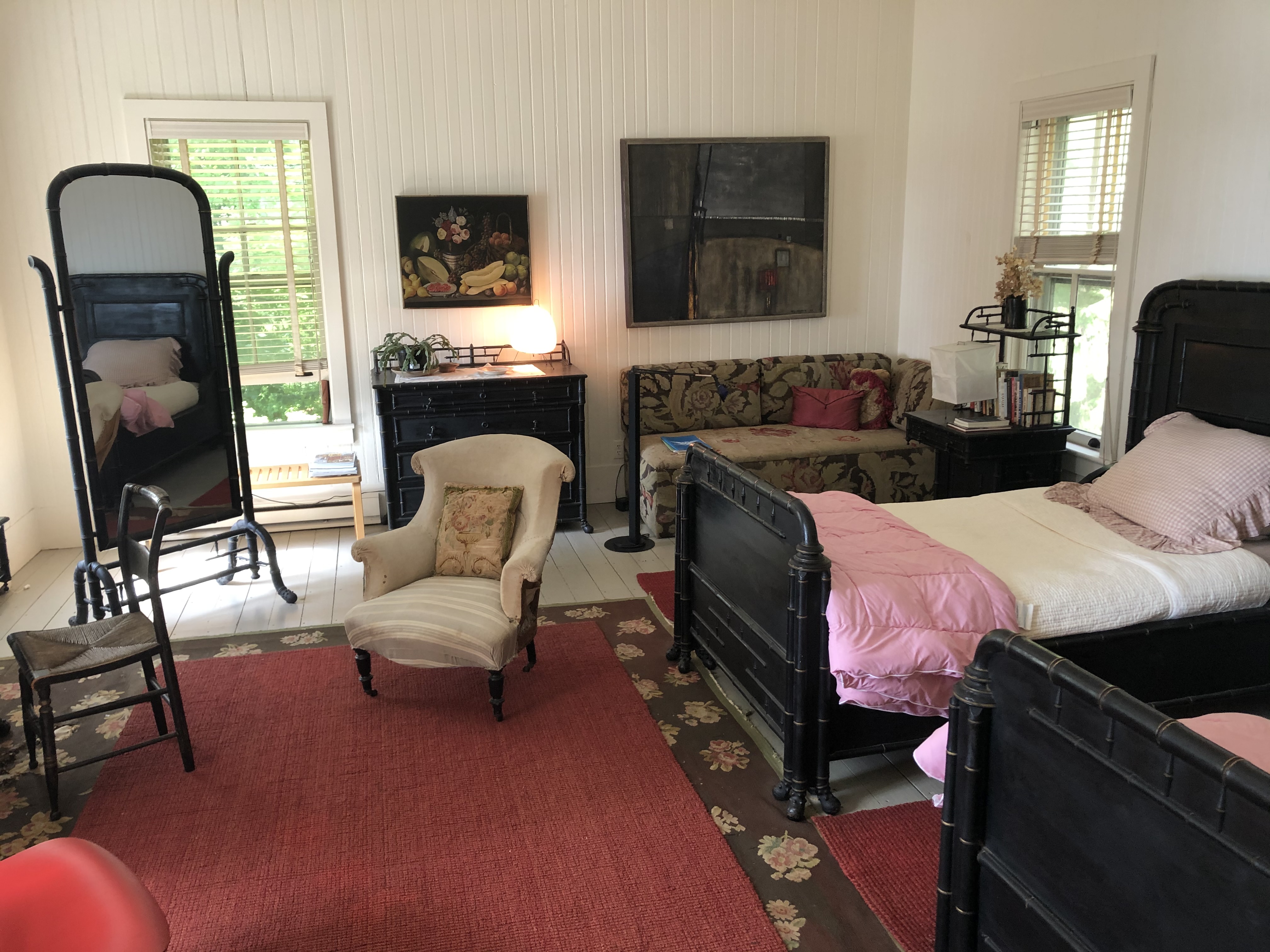
Then, after the last guest retired and all the lights turned off downstairs, going up to my usual room, Bamboo, named for the suite of 19th-century furniture carved to replicate bamboo, and hearing the last night train far down the hill between the house and the Hudson, breaking the silence of the night yet unseen but reassuring in its journey north to Canada. In early spring the peepers would send their chorus thrilling through the windows, a harbinger of warmer days to come.
I’m missing Pat Falk, not gone but confined now to a care home in Manhattan, her lovely farmhouse atop the hill outside the hamlet of Germantown sits empty. Pat and I both worked for Joan at the Kaplan Fund back in the late 1970’s when we created and published Artists’ Postcards. That was the beginning. Pat invited Evelyn and me into her life and the life of her parents Johnny and Pauline, then residing in their East 60’s townhouse off Fifth Avenue where we enjoyed Christmas dinner during those years, and in the summers staying with them at their house on the Jersey Shore. Johnny cooked magnificently and collected rare Chinese ceramics. I have their steamer trunk, with the White Star Line first class labels, in my living room.
I’m even missing Bunny—Eleanor McPeck—Joan’s cranky friend and landscape gardener who designed the Midwood property. I remember one morning at breakfast during a typical weekend house party when the boyfriend of one of Joan’s guests, Bill Griswold, then director of the Morgan Library, asked Bunny what she did. Bunny said she designed landscapes, such as Midwood. The fellow then asked, “Oh, when will you begin?”—an affront Bunny never forgave. I feel badly, now, thinking of my own annoyance at driving Bunny so frequently from Cambridge to Midwood and back, now that she, too, is gone. We spoke weekly during the last painful months of her life, reliving all the times we enjoyed the warm embrace of her much-loved Midwood.
Midwood remains, now owned and managed by Joan’s grandchildren. They’re trying to make a go of it, keep the house, if not Joan’s spirit, in the family. I hope they succeed. I have little interest to return. For me, the fine, handsome house, the gorgeous view across the Hudson, were never the point in and of themselves. Midwood existed as a creation of Joan’s imagination, of her generosity and warmth, of her talent to bring people of all stripes together for lively conversation, for her commitment to New York, the state and city, to liberal causes and civilized behavior. She died a year before the 2024 election, a blessing. I remain friends with Joan’s eldest son Matthew and his wife Amy, a happy legacy.

All those “thens”…and now.
Now is Easter weekend 2025. I’m here in Egremont on my own. I’ve been driving up and over the same hills I’ve driven for more than forty-five years. The White Hart still sits squarely on the town green, fancified since my dinners there years ago. Johnnie Cake Books occupies the same wooden shop that my friend Mike’s Lion’s Head Books once occupied. Some things never change.

Millerton on the other hand—a down-in-the-heels farm town when Aperture had its editorial office there—is now gentrified with art galleries and antique shops, and where the old Saperstein’s once was is now the hip and expensive Westerlind. New Yorkers fill the seats in the local diner. Progress of a kind.

I remember once when I worked at Aperture (this would have been 1976), I was in our tiny shipping room with our shipping manager, Gertrude O., a local farm lady. We shared warehouse space with Arnoff Moving and Storage. On that afternoon, one of Arnoff’s men, a veritable Charles Atlas of a man, was walking up the driveway with a refrigerator on his back. Serenely, Gertrude looked up and said, “That’s not a real man.” Say what? He looked all man to me—a manly specimen if there ever was one. Gertrude continued, “He only has daughters. It takes a real man to make a boy.” Such was Dutchess County wisdom.
I’m lucky to be here this Easter weekend, so many years later; I, too, have changed, and I’ve also stayed the same. So much of how I see the world was formed in these Berkshire towns, by the people I knew then, and by the landscape I love to this day.
This feels like home.
 Spindriftglobal